

We are a digital agency helping businesses develop immersive, engaging, and user-focused web, app, and software solutions.
2310 Mira Vista Ave
Montrose, CA 91020

2500+ reviews based on client feedback
What's Included?
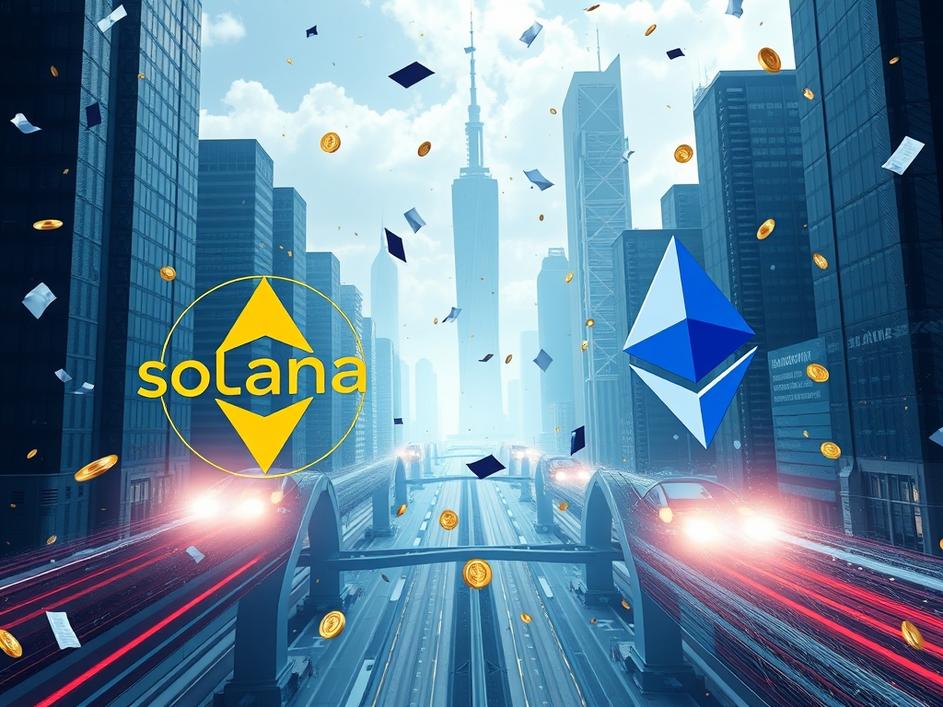
ToggleIn the fast-paced world of cryptocurrency, speed is everything. And when it comes to stablecoins – those digital currencies designed to maintain a steady value, usually pegged to the US dollar – transaction speed can make or break a platform. Recent data reveals a significant difference in how quickly stablecoins move on Solana compared to Ethereum, and it’s a difference that could have major implications for the future of these two leading blockchain networks.
According to recent reports, every stablecoin dollar on Solana changes hands about six times faster than on Ethereum. Think about that for a moment. It means that for every dollar’s worth of stablecoins sitting on Solana, it’s being used in transactions and trades at six times the rate of a comparable dollar on Ethereum. This higher turnover rate suggests a more active and vibrant ecosystem on Solana, especially when it comes to decentralized finance (DeFi) and other applications that rely on stablecoins.
So, what’s driving this difference, and why should anyone care? There are several factors at play. One key element is the underlying technology of each blockchain. Solana is designed for high throughput, meaning it can process a large number of transactions per second (TPS) at a much lower cost than Ethereum. Ethereum, while the dominant platform for DeFi, has historically struggled with scalability issues, leading to higher transaction fees and slower processing times, especially during periods of high network congestion.
This difference in transaction speed and cost directly impacts how people use stablecoins. If it’s cheaper and faster to move stablecoins on Solana, traders and DeFi users are naturally going to gravitate towards that platform. They can execute more trades, provide liquidity to more pools, and generally engage in more activity without getting bogged down by high fees or slow confirmation times. The cost to execute the transaction makes a huge difference. A transaction costing fractions of a penny is far more attractive than a transaction costing several dollars.
It’s important to remember that Ethereum is not standing still. The Ethereum development community has been working tirelessly to address scalability issues through various upgrades, including the shift to a proof-of-stake consensus mechanism and the implementation of layer-2 scaling solutions. These efforts are aimed at improving Ethereum’s transaction speed and reducing fees, bringing it more in line with the performance of networks like Solana. However, these upgrades take time to implement and fully roll out, and it remains to be seen whether they will be enough to close the gap entirely.
But the network effects of Ethereum are strong. Many of the largest and most popular DeFi protocols are built on Ethereum, and a large community of developers and users are already deeply invested in the Ethereum ecosystem. It’s not easy to simply uproot and move to a different platform, even if that platform offers certain advantages. The size and scale of the Ethereum platform still command interest.
The competition between Solana and Ethereum is ultimately a good thing for the crypto industry as a whole. It encourages both platforms to innovate and improve, pushing the boundaries of what’s possible with blockchain technology. Solana’s high-speed stablecoin turnover rate demonstrates the potential of alternative blockchain designs, while Ethereum’s continued efforts to scale and improve its performance show its commitment to remaining a dominant player in the space. The pressure will remain on Ethereum to be faster and cheaper.
This competition also benefits users, giving them more choices and options when it comes to choosing a platform for their stablecoin transactions. Depending on their specific needs and priorities, users can opt for the speed and low cost of Solana or the established ecosystem and wider range of applications available on Ethereum. Ultimately, the market will decide which platform – or platforms – will thrive in the long run.
While transaction speed is certainly an important factor, it’s not the only thing that matters. Other considerations include security, decentralization, and the overall health and activity of the ecosystem. Ethereum, for example, is generally considered to be more decentralized and secure than Solana, although Solana has made significant strides in these areas as well. The best platform really comes down to a user’s individual needs and risk tolerance.
Security is always a major consideration. Users need to have confidence that their funds are safe and secure. Decentralization is also important for ensuring that the network is resistant to censorship and manipulation. And a healthy ecosystem, with a wide range of applications and services, provides more opportunities for users to put their stablecoins to work.
The battle between Solana and Ethereum for stablecoin dominance is far from over. Both platforms have their strengths and weaknesses, and both are constantly evolving and improving. As the crypto industry continues to mature, we can expect to see even more innovation and competition in the stablecoin space, with new platforms and technologies emerging to challenge the established players. It will be interesting to see how layer 2 solutions change the landscape in the coming years as well. This will be an interesting space to watch and see how it develops as the entire blockchain and crypto space continues to rapidly evolve.


Comments are closed