

We are a digital agency helping businesses develop immersive, engaging, and user-focused web, app, and software solutions.
2310 Mira Vista Ave
Montrose, CA 91020

2500+ reviews based on client feedback
What's Included?
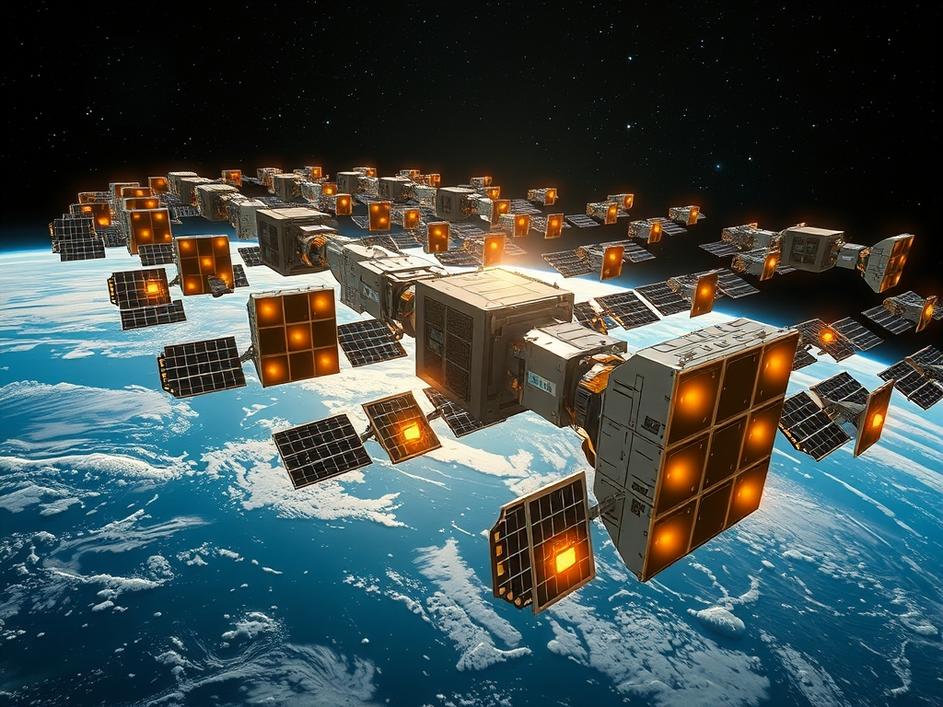
ToggleSpaceX, never one to shy away from grand ideas, has reportedly filed a request with the Federal Communications Commission (FCC) seeking permission to launch an astounding constellation of one million data center satellites into orbit. The sheer scale of this proposal is enough to make anyone pause and consider the implications. This isn’t just about adding a few more satellites; it’s about creating a floating network of data processing power on a scale never before imagined.
The concept, as described, involves solar-powered data centers. This is significant because it suggests a move towards sustainability, at least in terms of energy consumption. Traditional data centers on Earth consume enormous amounts of electricity, contributing significantly to carbon emissions. Harnessing solar energy in space could potentially offer a cleaner, more efficient way to power these computational hubs. And it makes sense given SpaceX’s focus on innovation and forward-thinking technologies.
Of course, the big question is whether the FCC will actually approve such a massive undertaking. While SpaceX has a track record of pushing boundaries and achieving ambitious goals, a million satellites is a lot, even for them. There are numerous regulatory hurdles to consider, including concerns about orbital debris, potential interference with other satellite systems, and the overall impact on the space environment. It seems unlikely that the FCC would approve the plan in its entirety, but perhaps a scaled-down version could be viable. It really is a hard sell.
If SpaceX were to successfully deploy even a fraction of its proposed data center constellation, the potential benefits could be substantial. One key advantage would be reduced latency. By processing data closer to the source and the user, these space-based data centers could significantly speed up applications and services that rely on real-time data processing. Think about things like online gaming, autonomous vehicles, and augmented reality – all of which could benefit from lower latency. Additionally, such a network could provide global access to computing resources, particularly in areas with limited or unreliable internet infrastructure.
However, the potential benefits must be weighed against the potential risks and challenges. One of the biggest concerns is the creation of space debris. With a million satellites in orbit, even a small percentage of failures could lead to a significant increase in the amount of junk orbiting the Earth, posing a threat to other satellites and spacecraft. Mitigation strategies would be crucial, including designing satellites with deorbiting capabilities and implementing robust tracking and collision avoidance systems. And one has to consider the light pollution implications.
While the primary function of these satellites is envisioned to be data storage and processing, the presence of extensive computational infrastructure in orbit could unlock novel opportunities. For example, these satellites could be used for scientific research, such as processing data from space-based telescopes or running simulations of climate change. They could also facilitate the development of new space-based applications, such as on-orbit manufacturing or resource extraction. Space based processing power could also be used for space exploration.
SpaceX’s proposal, if realized, could have profound economic implications. It could spur the development of a new space-based economy, creating jobs and opportunities in areas such as satellite manufacturing, data processing, and software development. It could also attract investment from both public and private sectors, further accelerating the growth of the space industry. It could also increase the value of already orbiting satellites, or even those on the ground.
Ultimately, SpaceX’s vision of a million solar-powered data centers in orbit is a bold and ambitious one. While the FCC is unlikely to approve the plan in its entirety, the proposal highlights the growing importance of space-based infrastructure and the potential for innovation in this domain. The challenges are significant, but the potential rewards are even greater. Whether this particular plan comes to fruition remains to be seen, but it certainly sparks the imagination and prompts us to think about the future of computing in space. But with Elon Musk at the helm, anything is possible.



Comments are closed