

We are a digital agency helping businesses develop immersive, engaging, and user-focused web, app, and software solutions.
2310 Mira Vista Ave
Montrose, CA 91020

2500+ reviews based on client feedback
What's Included?
ToggleThe Super Bowl. It’s more than just a football game; it’s a cultural phenomenon, a spectacle that transcends sports. But when Super Bowl L (that’s 50 for those not fluent in Roman numerals) landed in the San Francisco Bay Area, it wasn’t just about touchdowns and tackles. It was about technology. The event organizers planned something special: an innovation summit designed to showcase the region’s tech prowess alongside the on-field action. The Bay Area was essentially betting that tech would make this Super Bowl unlike any other. And while the game itself might have been a defensive struggle (Denver Broncos defeated the Carolina Panthers), the technological innovations surrounding it aimed for a high score.
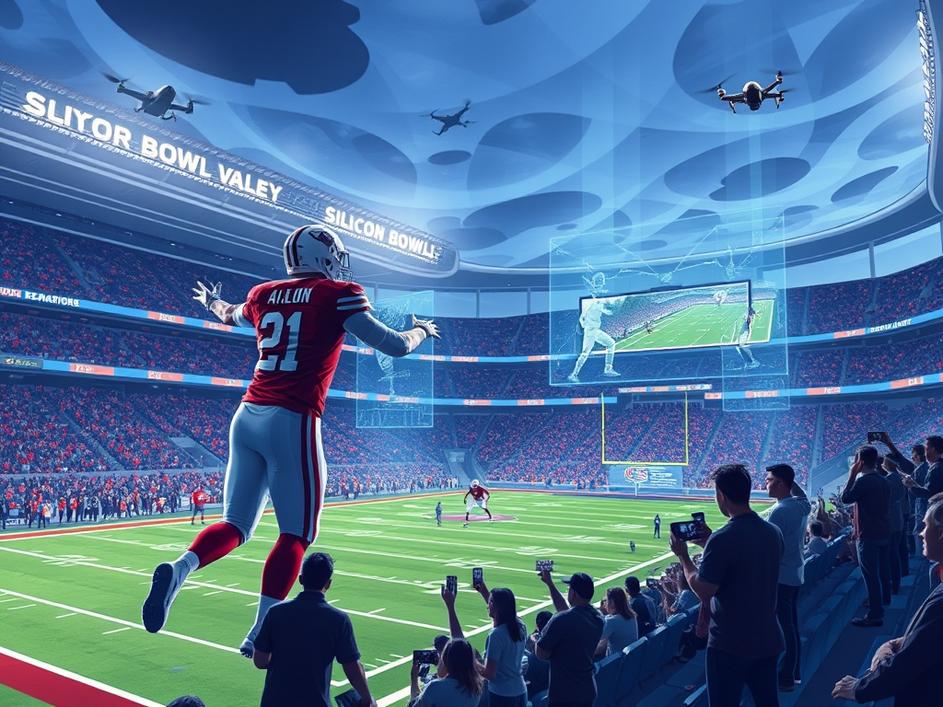
Imagine a stadium where your phone never loses connection, where you can order food from your seat with a tap, and where replays are available on demand right on your device. That was the vision for Super Bowl L. The goal was a hyper-connected fan experience, utilizing improved Wi-Fi infrastructure and mobile apps to enhance every aspect of the game day. Think about it: no more missing crucial plays because you were in line for a hot dog. No more struggling to upload that perfect selfie because of spotty service. The promise was seamless connectivity, making the fan experience smoother and more engaging.
But the tech focus wasn’t confined to the stadium. The innovation summit, a key part of the Super Bowl L festivities, brought together tech leaders, entrepreneurs, and investors. It was a chance to showcase cutting-edge technologies, discuss the future of sports, and explore how technology could enhance fan engagement. Think of it as a tech huddle, where industry experts brainstormed ways to improve everything from player performance to stadium security using the power of data and digital innovation. It was a forward-looking event, aiming to push the boundaries of what was possible in the world of sports.
So, what kind of tech innovations were actually on display? Well, drones were used for aerial footage and security surveillance, providing a bird’s-eye view of the stadium and surrounding areas. Data analytics played a huge role, with teams using sophisticated algorithms to analyze player performance and optimize game strategies. Wearable technology tracked player movements and vital signs, providing real-time insights into their physical condition. And of course, there were advancements in broadcast technology, offering viewers at home a more immersive and engaging viewing experience. It was a complete digital game plan, designed to enhance every aspect of the Super Bowl.
Super Bowl L in Silicon Valley wasn’t just a football game; it was a glimpse into the future of sports. It showed how technology could transform the fan experience, enhance player performance, and create new opportunities for engagement and entertainment. While some might argue that technology can detract from the purity of the game, it’s hard to deny the potential for innovation. The increased use of data analytics, for example, can help teams make smarter decisions and improve their overall performance. The improved connectivity can make the game more accessible and engaging for fans around the world. It’s a balance, of course, but the possibilities are endless.
Of course, the immediate hype surrounding the tech innovations at Super Bowl L has faded. But the underlying trends have continued to shape the sports landscape. We’re seeing more and more teams embrace data analytics, wearable technology, and digital engagement strategies. Stadiums are becoming increasingly connected, offering fans a more immersive and personalized experience. And the lines between the physical and digital worlds are blurring, creating new opportunities for innovation and entertainment. Super Bowl L might have been a one-off event, but its impact on the future of sports is undeniable. It showcased the potential for technology to transform the game, and it set the stage for a new era of innovation in the world of sports.
The convergence of the NFL’s championship game with Silicon Valley’s innovative spirit provided a unique opportunity to explore the possibilities at the intersection of sports and technology. While the Denver Broncos emerged victorious on the field, it was the promise of a tech-enabled future that truly captured the imagination. The innovations on display at Super Bowl L – from enhanced stadium connectivity to data-driven player analytics – foreshadowed the transformative role technology would play in shaping the future of sports. This showcase highlighted the evolving relationship between athletics and digital advancements, leaving a lasting legacy on the industry.



Comments are closed