

We are a digital agency helping businesses develop immersive, engaging, and user-focused web, app, and software solutions.
2310 Mira Vista Ave
Montrose, CA 91020

2500+ reviews based on client feedback
What's Included?
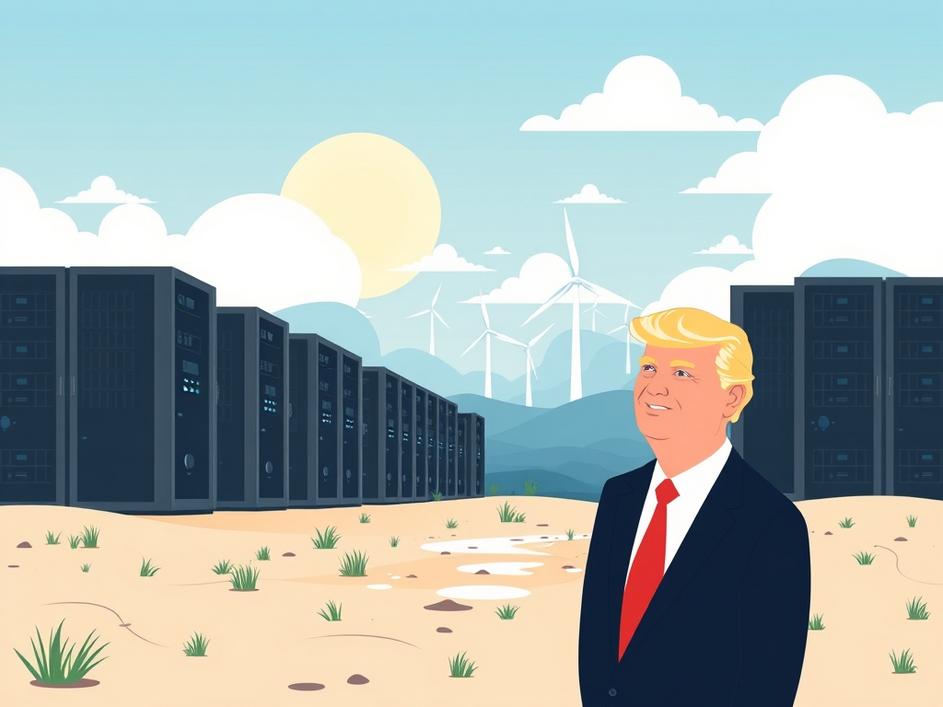
ToggleIn a move that has raised eyebrows across the tech and political landscapes, former President Donald Trump has reportedly secured pledges from major tech companies, including Amazon and Microsoft, to address the rising energy demands of artificial intelligence. The agreement, announced earlier this week, is framed as a critical step toward ensuring the sustainable growth of AI, a field that is rapidly expanding and increasingly power-hungry. But what does this really mean, and what are the implications for the future of AI and energy consumption?
Artificial intelligence is not just about clever algorithms; it is a resource-intensive endeavor. Training complex AI models requires vast amounts of computational power, translating directly into massive energy consumption. Data centers, the hubs where these models are trained and deployed, are already significant energy users, and their demand is only set to increase as AI becomes more integrated into everyday life. Concerns about the environmental impact of this growing energy footprint are valid and pressing. As AI evolves, its energy needs become a central concern, demanding innovative solutions and responsible practices to mitigate its environmental effects. And, with increased energy consumption, questions about carbon emissions and overall sustainability become more critical.
While the specifics of the commitments remain somewhat vague, the general idea is that these tech giants will invest in renewable energy sources to offset the energy used by their AI operations. This could involve building new solar or wind farms, purchasing renewable energy credits, or implementing more energy-efficient hardware and software. Trump, in his statement, lauded the pledges as “tremendous,” suggesting a significant impact. However, critics are already questioning the enforceability and transparency of these commitments. Without clear metrics and accountability mechanisms, it’s difficult to assess the real-world impact of these promises. Furthermore, some worry that these pledges could be a form of greenwashing, designed to improve public image without making substantial changes.
Why are these tech companies making these pledges now, and to Trump, of all people? Several factors could be at play. First, there’s the increasing public pressure on corporations to address their environmental impact. Investing in renewable energy can be a positive PR move, attracting environmentally conscious customers and investors. Second, there’s the potential for future regulation. Governments around the world are starting to scrutinize the energy consumption of AI and data centers, and companies may be trying to get ahead of potential regulations by voluntarily adopting more sustainable practices. And, finally, there’s the simple economic incentive. Renewable energy is becoming increasingly cost-competitive with fossil fuels, and investing in renewable energy can reduce long-term energy costs. So, these pledges might not be entirely altruistic; they could also be sound business decisions.
Despite the positive spin, several challenges remain. One key issue is the geographic mismatch between energy consumption and renewable energy generation. Data centers are often located in areas with high electricity demand, which may not be ideal locations for renewable energy projects. Transporting renewable energy over long distances can be inefficient and costly. Another challenge is the intermittency of renewable energy sources like solar and wind. Data centers require a constant and reliable power supply, and relying solely on intermittent renewables could create instability. Furthermore, there’s the question of legacy infrastructure. Many data centers are still powered by fossil fuels, and transitioning to renewable energy requires significant investment and upgrades. Even with pledges, there’s no guarantee that data centers will be powered entirely by clean energy anytime soon.
Skepticism surrounding this agreement is warranted. Trump’s track record on environmental issues is far from stellar, and his involvement raises concerns about the true intentions behind these pledges. It’s possible that this is simply a photo opportunity, designed to boost Trump’s image without any real commitment to sustainability. Tech companies, too, have been known to make grand promises that fall short of reality. Without independent verification and strict enforcement, these pledges could amount to little more than empty words. Citizens should remain vigilant and demand transparency from both the government and the tech industry to ensure that these commitments translate into tangible action.
Ultimately, this agreement, whatever its true motivations, highlights the growing importance of sustainable AI. As AI continues to evolve, it’s crucial that we address its environmental impact proactively. This requires a multi-faceted approach, including investments in renewable energy, improvements in energy efficiency, and the development of new, more sustainable AI algorithms. It also requires collaboration between governments, industry, and researchers. By working together, we can ensure that AI benefits humanity without jeopardizing the planet. This means focusing on long-term sustainability rather than short-term gains. It means prioritizing environmental responsibility over political expediency. And it means holding both government and industry accountable for their promises.
These pledges from tech giants represent a step in the right direction, but they are only a first step. It is imperative that we maintain a critical eye, demanding transparency and accountability to ensure that these promises translate into meaningful action. The future of AI depends on our ability to harness its potential in a responsible and sustainable manner. We need more than just pledges; we need concrete plans, measurable goals, and independent verification. It is up to us, as citizens, to hold those in power accountable and to demand a future where technology and sustainability go hand in hand.



Comments are closed