

We are a digital agency helping businesses develop immersive, engaging, and user-focused web, app, and software solutions.
2310 Mira Vista Ave
Montrose, CA 91020

2500+ reviews based on client feedback
What's Included?
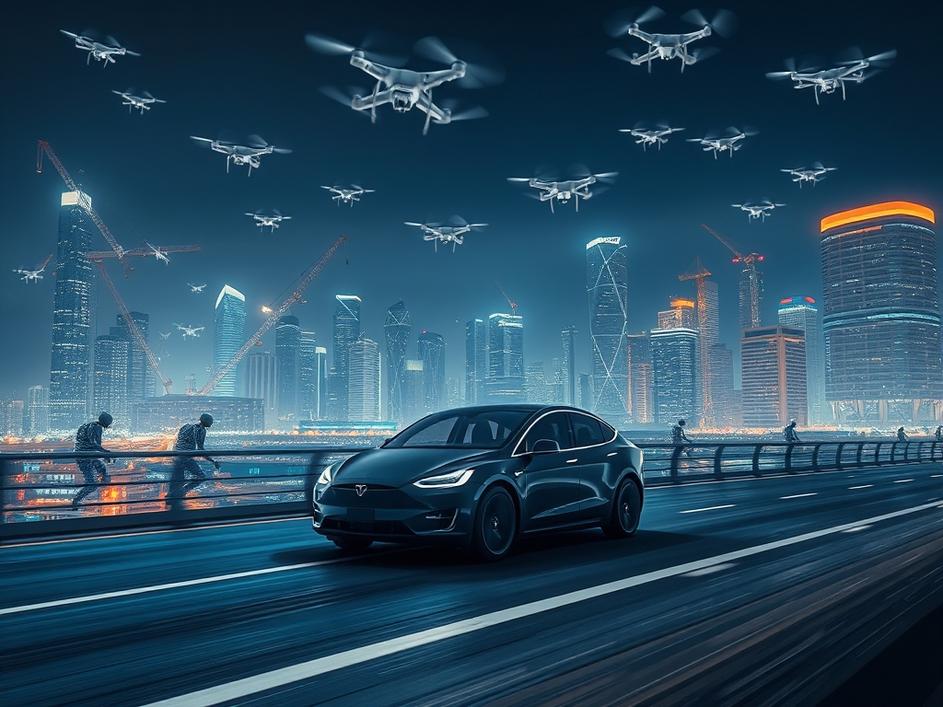
ToggleWord on the street, or rather, from inside Tesla’s virtual town hall, is that 2026 is shaping up to be a pivotal year. Ashok Elluswamy, the VP of AI software at Tesla, has reportedly warned employees to brace themselves. He painted a picture of 2026 being the “hardest year,” a statement that’s sent ripples of speculation throughout the tech world. But what exactly makes 2026 so daunting for the electric vehicle giant?
While the exact details of Elluswamy’s warning remain shrouded in corporate secrecy, we can piece together some likely scenarios. Tesla’s ambitions in artificial intelligence, particularly concerning full self-driving (FSD) capabilities, are no secret. Elon Musk has repeatedly set ambitious timelines for achieving Level 5 autonomy – the holy grail of self-driving technology where the car can handle all driving tasks in all conditions without human intervention. 2026 might represent a crucial deadline, a make-or-break moment for Tesla to deliver on its FSD promises. This could mean intense pressure to finalize and deploy a fully functional, safe, and reliable autonomous system. Missing this deadline could have significant consequences for Tesla’s market position and reputation.
Tesla’s approach to FSD has always been somewhat controversial, relying heavily on camera-based vision systems rather than LiDAR (Light Detection and Ranging) used by many competitors. While this strategy has the potential to be more cost-effective and scalable, it also presents unique challenges. Training AI models to accurately interpret the visual world, especially in complex and unpredictable driving scenarios, requires massive amounts of data and sophisticated algorithms. Getting it wrong could lead to accidents and erode public trust. 2026 could be the year when Tesla either proves its vision-only approach is viable or faces the harsh reality that it needs to rethink its strategy. It’s a bet-the-company moment, and the pressure is on.
But Tesla’s AI ambitions extend beyond just self-driving cars. The company is also developing humanoid robots, known as Optimus, designed to perform various tasks in manufacturing, logistics, and even domestic settings. 2026 might be the year when Tesla aims to showcase a fully functional Optimus prototype capable of performing complex tasks autonomously. Integrating AI into robotics presents a whole new set of challenges, requiring robots to not only perceive their environment but also to interact with it safely and effectively. If Tesla can successfully demonstrate a versatile and capable Optimus robot, it could revolutionize industries beyond transportation.
Of course, Tesla’s path to AI dominance isn’t without its obstacles. Regulatory hurdles, intense competition from other tech companies and automakers, and public perception of autonomous technology all pose significant challenges. Governments around the world are still grappling with how to regulate self-driving cars and robots, and strict safety standards could delay or hinder Tesla’s deployment plans. Competitors like Waymo, Cruise, and others are also making strides in autonomous technology, and the race to market is heating up. And perhaps most importantly, convincing the public that self-driving cars and robots are safe and reliable will be crucial for widespread adoption. Any major accidents or safety incidents could set the industry back years.
So, why is 2026 the “hardest year”? It appears to be the culmination of years of intense development in AI, self-driving technology, and robotics. It’s the year when Tesla aims to deliver on its ambitious promises and prove that its unique approach to AI is viable. The company faces significant challenges, but the potential rewards are enormous. Whether 2026 will be an “AI apocalypse” for Tesla or a triumph of engineering remains to be seen. It’s a story worth watching closely.
Expect to see intense activity from Tesla leading up to 2026. This includes significant software updates for its FSD system, continued development of the Optimus robot, and increased lobbying efforts to influence regulations. The company will likely face intense scrutiny from regulators, the media, and the public. Any missteps or setbacks will be amplified, and the pressure to succeed will be immense. Investors will be closely monitoring Tesla’s progress, and the company’s stock price could be highly volatile. 2026 promises to be a wild ride for Tesla and the entire AI industry.
Ultimately, Tesla’s 2026 challenge reflects a broader trend in the tech world: the relentless pursuit of artificial intelligence. Whether it’s self-driving cars, robots, or other AI-powered applications, the potential to transform our lives is immense. But with great power comes great responsibility, and it’s crucial that we develop and deploy AI safely, ethically, and responsibly. Tesla’s journey in 2026 will serve as a crucial test case, offering valuable lessons for the future of AI.
Comments are closed