

We are a digital agency helping businesses develop immersive, engaging, and user-focused web, app, and software solutions.
2310 Mira Vista Ave
Montrose, CA 91020

2500+ reviews based on client feedback
What's Included?
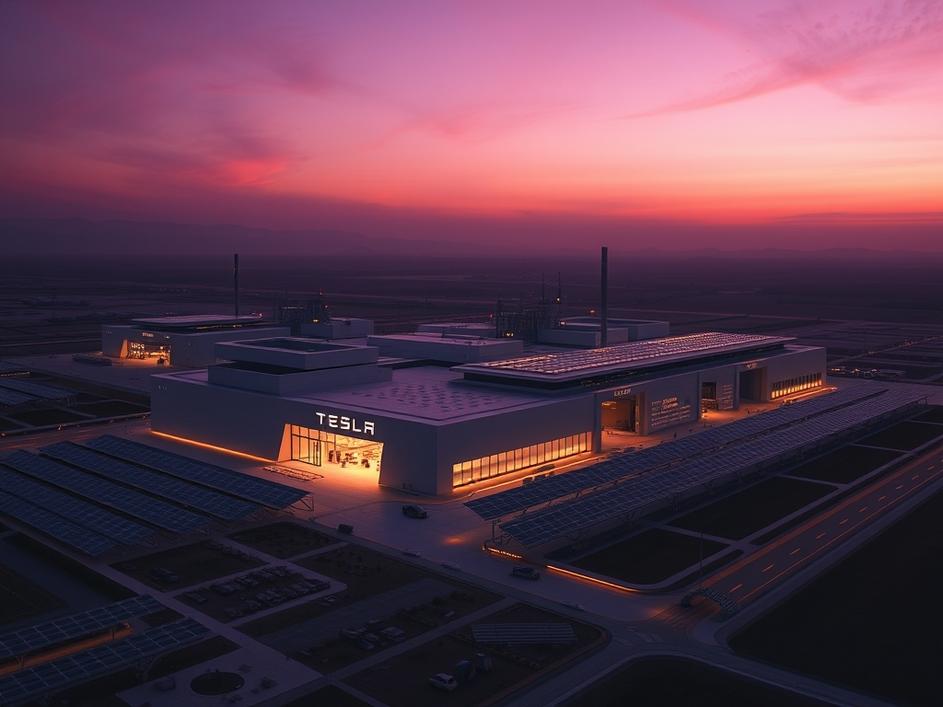
ToggleElon Musk, known for thinking big and pushing boundaries, recently dropped another huge idea. He said Tesla might need to build a massive factory just for making artificial intelligence chips. This isn\’t a small side project; we\’re talking about a “gigantic chip fab.” Think about it: a car company wanting to build its own highly specialized chip manufacturing plant. That alone is a big deal. But then he also mentioned something even more intriguing: the possibility of working with Intel. This news really gets you thinking about what Tesla\’s long-term vision looks like, and how far they\’re willing to go to control their own destiny in the fast-paced world of AI.
Tesla has always been about doing things differently. They built their own battery cells, their own charging network, and their own software from the ground up. This move into making their own AI chips fits right into that pattern. It shows a deep commitment to controlling every single part of their technology, especially the most important bits. AI chips are the brains behind everything from self-driving cars to the robots Tesla is developing. If you can design and build those brains exactly how you want them, you get a huge advantage. You\’re not waiting on someone else\’s timeline or limited by their standard designs. You get to make chips perfectly tuned for Tesla\’s specific needs, which could make their cars smarter and safer, faster than anyone else. This kind of vertical integration, owning the entire process, is a classic Musk strategy, and it\’s often paid off.
So, why would a company known for electric cars decide to jump into the incredibly complex and expensive world of chip manufacturing? It boils down to control and performance. Tesla\’s FSD (Full Self-Driving) system needs huge amounts of computing power. Current off-the-shelf chips, even powerful ones, might not be exactly what Tesla needs for its unique AI models. By designing their own chips, like the D1 chip they already showed off for their Dojo supercomputer, they can create hardware specifically made for their software. This means better efficiency, more speed, and a tighter integration between the car\’s brain and its operating system. When every millisecond and every watt of power counts, having custom silicon can make all the difference. It\’s about building the exact tools they need, not just buying what\’s available.
And it\’s not just about the cars. Tesla is also getting into robotics with the Optimus bot. These robots will need incredibly sophisticated AI to navigate the real world, learn new tasks, and interact safely with people. Having proprietary AI chips means Tesla can push the boundaries of what these robots can do. They won\’t be held back by generic processors; instead, they can innovate freely. This move, if it happens, would put Tesla in a very exclusive club of companies that design and manufacture their own core computing hardware, right alongside giants like Apple and Google, who also make their own custom chips for specific devices and tasks. It\’s a bold step that screams confidence in their own engineering capabilities and their future AI ambitions.
Now, let\’s talk about that Intel mention. This part is really interesting because building a chip fab from scratch is an incredibly difficult and costly undertaking. It takes billions of dollars, highly specialized equipment, and years of expertise. Intel, on the other hand, has been doing this for decades. They have the fabs, the knowledge, and the manufacturing processes down cold. For Tesla to partner with Intel could be a very smart move. It would allow Tesla to get their custom-designed chips made without having to build the entire infrastructure themselves right away.
Think of it as combining strengths. Tesla brings the cutting-edge AI chip designs, tailor-made for their specific needs, and Intel brings the manufacturing muscle and know-how. This kind of partnership could benefit both companies. Tesla gets its chips made, possibly faster and more reliably than if they started from scratch. Intel, which is trying hard to expand its contract manufacturing business, gets a high-profile client with ambitious demands. It\’s a win-win scenario, letting each company focus on what they do best. It also shows that even a company as self-reliant as Tesla understands the value of strategic partnerships when tackling something as complex as advanced chip manufacturing.
But let’s be clear: even with Intel’s help, building or even running a “gigantic chip fab” is no small feat. The semiconductor industry is one of the most capital-intensive industries in the world. New fabs cost upwards of $10 billion and can take several years to become fully operational. The technology evolves incredibly fast, and the margins can be razor-thin. This isn’t just about making chips; it’s about making them at a scale and efficiency that makes sense for Tesla’s production numbers, which are only going to grow.
If Tesla successfully pulls this off, it could change a lot of things. It could make their supply chain much more secure, especially important after the global chip shortages we\’ve seen. It could also set a new standard for how vertically integrated tech companies become, especially those that rely heavily on AI. For the broader tech world, it\’s another sign that owning the hardware and software stack is becoming essential for staying competitive at the very top. It’s a move that truly emphasizes how central AI has become, driving even car makers to invest in the most fundamental building blocks of computing. This isn’t just about faster cars; it’s about controlling the very future of intelligent machines.
Elon Musk\’s latest pronouncement about a Tesla mega AI chip fab and a potential Intel partnership isn\’t just a headline; it\’s a powerful statement about the future. It underscores Tesla\’s unwavering commitment to being at the forefront of AI and robotics. By aiming to control the very silicon that powers their innovations, Tesla is looking to build an ecosystem that is truly self-sufficient and hyper-optimized. This vision, while incredibly ambitious and fraught with challenges, holds the promise of pushing technological boundaries in ways we can only begin to imagine. It\’s a reminder that in the world of high-tech, true innovation often comes from those audacious enough to try to build the future themselves, brick by digital brick, and chip by specialized chip. The road ahead for Tesla\’s AI ambitions just got a whole lot more interesting, and perhaps, a whole lot more powerful.



Comments are closed