

We are a digital agency helping businesses develop immersive, engaging, and user-focused web, app, and software solutions.
2310 Mira Vista Ave
Montrose, CA 91020

2500+ reviews based on client feedback
What's Included?
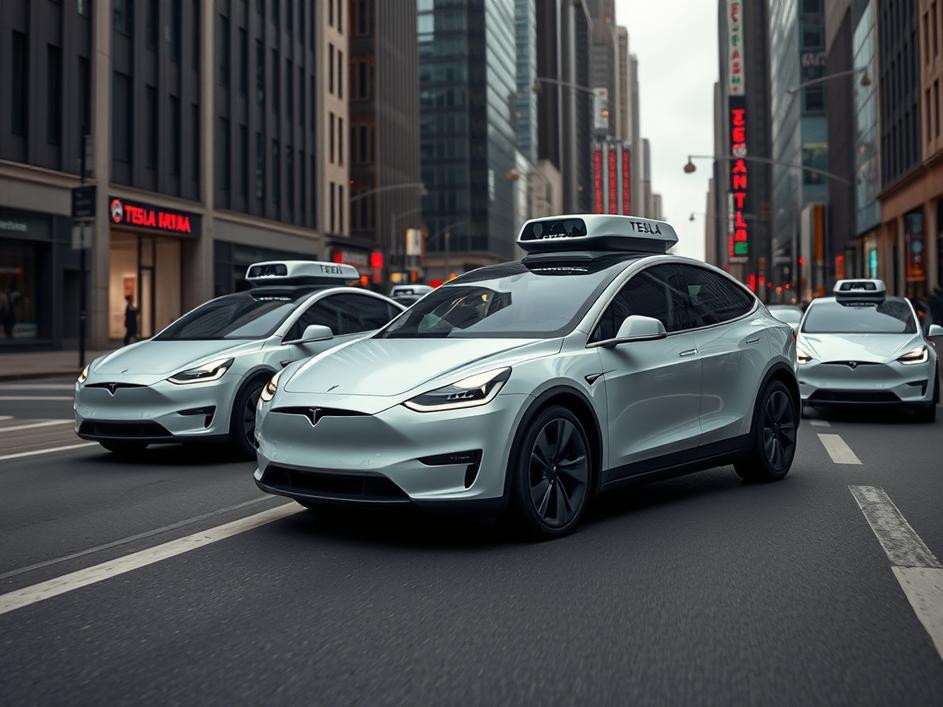
ToggleTesla, a company synonymous with electric vehicles, is apparently making a sharp turn. Recent news indicates CEO Elon Musk is steering the company toward a future heavily reliant on artificial intelligence. This shift comes even as Tesla reported its first-ever drop in annual revenue. It’s a bold move, and one that has investors buzzing – reflected in the uptick in premarket trading despite the less-than-stellar financial report. But what does this pivot really mean for the future of Tesla, and the broader automotive landscape?
Perhaps the most surprising aspect of this strategic redirection is the hinted discontinuation of the Model S and Model X. These models, once the flagships of Tesla’s lineup, represented the pinnacle of the company’s engineering and design prowess. Phasing them out would signal a significant change in Tesla’s identity. It’s a move that suggests a complete commitment to mass-market vehicles and, of course, AI-driven technologies. The Model S and X catered to a premium market, so the transition to focusing solely on mass-market cars, and robotaxis could make economic sense.
Musk’s vision for Tesla increasingly revolves around AI. The company is already deeply invested in autonomous driving technology, and this pivot suggests an acceleration of those efforts. The potential applications of AI in the automotive industry are vast, ranging from fully self-driving cars to advanced driver-assistance systems, and even personalized in-car experiences. Tesla clearly believes that AI is the key to unlocking the next level of growth and innovation. Tesla is likely betting the company on robotaxis with no steering wheel. And to that extent, the mass market vehicles are just a necessary distraction until then.
The market’s initial reaction to this news has been positive, with Tesla shares rising. However, it’s important to remember that stock prices can be volatile, and the long-term success of this strategy hinges on Tesla’s ability to execute its AI ambitions effectively. Investors are likely betting on Musk’s track record of innovation and disruption, but there’s no guarantee that this gamble will pay off. The drop in annual revenue also raises questions about Tesla’s current financial health and its ability to fund these ambitious AI projects. Will the company be able to maintain its competitive edge in the EV market while simultaneously investing heavily in AI research and development?
Tesla faces several potential challenges in its pursuit of AI dominance. The development of truly autonomous driving technology is proving to be more difficult than many initially anticipated. Regulatory hurdles, ethical considerations, and public acceptance all pose significant obstacles. Furthermore, Tesla is not the only company investing in AI; it faces intense competition from established automakers, tech giants, and well-funded startups. The race to develop and deploy AI-powered vehicles is a marathon, not a sprint, and there’s no guarantee that Tesla will emerge as the winner. Musk’s previous comments about full self driving have proven to be very optimistic, but he has a way of eventually achieving his goals.
Tesla’s strategic shift could have significant implications for the broader automotive industry. If Tesla succeeds in developing truly revolutionary AI-powered vehicles, it could force other automakers to accelerate their own AI efforts. This could lead to a wave of innovation and disruption, ultimately benefiting consumers. However, it could also create winners and losers, with some companies struggling to keep up with the pace of change. It’s entirely possible that Tesla’s renewed focus on self driving cars may open up other opportunities that they may not be considering now.
Tesla’s decision to pivot to AI and potentially phase out its flagship models represents a bold and risky bet on the future of transportation. While the company faces numerous challenges, it also has the potential to revolutionize the automotive industry once again. Whether this gamble pays off remains to be seen, but one thing is certain: the road ahead for Tesla will be anything but boring. The key to it all will be how quickly they can get regulators on board.

Comments are closed