

We are a digital agency helping businesses develop immersive, engaging, and user-focused web, app, and software solutions.
2310 Mira Vista Ave
Montrose, CA 91020

2500+ reviews based on client feedback
What's Included?
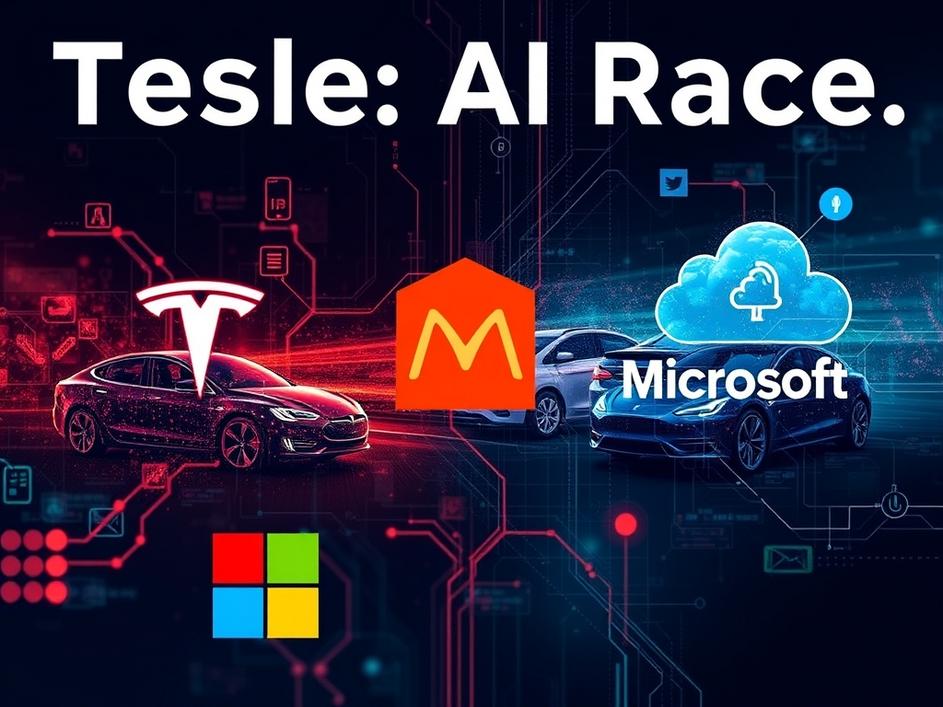
ToggleIt’s earnings season, and that means one thing: every tech company is eager to tell you how they’re dominating the artificial intelligence landscape. This quarter, Tesla, Meta, and Microsoft all highlighted AI as a key driver for future growth. But beyond the buzzwords and optimistic projections, are they actually delivering meaningful results?
Tesla has long been synonymous with AI, primarily through its Autopilot system. While Elon Musk continues to promise fully autonomous driving is just around the corner, the reality remains a bit more complicated. Autopilot, even in its most advanced form, still requires constant driver supervision. The earnings call inevitably touched on the elusive robotaxi fleet, which Musk envisions as a significant revenue stream. However, regulatory hurdles, technological limitations, and safety concerns continue to cast a shadow on this ambitious project. Whether Tesla can actually achieve full self-driving and deploy a successful robotaxi service remains to be seen, but profitability remains the question.
Meta, fresh off a rebrand and a renewed focus on efficiency, is betting big on AI to boost its advertising business. The company claims its AI-powered ad targeting and delivery systems are driving significant improvements in ad performance. And, they claim to be getting better every quarter. CEO Mark Zuckerberg consistently mentions AI in the context of increasing user engagement and monetizing platforms like Facebook and Instagram. However, the elephant in the room is still the Metaverse. While Meta continues to invest heavily in virtual reality and augmented reality technologies, the Metaverse’s adoption rate has been slow, and its future remains uncertain. The degree to which AI can truly revitalize the Metaverse and make it a compelling platform for users and advertisers is a question that only time can answer.
Microsoft has arguably made the most concrete progress in the AI space, largely thanks to its partnership with OpenAI and its integration of AI into its Azure cloud computing platform. Microsoft is trying to position Azure as the go-to platform for developers and businesses looking to build and deploy AI applications. The company’s earnings reports consistently highlight the growing demand for Azure AI services, including OpenAI’s models. And it is showing up in their bottom line. The integration of Copilot into various Microsoft products, like Windows and Office, is also generating excitement, although its long-term impact on productivity and user behavior remains to be fully assessed. The real win for Microsoft has been positioning itself as the essential partner to OpenAI and all the excitement and value generation that partnership entails.
While all three companies are undoubtedly making strides in AI development, it’s crucial to look beyond the hype and assess the real-world impact of these technologies. Are these AI advancements truly improving people’s lives, or are they primarily serving to boost corporate profits? Furthermore, the ethical implications of AI need careful consideration. Issues such as bias in algorithms, data privacy, and the potential for job displacement need to be addressed proactively. The AI race is not just about technological superiority; it’s also about responsible innovation and ensuring that these technologies benefit society as a whole.
So, who’s winning the AI race? It’s still too early to declare a definitive victor. Tesla’s autonomous driving ambitions are compelling, but face significant challenges. Meta’s AI-powered advertising holds promise, but the Metaverse remains a question mark. Microsoft’s Azure AI is showing tangible results, but its long-term impact on the broader technology landscape is yet to be seen. All three companies are investing heavily in AI, and they all have the potential to shape the future of this technology. But ultimately, their success will depend on their ability to translate their AI investments into real-world value and address the ethical considerations that come with this powerful technology. What consumers expect is AI to become invisible. It just works, and it’s baked into every product they use.
What consumers expect is AI to become invisible. It just works, and it’s baked into every product they use. That is happening now, and it will only increase in the future. AI will be a basic feature, not an add-on.


Comments are closed