

We are a digital agency helping businesses develop immersive, engaging, and user-focused web, app, and software solutions.
2310 Mira Vista Ave
Montrose, CA 91020

2500+ reviews based on client feedback
What's Included?
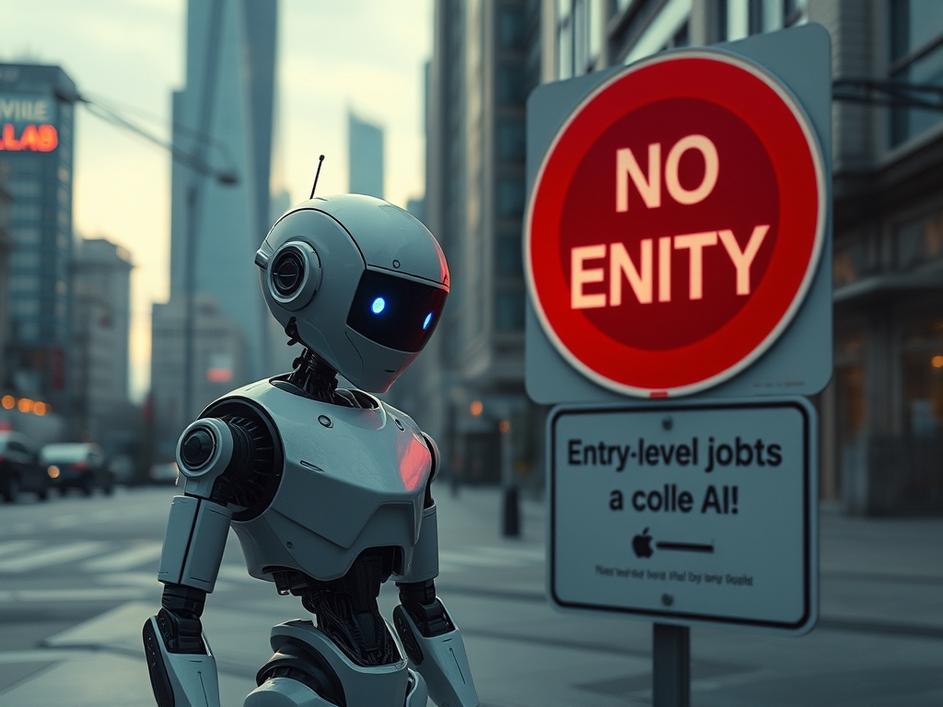
ToggleA new survey from Resume.org paints a worrying picture for young workers. According to their February 2026 findings, a significant number of companies – one in five, to be precise – have completely stopped hiring for entry-level positions. The culprit? Artificial intelligence. It seems the robots aren’t just coming for our jobs; they’re starting at the bottom, eliminating the first rung on the career ladder for many.
The reasoning behind this shift is pretty straightforward. Entry-level tasks are often repetitive, rule-based, and easily automated. Think data entry, basic customer service inquiries, or simple content creation. AI excels at these kinds of jobs, performing them faster, cheaper, and without the need for breaks or salaries. For companies looking to cut costs and boost efficiency, replacing entry-level employees with AI solutions is becoming an increasingly attractive option. It’s a hard pill to swallow, but the economic incentives are undeniable.
This trend has potentially devastating consequences for young people just starting their careers. Entry-level jobs have traditionally served as a crucial training ground, offering invaluable opportunities to learn new skills, gain experience, and build a professional network. Without these initial stepping stones, it becomes significantly harder to enter the workforce and advance in one’s chosen field. We risk creating a generation of underemployed or unemployed young adults, struggling to find their footing in an increasingly automated economy.
While the survey results are alarming, it’s important to avoid falling into despair. The job market is constantly evolving, and new opportunities will undoubtedly emerge as AI continues to reshape the business landscape. The key is to adapt and prepare for these changes. This means focusing on developing skills that are difficult for AI to replicate, such as creativity, critical thinking, complex problem-solving, and emotional intelligence. It also means embracing lifelong learning and being willing to acquire new knowledge and expertise throughout one’s career.
The rise of AI necessitates a fundamental rethinking of our education and training systems. Traditional models that emphasize rote memorization and standardized testing are becoming increasingly obsolete. Instead, we need to prioritize skills that will enable young people to thrive in an AI-driven world. This includes fostering creativity and innovation, promoting critical thinking and problem-solving abilities, and cultivating strong communication and collaboration skills. Furthermore, we need to provide access to affordable and relevant training programs that equip individuals with the technical skills needed to work alongside AI systems.
Companies also have a responsibility to mitigate the negative impacts of AI on the workforce. While automation can undoubtedly lead to increased efficiency and profitability, it shouldn’t come at the expense of human workers. Businesses should invest in retraining and upskilling programs to help employees transition to new roles within the organization. They should also consider implementing policies that promote fair wages, benefits, and working conditions for all employees, including those working in AI-related roles. Furthermore, businesses should be transparent about their AI strategies and engage in open dialogue with employees and stakeholders about the potential impacts of automation.
In some cases, government intervention may be necessary to ensure a just and equitable transition to an AI-driven economy. This could include policies such as universal basic income, which would provide a basic level of income to all citizens regardless of their employment status. It could also include investments in education and training programs, as well as regulations to protect workers from displacement and exploitation. The specific policies will need to be carefully considered and tailored to the unique circumstances of each country and region.
The findings of the Resume.org survey serve as a wake-up call. We can’t afford to ignore the potential consequences of AI on the job market, particularly for young workers. We need to take proactive steps to prepare for these changes and ensure that everyone has the opportunity to thrive in the future of work. This requires a collective effort from individuals, businesses, governments, and educational institutions. By working together, we can create a future where AI complements and enhances human capabilities, rather than replacing them altogether. The time to act is now, before the entry-level dream fades away completely.



Comments are closed