

We are a digital agency helping businesses develop immersive, engaging, and user-focused web, app, and software solutions.
2310 Mira Vista Ave
Montrose, CA 91020

2500+ reviews based on client feedback
What's Included?
ToggleArtificial intelligence is supposed to make our lives easier, right? The promise has always been that AI would automate the tedious tasks, freeing us up to focus on the creative, strategic, and frankly, more enjoyable parts of our jobs. We’d be more efficient, more productive, and maybe even get to leave the office a little earlier. That’s the dream, anyway.
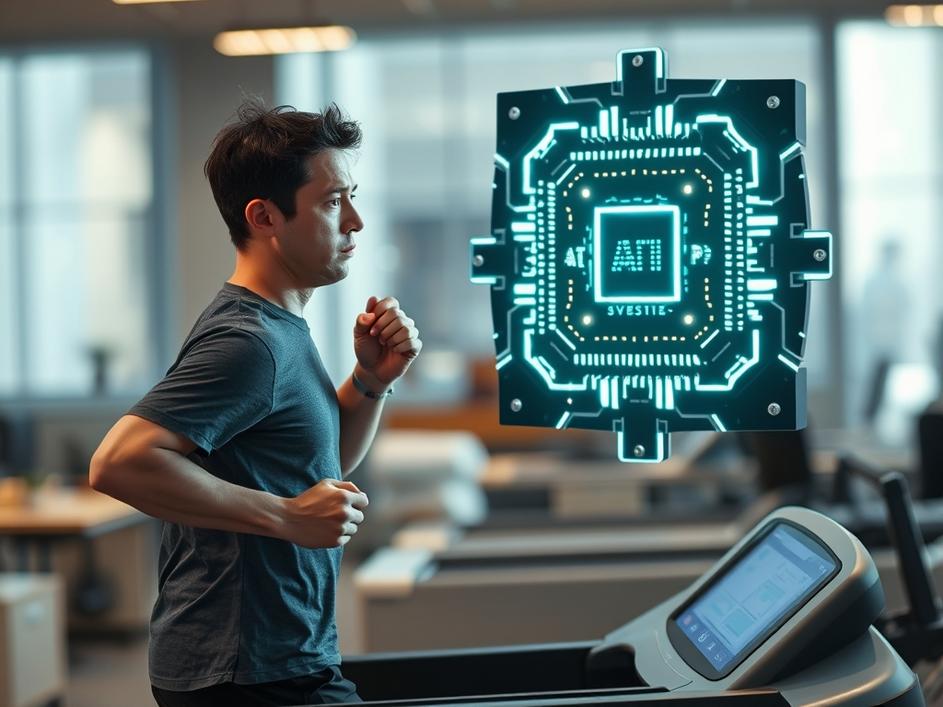
But what happens when the dream clashes with reality? A recent report highlights a growing concern: AI might be speeding up our work, but it’s also blurring the lines between work and rest. The SaaS developer mentioned in the original article isn’t alone. Many are finding that while AI helps them complete tasks faster, the expectation to maintain that accelerated pace is leading to longer hours and fewer breaks. Suddenly, we’re on an AI-powered treadmill, running faster and faster just to keep up.
Think about it. If AI can automate a task that used to take an hour, and now it takes 15 minutes, what happens to those extra 45 minutes? Does it become free time for coffee and conversation? Or does it get filled with more work? Often, it’s the latter. Managers, seeing the increased efficiency, naturally expect more output. And employees, eager to prove their value in an AI-driven world, are often willing to oblige. The result is a subtle but significant erosion of downtime. The five-minute chat at the water cooler becomes a quick scan of emails. The lunch break becomes a working lunch. The lines blur, and before you know it, you’re spending more time “on” than ever before.
This isn’t just about losing a few minutes here and there. It’s about the cumulative effect of constant pressure to perform at an AI-enhanced level. Humans aren’t robots. We need breaks to recharge, to think creatively, and to maintain our mental and physical health. When those breaks are squeezed out, we risk burnout, decreased job satisfaction, and a decline in overall well-being. The irony is that AI, designed to help us, could end up hurting us if we don’t manage it carefully.
We need to talk about productivity. It’s often measured in terms of output, but what about the input? What about the human cost? We can’t simply assume that more output automatically equals more productivity. True productivity takes into account the sustainability of the work environment. Are employees able to maintain the pace without sacrificing their health and well-being? Are they given the resources and support they need to thrive? If the answer to these questions is no, then we’re not really increasing productivity. We’re just pushing people harder, and that’s not a sustainable solution.
So, what can we do? First, we need to be aware of the potential pitfalls of AI-driven efficiency. We need to consciously set boundaries and protect our downtime. This might mean scheduling breaks into our calendars, turning off notifications during lunch, or simply saying no to additional tasks when we’re already feeling overwhelmed. It also means advocating for a more human-centered approach to AI implementation. Managers need to understand that employee well-being is essential for long-term productivity. Companies should invest in training and resources that help employees manage their workload and avoid burnout.
Furthermore, we need to rethink how we measure success in the age of AI. Instead of focusing solely on output, we should also consider factors like employee satisfaction, retention rates, and overall well-being. A company that prioritizes these metrics is more likely to create a sustainable and thriving work environment. And that, in turn, will lead to greater productivity and innovation in the long run.
AI is a powerful tool, but it’s just that – a tool. It’s up to us to decide how to use it. We can choose to let it drive us to exhaustion, or we can harness its power to create a more balanced and fulfilling work life. The choice is ours. Let’s make sure we choose wisely, remembering that the human element is still, and always will be, the most important factor in any equation.


Comments are closed