

We are a digital agency helping businesses develop immersive, engaging, and user-focused web, app, and software solutions.
2310 Mira Vista Ave
Montrose, CA 91020

2500+ reviews based on client feedback
What's Included?
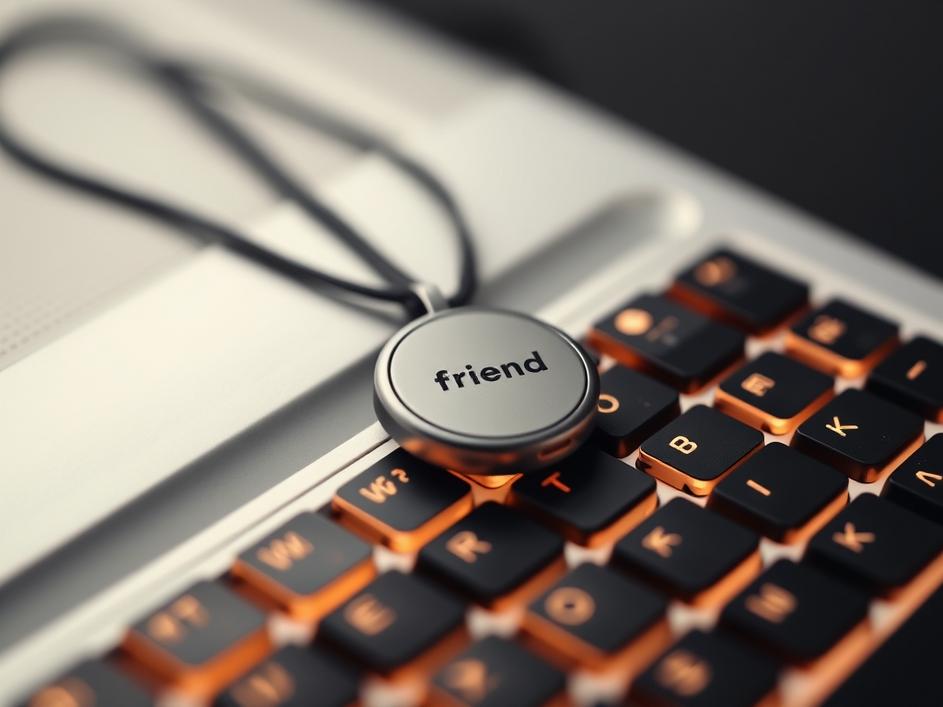
ToggleIn a world increasingly dominated by artificial intelligence, a tiny, unassuming gadget has become a symbol of resistance. The “Friend” device, a circular pendant not much bigger than a quarter, is designed to be a buffer between you and the ever-encroaching world of AI. But why is such a small thing causing such a large reaction? It boils down to control, privacy, and the fear of losing our humanity in the digital age.
The 23-year-old CEO behind the Friend, Avi Schiffmann, isn’t new to the spotlight. He gained prominence for his early and accurate tracking of the COVID-19 pandemic. Now, he’s setting his sights on a new challenge: reigning in the perceived excesses of AI. Schiffmann envisions the Friend as a personal AI assistant that prioritizes user privacy and control, a stark contrast to the data-hungry algorithms of tech giants. He’s not afraid of the backlash; in fact, he seems to thrive on it.
The details of the Friend’s inner workings are still somewhat shrouded in mystery, but the core idea is simple: to filter and curate the information you receive from the digital world. It purportedly uses advanced AI to understand your preferences and priorities, blocking out unwanted notifications, irrelevant news, and intrusive advertisements. Imagine a world where your phone only buzzes when something truly important happens, where your social media feed is filled with content you actually care about, and where your personal data remains, well, personal. This is the promise of the Friend.
The Friend device taps into a growing unease about the pervasive influence of AI in our lives. People are increasingly concerned about data privacy, algorithmic bias, and the potential for job displacement. We see it in the push for stricter data protection laws, the growing awareness of the ethical implications of AI, and the skepticism towards tech companies that seem to prioritize profit over people. The Friend, in this context, is more than just a gadget; it’s a statement. It’s a way for individuals to say, “I want control over my digital life.”
While the Friend has captured the imagination of many, it’s important to approach it with a healthy dose of skepticism. Can a single device truly protect us from the complexities of AI? Are its privacy claims legitimate? And what are the potential unintended consequences of filtering our information so aggressively? These are questions that need to be answered before we fully embrace the Friend as the savior of our digital souls.
And let’s be real, it’s another piece of tech. We’re attaching another item to our bodies that could be tracked and used against us. The road to hell is paved with good intentions, and this feels like a possible first step.
Also, consider the eco-impact of creating a piece of technology. It’s an added burden on the environment. It requires materials, manufacturing processes, and shipping, all of which contribute to carbon emissions and resource depletion.
Whether the Friend succeeds or fails, it has already sparked an important conversation. It has highlighted the need for greater transparency and accountability in the development and deployment of AI. It has empowered individuals to demand more control over their data and their digital experiences. And it has shown that there is a growing appetite for alternatives to the dominant, data-hungry AI models of today.
But is it enough? A pendant cannot solve problems. We need widespread changes, with government regulations and policies.
Only time will tell if the Friend device will live up to its promise. But regardless of its ultimate fate, it serves as a powerful reminder that we are not passive recipients of technology. We have the power to shape its development, to demand ethical standards, and to create tools that empower us rather than control us. The Friend may be a small device, but it represents a growing movement: a pushback against the unchecked power of AI and a demand for a more human-centered digital future.
The “Friend” isn’t just about one device; it is a commentary on technology, humanity, and control. Do we cede our free will to AI or do we fight back? Will the promise of convenience lull us into a false sense of security, or will we demand more? The answers depend on our actions. The future is not yet written. It is in our hands.



Comments are closed