

We are a digital agency helping businesses develop immersive, engaging, and user-focused web, app, and software solutions.
2310 Mira Vista Ave
Montrose, CA 91020

2500+ reviews based on client feedback
What's Included?
ToggleJack Dorsey’s recent decision to slash nearly half of Block’s workforce has sent shockwaves through the tech world. While corporate restructuring and cost-cutting measures are nothing new, the timing of these layoffs – coinciding with rapid advancements in artificial intelligence – has fueled speculation about a potential AI-driven job apocalypse. Are these cuts a glimpse into a future where AI takes over significant portions of the workforce, leaving many unemployed? It’s a question that economists and industry experts are now grappling with, and the answer could reshape the future of work.
It’s important to consider whether Block’s situation is unique or part of a larger trend. Other tech companies have also announced layoffs in recent months, citing economic uncertainty and a need to streamline operations. But the increasing capabilities of AI add a new dimension to the equation. AI is no longer just automating repetitive tasks; it’s starting to handle more complex and creative work. This raises concerns about the long-term impact on various industries, particularly those heavily reliant on knowledge workers.
Economists hold diverse views on the potential impact of AI on employment. Some argue that AI will primarily augment human capabilities, creating new job opportunities and increasing productivity. They believe that while some jobs will be displaced, AI will ultimately lead to a net positive impact on the labor market. Others are more cautious, warning that AI could lead to widespread job losses, particularly for workers in routine or easily automated roles. The key, they say, is for workers to adapt and acquire new skills that complement AI.
The ability to adapt and acquire new skills will be crucial for navigating the AI era. Workers will need to focus on developing skills that are difficult for AI to replicate, such as critical thinking, problem-solving, creativity, and emotional intelligence. Education and training programs will need to evolve to equip workers with these essential skills. Lifelong learning will become the norm, as workers need to continuously update their skills to remain relevant in a rapidly changing job market. There will be a large need for retraining programs, which will require significant resources from the private sector as well as public investment.
While AI is undoubtedly transforming the workplace, it’s important to remember that it’s not a perfect substitute for human workers. AI lacks the creativity, empathy, and nuanced understanding that humans bring to the table. Many jobs require human interaction and judgment, qualities that AI cannot fully replicate. Furthermore, ethical considerations and the need for human oversight will remain crucial in AI-driven environments. The most successful businesses will likely be those that find a way to combine the strengths of AI with the unique capabilities of human workers.
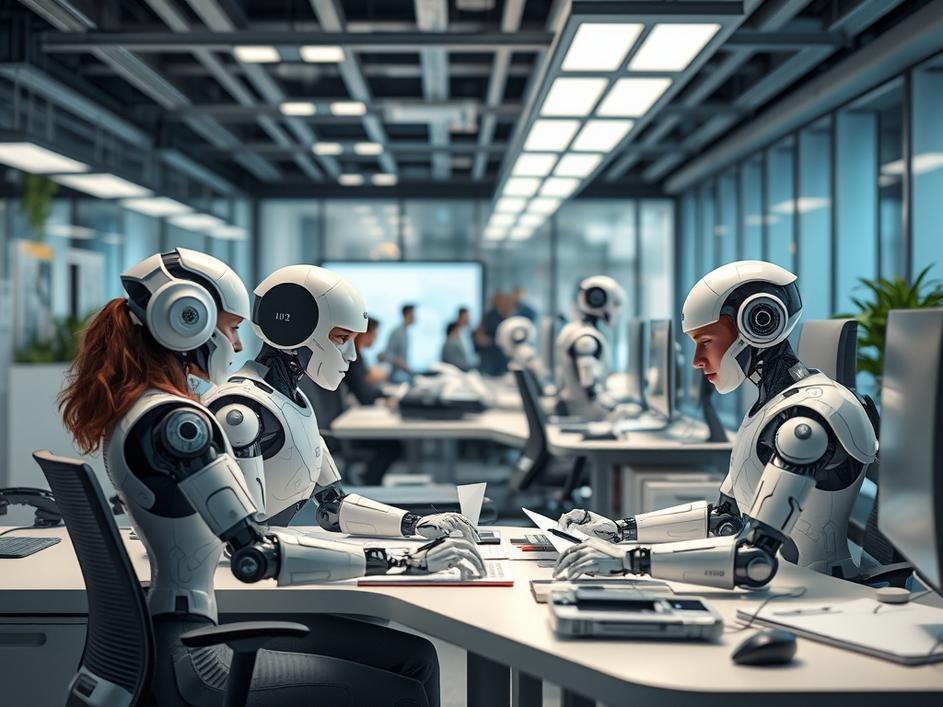
It seems that the future of work will likely involve a hybrid approach, where humans and AI work together to achieve common goals. This will require a shift in mindset, with workers viewing AI as a tool to enhance their capabilities rather than a threat to their jobs. Companies will need to invest in training and development programs to help workers adapt to this new reality. They will also need to create a culture that values both human and artificial intelligence. The key will be to find the right balance, leveraging the strengths of both to create a more productive and fulfilling work environment. It’s less about AI replacing jobs and more about AI changing what those jobs look like.
Even with proactive measures to adapt to the AI era, there’s a risk that some workers will be left behind. It’s important to consider the potential need for a stronger social safety net to support those who are displaced by AI. This could include measures such as universal basic income, expanded unemployment benefits, and job retraining programs. Addressing the potential social and economic consequences of AI is crucial to ensure a just and equitable transition to the future of work. Furthermore, governments may need to consider how to tax increased productivity attributable to AI. If fewer people are employed in the creation of goods and services, there may be fewer people paying income tax. To continue providing services, the government may need to shift the tax burden.
Jack Dorsey’s layoffs at Block serve as a stark reminder of the potential impact of AI on the workforce. While it’s too early to declare an AI-driven job apocalypse, it’s clear that the rise of AI is transforming the job market. The key to navigating this transition is proactive adaptation, with workers, businesses, and governments working together to embrace the opportunities and mitigate the risks. By investing in education and training, fostering a culture of lifelong learning, and strengthening the social safety net, we can ensure that AI benefits everyone, not just a select few.



Comments are closed