

We are a digital agency helping businesses develop immersive, engaging, and user-focused web, app, and software solutions.
2310 Mira Vista Ave
Montrose, CA 91020

2500+ reviews based on client feedback
What's Included?
ToggleFor years, the narrative has been that artificial intelligence and automation would first target white-collar jobs. We’ve seen AI writing marketing copy, algorithms managing investment portfolios, and chatbots handling customer service. But now, the winds are shifting. According to Fred Voccola, a CEO in the trade tech industry, blue-collar jobs are next in line for a technological takeover. It’s a scary thought for anyone working in the trades, but how real is the threat?
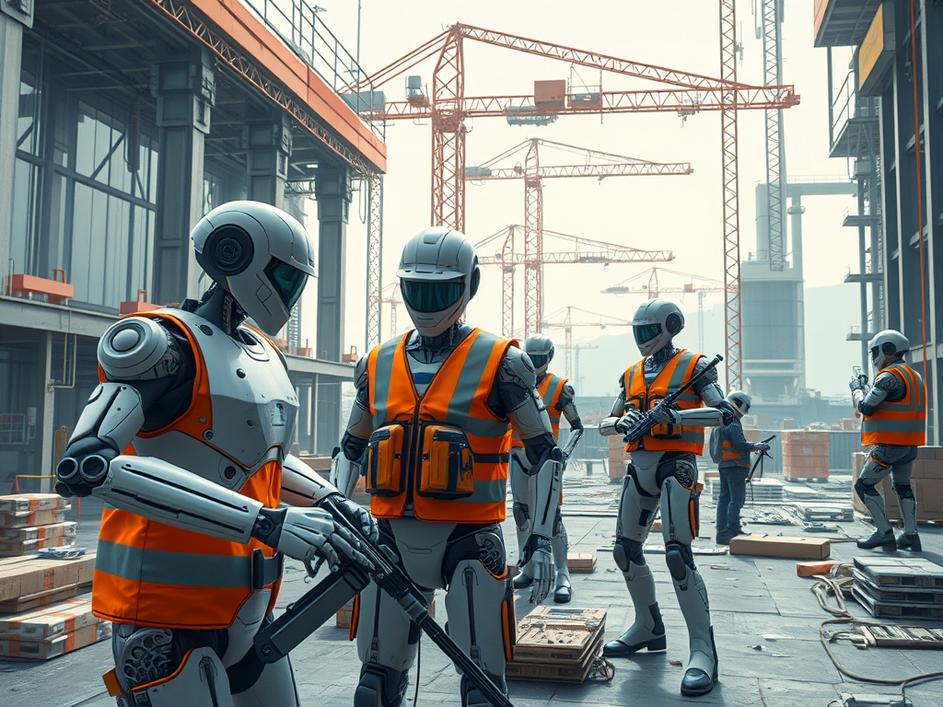
Voccola’s prediction hinges on the rapid advancements in robotics. He believes that within three years, robotics will become mainstream, and within a decade, they could handle over 50% of trade-related tasks. This isn’t just about replacing factory workers with automated assembly lines; it’s about robots performing tasks like plumbing, electrical work, and even construction. Consider the construction industry, always facing labor shortages and demanding physical work. Robots could, in theory, lay bricks, install wiring, and even operate heavy machinery with greater precision and efficiency. The initial investment would be high, but the long-term cost savings could be significant for companies willing to take the plunge.
While the idea of robots building houses and fixing pipes seems futuristic, there are real-world challenges to consider. The trades require adaptability and problem-solving skills that are difficult to program into a machine. Every plumbing job is different; every electrical issue requires a unique diagnostic approach. Can robots truly handle the unpredictable nature of these tasks? Furthermore, there’s the issue of regulation and safety. Who is liable if a robot makes a mistake and causes damage or injury? These are complex questions that need to be addressed before robots become widespread in the trades.
Despite the potential for automation, there are certain aspects of blue-collar work that are difficult to replicate. The human element of craftsmanship, the ability to assess a situation with intuition, and the communication skills needed to interact with clients are all valuable assets. A robot might be able to install a pipe, but it can’t explain the problem to a homeowner or offer alternative solutions based on their needs. The trades are also about building relationships and establishing trust, something that robots are unlikely to achieve.
So, what does this mean for the future of blue-collar work? It doesn’t necessarily mean mass unemployment. Instead, it likely means a shift in the skills required to succeed in the trades. As robots take over repetitive and physically demanding tasks, human workers will need to focus on higher-level skills such as programming, maintenance, and troubleshooting. Trade schools and apprenticeship programs will need to adapt their curricula to reflect these changing demands. Learning how to work alongside robots, rather than being replaced by them, will be crucial. This could also mean an increase in specialized roles. Instead of being a general plumber, you might become a “robotic plumbing technician”, responsible for maintaining and repairing the robotic systems doing the grunt work.
The widespread adoption of AI and robotics in the trades could have significant economic implications. On one hand, it could lead to increased productivity, lower costs, and higher profits for businesses. On the other hand, it could exacerbate income inequality and lead to job displacement for workers who lack the skills to adapt. Governments and educational institutions will need to play a role in mitigating these negative effects by investing in retraining programs and providing support for workers who are displaced by automation. Consider the potential for a universal basic income, or other social safety nets, to help those whose jobs are completely replaced.
Ultimately, the future of blue-collar work is about more than just efficiency and cost savings. It’s about the value we place on human labor and the importance of providing meaningful work for everyone. While AI and robotics have the potential to transform the trades, they should not come at the expense of human dignity and opportunity. It will be important to find a balance between technological progress and the preservation of human values. We need to be asking ourselves if increased profits are worth the cost of mass unemployment, and what kind of society we want to create.
The prospect of AI taking over blue-collar jobs is both exciting and unsettling. While the potential benefits of increased efficiency and productivity are undeniable, we must also be mindful of the potential consequences for workers and society as a whole. A measured approach, focused on education, retraining, and social support, is essential to ensure that the future of work is one that benefits everyone. The key will be adapting and learning new skills. The trades aren’t going away, but how they’re done certainly will be, in some capacity. Prepare for that change; don’t fear it. Those who embrace the evolution will find new opportunities within it.



Comments are closed