

We are a digital agency helping businesses develop immersive, engaging, and user-focused web, app, and software solutions.
2310 Mira Vista Ave
Montrose, CA 91020

2500+ reviews based on client feedback
What's Included?
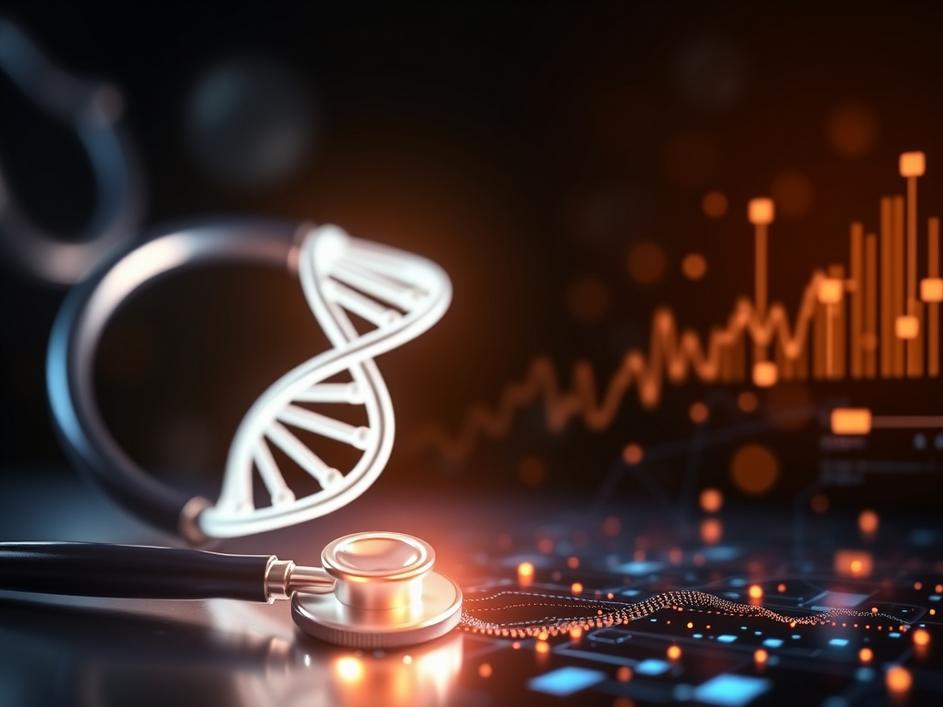
ToggleWhen you go to the doctor, you probably think about the person in the white coat, the stethoscope, or maybe even the waiting room magazines. But there’s a huge, quiet revolution happening behind the scenes, one that’s making our medical care much smarter. It’s all about information – how we collect it, how we understand it, and how we use it to figure out what’s going on inside our bodies. Think about all the tests you might have: blood work, X-rays, scans. Each of these creates a mountain of data. For a long time, doctors had to sort through this information almost entirely on their own, relying on their experience and what they could remember. But now, we’re seeing a big shift, thanks to something called informatics. This isn’t just about computers in hospitals; it’s about a whole new way of thinking, where technology helps doctors make better decisions, faster. It’s about getting to the root of a problem with more certainty and at an earlier stage. This quiet shift is truly changing how we approach health, offering a future where diagnostics are not just accurate, but also incredibly insightful.
So, what does ‘informatics’ actually mean when we talk about healthcare? Simply put, it’s the science of managing and using information. Imagine your body is a complex story, told in numbers, images, and microscopic details. Informatics is like the ultimate librarian and storyteller for that information. It involves using computer science and information technology to gather, store, analyze, and present medical data. This isn’t just about electronic health records, though those are a big part of it. It’s about taking data from lab results, medical images, patient histories, genetic tests, and even wearable devices, and putting it all together in a way that makes sense. It helps doctors see patterns they might miss, connect dots between seemingly unrelated symptoms, and even predict potential health issues before they become serious. Instead of just looking at one piece of the puzzle, informatics helps us see the whole picture, giving doctors a much clearer view of a patient’s health journey. It’s about transforming raw data into meaningful insights that can directly impact patient care.
Why should we care about ‘smarter diagnostics’? The answer is pretty simple: it can save lives and improve health dramatically. When doctors can pinpoint a problem earlier and more accurately, treatment can start sooner. This is incredibly important for serious conditions like cancer, heart disease, or rare illnesses where every day counts. Think about how a tiny change in a blood test might be a clue for a serious condition, but it could easily be overlooked without the right tools. Informatics can flag these subtle changes, prompting doctors to investigate further. It also helps reduce misdiagnoses, which unfortunately still happen too often. Getting the wrong diagnosis can lead to ineffective treatments, unnecessary worry, and wasted time. By making diagnostics smarter, we’re not just talking about incremental improvements; we’re talking about a fundamental shift that means fewer missed opportunities, more precise care, and ultimately, better outcomes for patients. It means getting the right answer, faster, and with more confidence.
One of the most exciting aspects of informatics in diagnostics is its ability to find patterns. Human brains are amazing, but they have limits, especially when dealing with vast amounts of information. Computers, on the other hand, excel at sifting through millions of data points, noticing tiny connections or trends that a person might never spot. For example, an informatics system can compare a patient’s genetic makeup with their symptoms and their family history, then cross-reference that with millions of similar cases from around the world. It can help predict how a patient might react to a certain medication or if they are at higher risk for a particular disease. This isn’t about replacing the doctor’s intuition or expertise; it’s about giving them a powerful magnifying glass and a super-fast research assistant. It means moving beyond a ‘one-size-fits-all’ approach to medicine and towards highly personalized care, where treatments are tailored to the individual’s unique biological profile. This ability to see the bigger picture, to connect the dots across vast datasets, is truly where the magic happens.
It’s easy to imagine a future where machines take over everything, but that’s not what informatics is about in diagnostics. Instead, it’s about giving doctors better tools, making their jobs easier, and letting them focus on what they do best: caring for people. Imagine a doctor having all a patient’s information – every test, every image, every specialist’s note – organized, analyzed, and presented clearly, highlighting the most important details. This saves them precious time that would otherwise be spent sifting through piles of paper or clicking through endless digital records. It also helps reduce human error, which is a natural part of any complex job. When a computer can flag a potential drug interaction or remind a doctor of an unusual test result, it adds an extra layer of safety for the patient. So, while the technology is complex, its purpose is simple: to support healthcare professionals, making them more efficient, more informed, and ultimately, better equipped to provide excellent care. It’s a partnership between human intelligence and artificial intelligence, working together for better health.
Looking to the future, the promise of informatics in diagnostics is huge. We can expect even more accurate, faster, and less invasive ways to understand our health. Imagine a future where a simple, comprehensive diagnostic process can tell you not only what’s wrong, but also the best path to wellness, all tailored just for you. But, like any big change, there are challenges. We need to make sure patient data is kept safe and private. We also need to develop these systems in a way that’s fair and unbiased, making sure they work well for everyone, regardless of their background. Training doctors and healthcare staff to effectively use these powerful new tools is another big task. And, of course, there’s the cost of developing and implementing such advanced technology. It’s not a simple fix; it’s a long journey that requires careful thought, ethical considerations, and ongoing investment. However, the potential rewards – healthier lives, more effective treatments, and a deeper understanding of human biology – make this journey incredibly worthwhile. This is a field that will keep evolving, constantly pushing the boundaries of what’s possible in medicine.
The conversation around informatics and smarter diagnostics isn’t just for scientists and tech experts. It’s for all of us. It’s about understanding how our healthcare system is quietly transforming, piece by piece, into something more precise, more proactive, and more personal. The idea that computers and data can help doctors see things they couldn’t before, leading to earlier diagnoses and more effective treatments, is genuinely exciting. While there are clearly obstacles to navigate – questions about privacy, fairness, and access – the overall direction is positive. This movement towards data-driven medicine offers a glimpse into a future where illnesses are caught sooner, treatments are sharper, and our health journey is understood with unprecedented clarity. It’s a future where the silent work of data analysis means louder, clearer answers for those who need them most, promising a brighter and healthier outlook for us all.


Comments are closed