

We are a digital agency helping businesses develop immersive, engaging, and user-focused web, app, and software solutions.
2310 Mira Vista Ave
Montrose, CA 91020

2500+ reviews based on client feedback
What's Included?
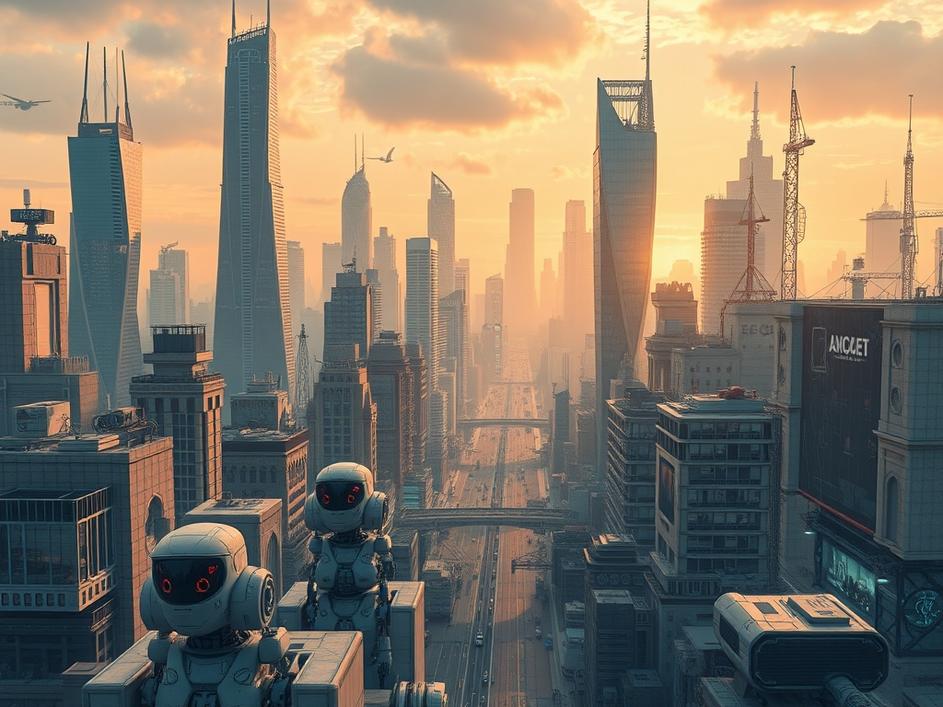
ToggleWe hear a lot about automation these days, usually tied to doom and gloom scenarios about robots taking our jobs. And it’s true, the rise of artificial intelligence and automated systems is changing the landscape of work. Industries from manufacturing to customer service are seeing tasks, and even entire roles, being handled by machines. But is it all bad news? The conversation often focuses on the jobs lost, but what about the jobs created, the improvements in efficiency, and the potential for a better work-life balance for humans?
It’s easy to get caught up in the fear-mongering around automation. Thinking that robots will replace us all is a common worry. However, the reality is more complex. Automation isn’t just about replacing workers; it’s about augmenting them. Many jobs involve repetitive, tedious tasks that can be easily automated. By taking over these tasks, automation frees up human workers to focus on more creative, strategic, and interpersonal aspects of their jobs. Think of it as a collaboration between humans and machines, where each plays to their strengths.
Automation isn’t just eliminating jobs; it’s also creating new ones. These so-called “new collar” jobs require a different set of skills than traditional roles. Instead of manual labor, they demand expertise in areas like data analysis, AI maintenance, and robotics programming. These jobs often require specialized training and education, but they also offer higher salaries and more opportunities for career advancement. And so, the transition to an automated economy will require a significant investment in education and reskilling programs.
One of the biggest benefits of automation is increased efficiency. Machines can work faster, longer, and more accurately than humans, leading to higher productivity and lower costs. This increased efficiency can boost economic growth, create new markets, and improve the overall standard of living. Companies can use automation to streamline their operations, improve product quality, and offer better services to their customers. But it’s crucial that the gains from automation are shared equitably across society.
Beyond the economic benefits, automation also has the potential to improve our work-life balance. By taking over repetitive and time-consuming tasks, automation can free up our time for more important things, like family, hobbies, and personal development. Imagine a world where we work fewer hours, have more time for leisure, and feel less stressed about work. It is a positive outcome that automation is supposed to bring. Automation can make this a reality, but only if we manage the transition carefully.
So, how do we ensure that automation benefits everyone, and not just a select few? The key lies in careful planning and preparation. Governments, businesses, and educational institutions need to work together to create policies and programs that support workers through the transition. This includes investing in education and training, providing social safety nets for those who lose their jobs, and promoting policies that ensure fair wages and working conditions. This also can create some labor movements and some union expansions to guarantee the safety and fair treatment of the workers. Without that, it can go in a totally opposite way.
We also need to consider the ethical implications of automation. As machines become more intelligent, we need to think about issues like bias, accountability, and privacy. How do we ensure that AI systems are fair and unbiased? Who is responsible when an automated system makes a mistake? How do we protect people’s privacy in an increasingly data-driven world? Addressing these ethical questions is essential to building a future where automation benefits all of humanity.
Automation is not something to be feared, but something to be embraced, but cautiously. It has the potential to transform our lives in positive ways, but only if we manage it responsibly. Instead of viewing automation as a threat, we should see it as an opportunity to create a better future for ourselves and for generations to come. It’s important to prepare well in advance, as things can change drastically. But as long as we remember the need of the people, we can have a better world for all of us.


Comments are closed