

We are a digital agency helping businesses develop immersive, engaging, and user-focused web, app, and software solutions.
2310 Mira Vista Ave
Montrose, CA 91020

2500+ reviews based on client feedback
What's Included?
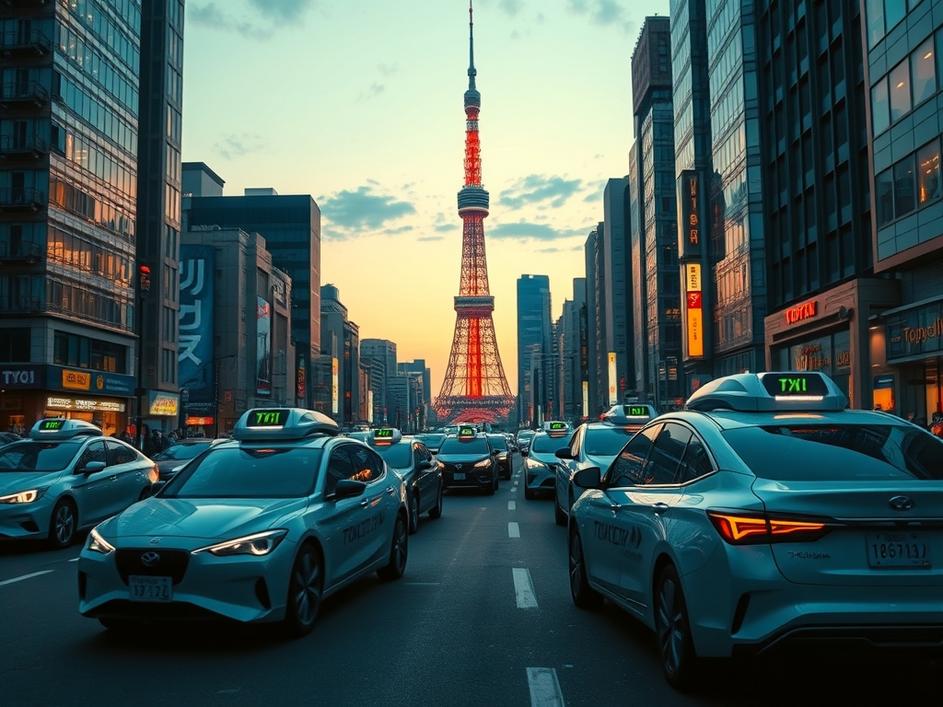
ToggleImagine a Tokyo where self-driving taxis navigate the bustling streets, offering a convenient and futuristic transportation option. That vision is moving closer to reality as Uber, Nissan, and Wayve, a UK-based autonomous vehicle startup, have announced a collaboration to launch a robotaxi pilot program in the city by late 2026. This partnership represents a significant move in the race to develop and deploy autonomous vehicle technology, particularly in a dense urban environment like Tokyo. It’s exciting because Tokyo is notoriously challenging for drivers, human or otherwise, due to its narrow streets and complex traffic patterns.
Tokyo presents a unique set of challenges and opportunities for autonomous vehicle development. The city’s high population density and intricate road network demand sophisticated AI and navigation systems. However, Tokyo is also known for its technological innovation and openness to new transportation solutions. Successfully navigating Tokyo’s streets would be a major win for any autonomous vehicle company, proving the technology’s viability in complex real-world scenarios. Furthermore, Japan faces a growing shortage of taxi drivers, making robotaxis a potentially vital solution to maintain transportation services for its aging population. This partnership allows Uber to expand its reach, Nissan to showcase its automotive expertise, and Wayve to test and refine its self-driving technology in a challenging, real-world environment. It’s a win-win-win, theoretically.
What makes Wayve different? Unlike many other companies in the autonomous vehicle space that rely heavily on detailed maps and pre-programmed routes, Wayve takes a different approach. They are developing AI-powered systems that learn to drive through experience, similar to how humans learn. This approach, called “end-to-end” deep learning, uses cameras and sensors to perceive the environment and make driving decisions in real-time. This could give Wayve’s system an edge in handling unexpected situations and navigating uncharted areas, a crucial advantage in a dynamic city like Tokyo. This is in contrast to relying on meticulously mapped roads, which can become obsolete quickly due to construction or road changes.
Uber’s involvement is equally important. As the world’s leading ride-hailing platform, Uber brings a massive user base and extensive experience in managing transportation networks. Uber’s app will likely be the primary interface for customers to request and use the robotaxi service. This integration will make the transition to autonomous vehicles seamless for many users. Uber’s data and logistical expertise will also be valuable in optimizing the robotaxi service, such as determining optimal routes and predicting demand. It also allows Uber to stay relevant in a future where autonomous vehicles potentially disrupt the traditional ride-hailing model.
While the prospect of robotaxis in Tokyo is exciting, several challenges remain. Regulatory hurdles, public acceptance, and ensuring the safety and reliability of the technology are all critical considerations. The pilot program will be crucial in gathering data, addressing concerns, and refining the technology before a full-scale deployment. Public perception will be vital; people need to trust that these vehicles are safe and reliable. Furthermore, ethical considerations surrounding autonomous vehicles, such as accident liability, need to be addressed. But, this collaboration has the potential to reshape urban transportation in Tokyo and beyond.
The collaboration between Uber, Nissan, and Wayve is not just about launching a robotaxi service in Tokyo. It is a glimpse into the future of urban mobility. Autonomous vehicles have the potential to reduce traffic congestion, improve road safety, and make transportation more accessible and affordable for everyone. As the technology matures and regulations evolve, we can expect to see more and more cities embracing autonomous transportation solutions. Tokyo, with its unique challenges and opportunities, is an ideal proving ground for this technology. The success of this pilot program could pave the way for widespread adoption of robotaxis in other cities around the world. It also signifies a shift in the automotive industry, from traditional car ownership to mobility-as-a-service, where transportation is viewed as a utility rather than a product.
The journey towards fully autonomous transportation is a long and complex one. However, the partnership between Uber, Nissan, and Wayve represents a significant step forward. By combining their respective strengths and expertise, they are well-positioned to tackle the challenges and unlock the potential of robotaxis. While it is too early to predict the ultimate outcome, this collaboration is undoubtedly one to watch. The robotaxi revolution may not be here yet, but it’s definitely on the horizon, and Tokyo is poised to be at the forefront.



Comments are closed