

We are a digital agency helping businesses develop immersive, engaging, and user-focused web, app, and software solutions.
2310 Mira Vista Ave
Montrose, CA 91020

2500+ reviews based on client feedback
What's Included?
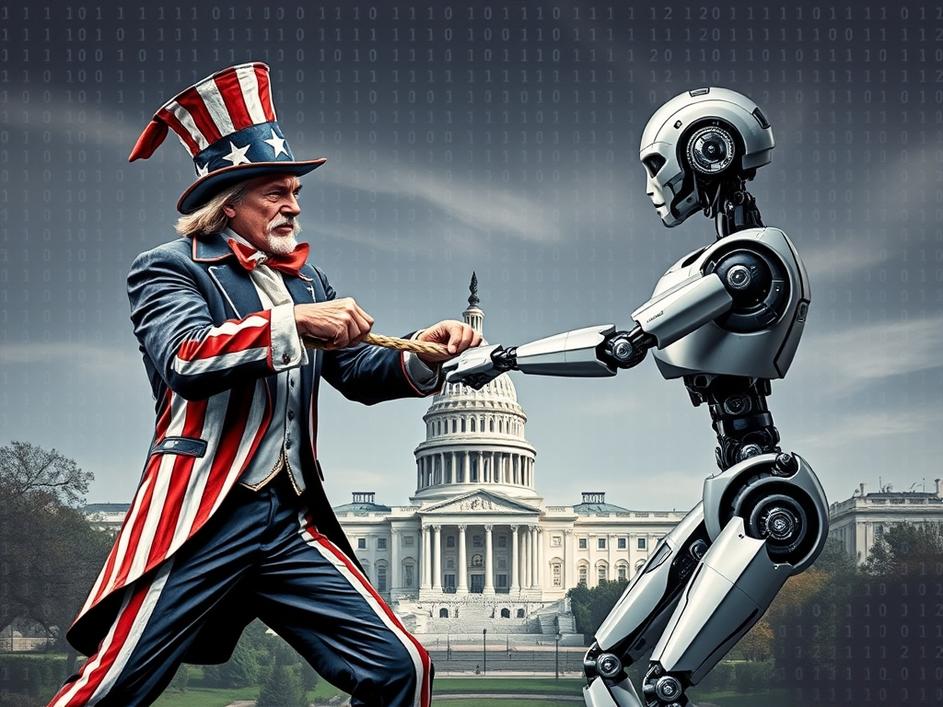
ToggleDonald Trump has announced plans to ban Anthropic AI from all federal government agencies. This is more than just a policy change; it’s a statement. Trump argues that Anthropic, a company developing advanced AI models, is too closely aligned with what he calls “radical left, woke” ideologies. He believes this alleged bias could compromise the integrity and security of governmental operations. The move raises serious questions about the intersection of political beliefs, technological advancement, and government contracts.
The impetus for this ban reportedly stems from Anthropic’s refusal to comply with demands from the Pentagon. While specific details of these demands remain somewhat vague, it’s likely they revolve around issues of data handling, algorithm transparency, or perhaps even the modification of AI outputs to align with specific governmental objectives. Anthropic, like many AI companies, likely values its independence and the integrity of its AI models. Yielding to political pressure could set a dangerous precedent, potentially opening the door for future manipulation of AI technology for partisan gain.
The accusation of “radical left, woke” bias against Anthropic warrants careful examination. AI models are trained on vast datasets, and if these datasets reflect existing societal biases, the AI can inadvertently perpetuate or even amplify them. However, bias can also be introduced through the design of the AI itself, the choice of training parameters, or even the way the AI’s outputs are interpreted. Determining whether Anthropic’s AI genuinely exhibits a politically motivated bias would require a thorough and impartial audit of its algorithms, training data, and output analysis.
A ban on Anthropic AI could have significant implications for federal agencies. Many agencies are increasingly relying on AI for tasks such as data analysis, cybersecurity, fraud detection, and even citizen services. If Anthropic’s technology is indeed superior in certain applications, a ban could hinder these agencies’ ability to operate efficiently and effectively. Moreover, it could stifle innovation by limiting the government’s access to cutting-edge AI solutions. Agencies might be forced to seek alternative AI providers, potentially at a higher cost or with less satisfactory results.
This situation underscores the ongoing debate about the control and independence of AI technology. Should the government have the right to dictate how AI companies develop and deploy their technologies, particularly when those technologies are being used in the public sector? Or should AI companies retain their autonomy, even if it means potentially clashing with political agendas? The answer is far from simple, as both sides have legitimate concerns. On one hand, the government has a responsibility to ensure that the technologies it uses are aligned with its values and objectives. On the other hand, unchecked government control over AI could lead to censorship, manipulation, and the suppression of dissenting viewpoints. So many times technology is seen as some kind of silver bullet, but as AI gets more and more powerful, oversight is going to be needed.
Trump’s proposed ban on Anthropic AI must also be viewed within the broader context of American politics. Trump has a history of targeting companies and organizations that he perceives as being critical of him or his policies. This move against Anthropic could be seen as another example of this pattern, designed to punish a company for allegedly failing to align with his political views. The ban also serves as a potent signal to other AI companies, warning them that they could face similar consequences if they are perceived as being too “woke.” This type of tactic is one reason why many do not support him.
The situation with Anthropic AI highlights the challenges of integrating advanced technologies into government operations. As AI becomes increasingly sophisticated and pervasive, it’s crucial to establish clear ethical guidelines, transparency standards, and accountability mechanisms. This is not just a political game. It would be a great idea for the government to bring people together to collaborate instead of trying to put their foot down. The government needs to foster open dialogue between policymakers, AI developers, and the public to ensure that AI is used responsibly and ethically, and in a way that benefits all members of society. A way to promote this is to fund education for both the public and government officials about AI. This is important as AI technology is new and ever-changing.
The challenge lies in striking a balance between promoting technological innovation and upholding fundamental principles. The government should not stifle innovation or discriminate against companies based on their perceived political leanings. However, it also has a legitimate interest in ensuring that the technologies it uses are secure, reliable, and aligned with its values. Transparency, accountability, and independent oversight are essential to navigate this complex landscape and prevent the politicization of AI. With AI getting stronger, the public needs to know how these tools are being used. The only way for the public to know what is up is for the government to be transparent.
The discussion surrounding AI and its role in society requires nuance, reason, and a willingness to engage in constructive dialogue. Demonizing entire companies or technologies based on broad generalizations or unsubstantiated claims is not only unproductive but also dangerous. Instead, we need to focus on addressing specific concerns about bias, security, and accountability, while fostering a culture of innovation and collaboration. Hopefully, something positive will come out of all of this and we can improve AI for everyone.
The Trump administration’s proposed ban on Anthropic AI serves as a cautionary tale about the potential for political interference in the development and deployment of AI technology. While concerns about bias and security are legitimate, they should be addressed through evidence-based analysis, transparent processes, and open dialogue. Ultimately, the goal should be to create a framework for responsible AI governance that promotes innovation, protects fundamental values, and ensures that AI benefits all members of society.



Comments are closed