

We are a digital agency helping businesses develop immersive, engaging, and user-focused web, app, and software solutions.
2310 Mira Vista Ave
Montrose, CA 91020

2500+ reviews based on client feedback
What's Included?
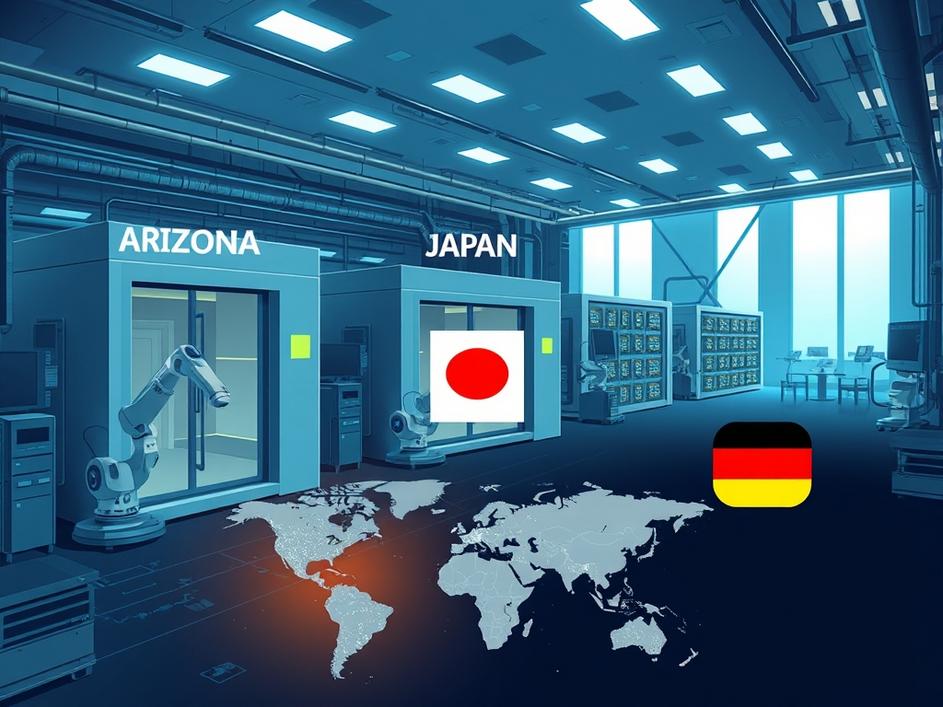
ToggleTSMC is the world’s biggest maker of advanced chips, and its recent announcements read like a map of where the next wave of silicon will be made. The company said it will soon have three new fabs operating outside Taiwan – one in Arizona, another in Japan, and a third in Germany. At the same time, Bank of America lifted its price target for the stock to $590, signaling that analysts see the expansion as a boost to earnings. For anyone who follows the tech sector, these moves are a reminder that chip supply is still a geopolitical chess piece. They also show how TSMC is trying to spread risk while staying close to its biggest customers.
The desert plant in Chandler, Arizona, is already humming with production of 5‑nanometer chips. TSMC now says a second line of equipment will be installed in the second half of 2026, followed by a third line later on. The new tools are expected to raise the fab’s output by roughly a third, which should help meet the growing demand from U.S. chip designers. The timing lines up with the U.S. government’s push for domestic semiconductor capacity, and the state has offered tax incentives to keep the project moving. While the Arizona site still depends on a steady supply of water and power, the company says it has secured long‑term contracts to avoid any bottlenecks.
In Japan, TSMC is building a fab that will focus on 28‑nanometer and 22‑nanometer technologies, which are still needed for automotive and industrial applications. The plant is slated to start production in early 2025, a little earlier than the European site. By locating the factory near existing Japanese semiconductor suppliers, TSMC hopes to cut logistics costs and tap into a skilled workforce. The move also fits Japan’s own policy of strengthening its chip ecosystem after recent shortages. For TSMC, the Japanese fab provides a foothold in a market that values reliability and long‑term supply contracts.
The German project, announced in partnership with the state of Saxony, will be the first TSMC fab in the continent that can produce 5‑nanometer chips. Construction is expected to finish by 2027, with a capacity that could rival the Arizona site once fully ramped up. Europe has been eager for a local source of cutting‑edge silicon, especially after the pandemic exposed the fragility of overseas supply chains. However, the German effort faces higher labor costs and stricter environmental rules, which could push the budget higher than originally planned. TSMC says it is working closely with local authorities to meet both speed and sustainability goals.
Bank of America analysts raised their fair‑value estimate for TSMC’s shares to $590, up from the previous $540 level. The analysts point to the three new fabs as a catalyst for revenue growth, especially as the company can now offer customers more localized production options. They also note that the expansion reduces the risk of a single‑point failure in Taiwan, which has been a concern after recent weather events and geopolitical tensions. On the downside, the analysts warn that the capital outlay required for the new plants will increase debt, and that any delay in equipment delivery could dent short‑term earnings. Still, the net view remains positive, and the stock has already seen a modest rally since the announcement.
Putting factories in three different regions spreads risk, but it also means TSMC will have to manage a more complex supply chain. Suppliers of chemicals, lithography machines, and clean‑room components will need to coordinate across time zones and regulatory regimes. For customers, the benefit is a shorter lead time and less exposure to shipping disruptions. The move also puts pressure on rivals like Samsung and Intel, who must decide whether to follow a similar multi‑regional strategy or double down on existing sites. In the end, TSMC’s aggressive expansion signals that the demand for chips will stay strong for years to come, and that the company is willing to invest heavily to stay ahead. The BofA price target increase is a nice extra validation, but the real story will be how quickly the new fabs can turn silicon into revenue.
Source: Original Article


Comments are closed