

We are a digital agency helping businesses develop immersive, engaging, and user-focused web, app, and software solutions.
2310 Mira Vista Ave
Montrose, CA 91020

2500+ reviews based on client feedback
What's Included?
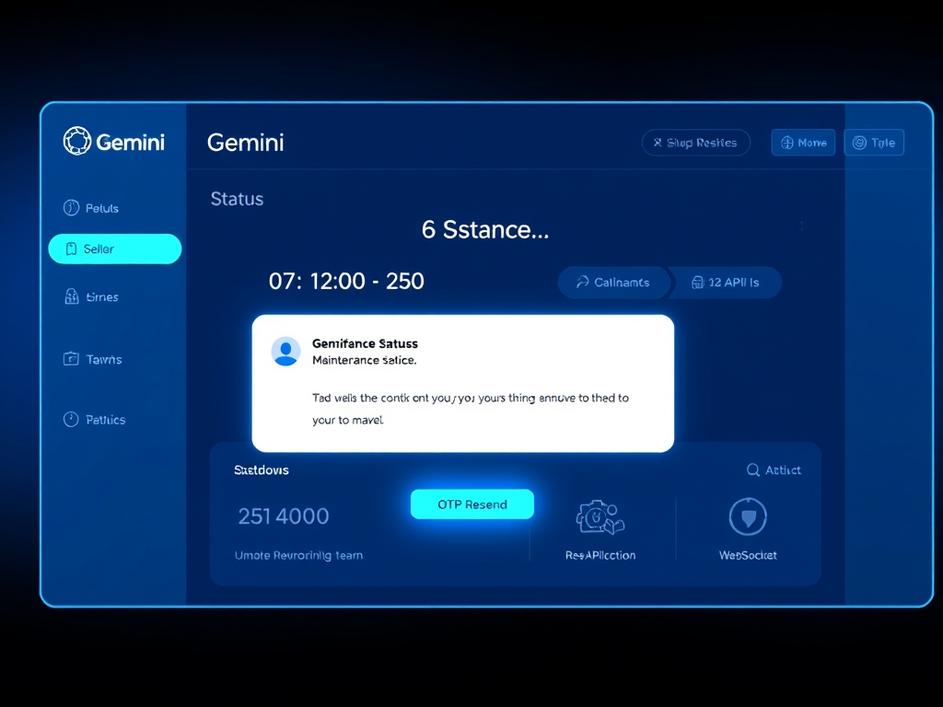
ToggleGemini just posted a scheduled maintenance alert for its REST and WebSocket market‑data feeds. At first glance it looks like a routine tech update, but for anyone who relies on real‑time price streams it’s a big deal. The notice shows a countdown for OTP (one‑time‑password) resends, which hints at a deeper security check happening behind the scenes. When a platform that powers hundreds of bots and trading desks goes offline, even a short window can ripple through strategies, risk models, and order execution. That’s why the blog post is worth a deeper look – not just to inform, but to help traders plan around it.
In plain terms, the REST API is like ordering a pizza: you send a request, you get a response, and then you wait for the next order. WebSocket, on the other hand, is a live feed – a constant stream of updates that never stops unless you cut the line. Traders use REST for occasional price checks, account balances, or order status, while high‑frequency bots lean on WebSocket for tick‑by‑tick market data. When Gemini says both will be down, it means both the “pizza delivery” and the “live news ticker” are paused. That can force a switch to backup providers or a temporary halt in automated trading, which is why the timing and communication matter.
The notice includes a line that reads “Resend OTP in: 30 seconds” and a button to request a new code. This isn’t just a UI detail – it signals that Gemini is tightening login security while the system is in maintenance mode. Users who need to log in to check the status or to re‑authenticate their bots will face a short wait, and the repeated OTP prompts can feel annoying. However, the short countdown also shows Gemini’s intent to keep the interruption brief. For traders, the practical tip is to have a secondary authentication method ready, like a hardware token, so you don’t get stuck waiting for a code when you need to act fast.
Any downtime brings risk. If a bot is mid‑trade when the feed stops, it could miss a price move and end up with an unintended position. Some traders mitigate this by building “circuit‑breaker” logic that pauses order placement when market data isn’t arriving. Others keep a fallback data source, such as a secondary exchange or a public data feed, to fill the gap. The scheduled nature of Gemini’s maintenance gives you a chance to prepare: pause open positions, enable alerts, or switch to a backup API before the clock hits zero. The real risk isn’t the outage itself, but the surprise factor – and that’s where clear communication from Gemini makes a difference.
Gemini’s status page is straightforward, offering an email and text subscription for updates. The fact that they publish the exact OTP resend timer and give a clear “Resend OTP” button shows they want users to stay informed, not left guessing. In the crypto world, where exchanges have a mixed reputation for reliability, that kind of transparency builds trust. It also lets developers embed the status feed into monitoring dashboards, so they can automate alerts when the maintenance starts or ends. From my perspective, this is a good practice that other platforms should copy – clear, actionable information beats vague “we’re working on it” messages every time.
Scheduled maintenance is inevitable for any tech‑heavy service, but the way it’s handled can either smooth or shake a trader’s workflow. Gemini’s notice gives you a concrete window to adjust, a reminder to have backup plans, and a glimpse into their security mindset with the OTP flow. Use the downtime to double‑check your bot’s error handling, test alternative data sources, and maybe even take a short break from the screens. In the end, a well‑communicated pause can make your trading setup more resilient, and that’s a win no matter how many seconds the market data is offline.
Source: Original Article



Comments are closed