

We are a digital agency helping businesses develop immersive, engaging, and user-focused web, app, and software solutions.
2310 Mira Vista Ave
Montrose, CA 91020

2500+ reviews based on client feedback
What's Included?
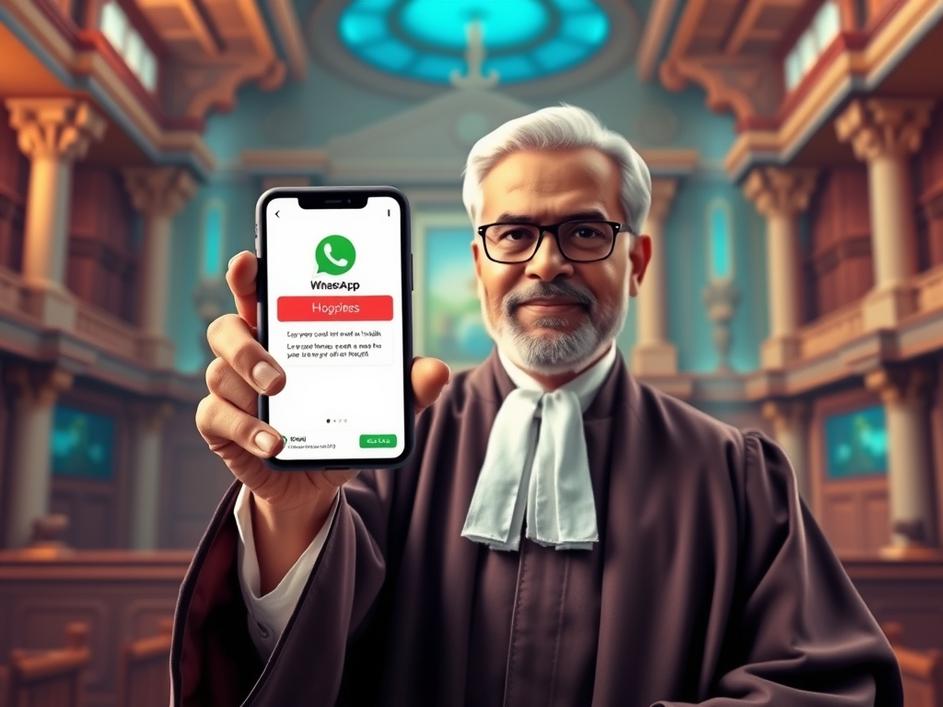
ToggleFor years, the legal system has wrestled with how to adapt to the digital age. Sending official court summons through regular mail seems almost archaic in a world dominated by instant messaging and email. But can a WhatsApp message really be considered a valid legal notification? The Nagpur bench of the Bombay High Court recently weighed in on this question, and their answer is a resounding yes – with certain caveats, of course.
The ruling came about when a case questioned the validity of a summons delivered via WhatsApp. The court examined the existing laws and regulations surrounding electronic communication, specifically referencing the relevant sections that acknowledge the validity of electronic records. The key takeaway? If the recipient acknowledges receipt of the WhatsApp message (the famous blue ticks certainly help!), and if the court is satisfied that the message was indeed delivered to the correct person, then the summons is considered legally valid. This isn’t just a minor procedural tweak; it’s a fundamental shift in how the Indian legal system approaches communication.
Why is this decision so important? Think about the sheer efficiency. Traditional methods of delivering summons can be slow, unreliable, and costly. Certified mail can get lost, addresses can be outdated, and the entire process can be a logistical nightmare, especially in a country as vast and diverse as India. WhatsApp, on the other hand, offers a near-instantaneous and relatively inexpensive way to reach individuals. It can be particularly useful in cases where the person being summoned is difficult to locate or resides in a remote area. This ruling has the potential to drastically reduce delays and improve the overall efficiency of the judicial process. For example, someone living abroad can immediately get court notifications.
However, this move towards digital summons is not without its challenges. One of the biggest concerns is authentication. How can a court be absolutely certain that the WhatsApp message was actually sent by the court and received by the intended recipient? Impersonation and fraud are real possibilities in the digital realm. The court will need to establish clear protocols and safeguards to verify the authenticity of electronic summons. This might involve using official court-verified WhatsApp accounts, employing encryption methods, or requiring digital signatures. Another concern is access to technology. While smartphone penetration is increasing rapidly in India, not everyone has access to a smartphone or reliable internet connectivity. The legal system needs to ensure that individuals who lack access to these technologies are not disadvantaged.
This ruling from the Bombay High Court is more than just a legal technicality; it’s a reflection of a broader trend towards digitalization in India. The government is actively promoting the use of technology to improve governance and deliver services more efficiently. From online portals for filing taxes to digital platforms for accessing government schemes, technology is transforming the way India operates. The legal system cannot afford to be left behind. By embracing digital tools like WhatsApp, courts can become more accessible, efficient, and responsive to the needs of the citizens. This decision could potentially pave the way for other innovative uses of technology in the judicial process, such as video conferencing for court hearings or online dispute resolution mechanisms. It is also important to acknowledge that the use of WhatsApp summons will have to make sure there are alternative options for those who don’t have ready access to the technology. The technology adoption should not be a hurdle to justice.
It is important to consider the privacy implications of using WhatsApp for official communications. WhatsApp is owned by Meta, a company with a complex track record regarding data privacy. Courts must establish guidelines to make sure that sensitive information shared via WhatsApp is protected and that individuals’ privacy rights are respected. This might involve using end-to-end encryption, limiting the amount of personal information shared through the platform, and providing individuals with the option to receive summons through traditional methods if they prefer.
The Bombay High Court’s decision to uphold the validity of WhatsApp summons is a bold step towards modernizing the Indian legal system. It offers the potential to improve efficiency, reduce delays, and make justice more accessible to all. However, it is crucial to address the concerns surrounding authentication, security, access to technology, and privacy. By implementing appropriate safeguards and protocols, the Indian legal system can harness the power of digital communication while upholding the principles of fairness and justice. This ruling marks a significant milestone in the ongoing effort to adapt the legal system to the realities of the digital age, and it will be interesting to see how other courts across the country respond to this precedent.



Comments are closed