

We are a digital agency helping businesses develop immersive, engaging, and user-focused web, app, and software solutions.
2310 Mira Vista Ave
Montrose, CA 91020

2500+ reviews based on client feedback
What's Included?
ToggleWhen news broke that a school in southern Iran had been hit, the world felt a familiar sting of grief. But what followed was something you don’t see every day – a handful of people, armed only with a laptop and a handful of algorithms, decided to chase the people responsible. They weren’t detectives with badge numbers, they were volunteers who believed that technology could give a voice to the voiceless. Their mission felt simple: gather proof, share it, and hope the evidence forces the world to act.
The attack on the primary school left dozens dead and many more injured. Families were left scrambling for answers, and governments were quick to issue statements that sounded rehearsed. In the chaos, official investigations moved slowly, and the details that mattered – who ordered the strike, who pulled the trigger – remained hidden. That vacuum is where the small team stepped in, determined to fill the gaps with data that could not be ignored.
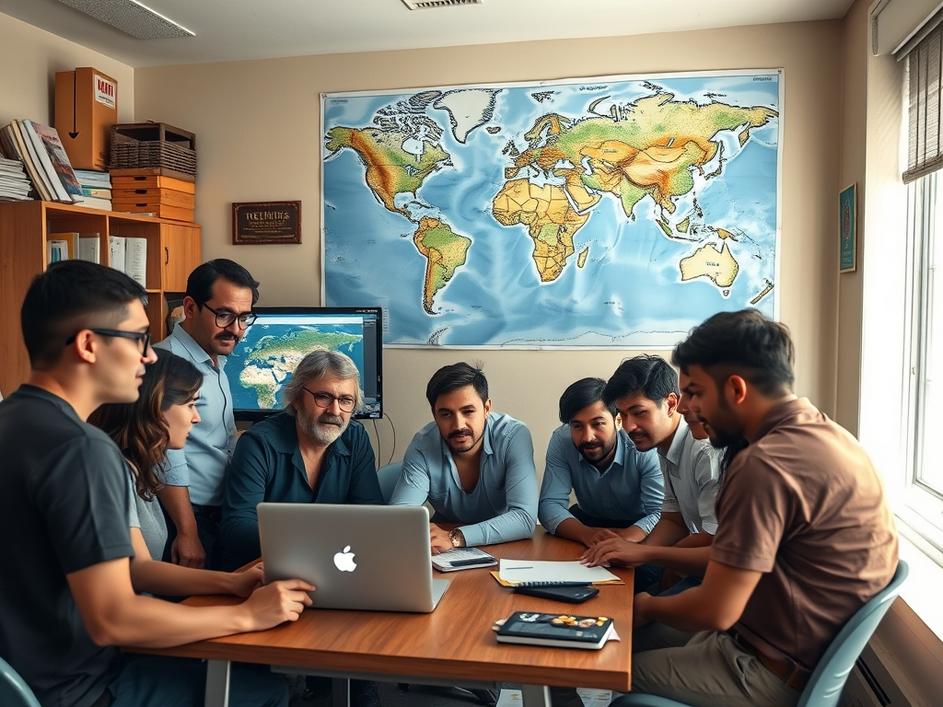
The group is a mix of former journalists, computer engineers, and human‑rights activists. One member spent years covering conflict zones, another built AI models for satellite image analysis, and a third ran a nonprofit that monitors war‑related violations. They share a common belief that ordinary tools, when used cleverly, can expose hidden crimes. Their laptop is loaded with open‑source software, and their office is a modest co‑working space, not a secret bunker.
Using publicly available satellite pictures, they run AI that can spot changes in terrain – a new crater, a disturbed building, a vehicle movement. They pair that with social‑media scraping tools that collect videos and photos posted by locals. The AI then flags content that matches patterns of weaponry or tactics linked to known perpetrators. In a few hours, they can turn a flood of raw data into a concise map that shows where the attack likely originated.
Collecting data is only half the battle. They have to make sure what they present is accurate, because a false claim could endanger lives or undermine credibility. To do that, they cross‑check satellite clues with eyewitness accounts, use reverse‑image searches to weed out doctored footage, and sometimes reach out to on‑the‑ground contacts for confirmation. All of this happens while they protect their own identities; operating in a space where powerful actors might try to silence them means they use encrypted channels and keep their digital footprints minimal.
Once the team assembles a dossier, they share it with international bodies, journalists, and NGOs. Their reports have already appeared in a few major news outlets, prompting calls for independent investigations. In some cases, the evidence has forced governments to reconsider their diplomatic stance, because ignoring clear proof becomes politically costly. The team’s work shows that even a small, tech‑savvy group can push the needle on accountability.
What happened in Iran is not an isolated case. Across the globe, ordinary people are using smartphones, drones, and AI to document abuses that would otherwise stay hidden. The success of this small team suggests a future where the line between professional investigators and everyday citizens blurs. When more eyes can see and verify what’s happening on the ground, it becomes harder for perpetrators to act with impunity.
Watching this story unfold made me realize how much power lies in a curious mind paired with the right tools. It’s easy to feel helpless when large‑scale violence erupts, but the reality is that technology has lowered the barrier to entry for truth‑seeking. I think the biggest takeaway is that accountability no longer belongs solely to governments or big NGOs; it can be a collective effort, driven by people who care enough to learn a bit of code and spend hours sifting through data.
The road ahead is still tough. War crimes will keep happening, and those responsible will try to stay hidden. But the fact that a small team can shine a light on a single tragedy gives hope that more groups will follow suit. If we keep improving the tools, sharing knowledge, and protecting those who use them, the chances of bringing justice to victims increase. In the end, a laptop and some clever algorithms might just become as important as any courtroom in the fight for human rights.


Comments are closed