

We are a digital agency helping businesses develop immersive, engaging, and user-focused web, app, and software solutions.
2310 Mira Vista Ave
Montrose, CA 91020

2500+ reviews based on client feedback
What's Included?
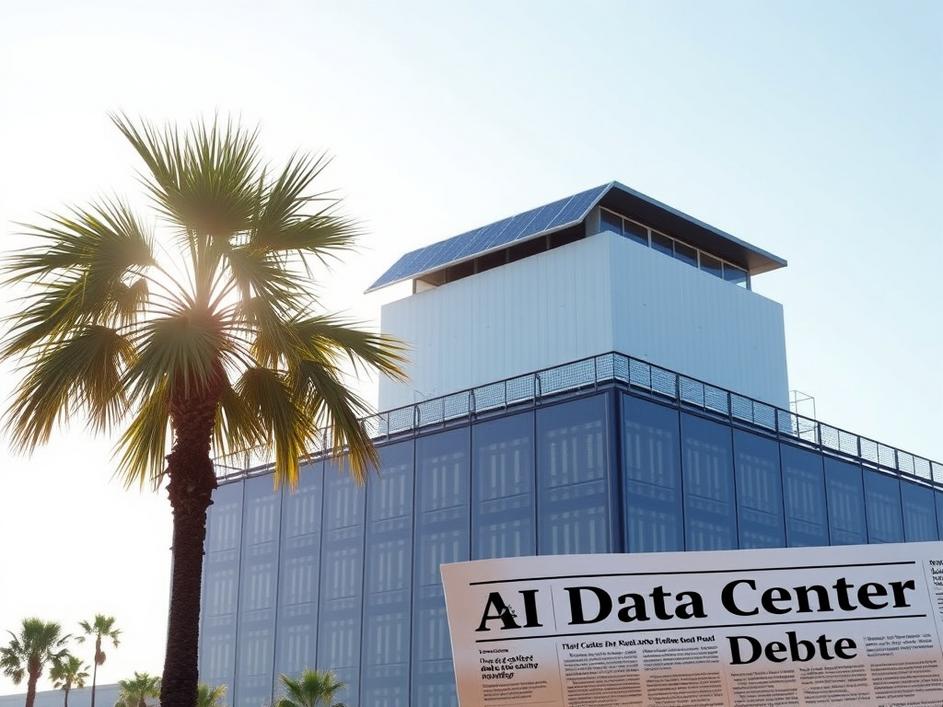
ToggleSeeing a reader’s note in the letters section can feel like a surprise. It reminds us that the big tech stories we read are not just abstract ideas. Real people live next to the places where those ideas become reality. In this case a Palm Beach Post reader asked the paper to look again at the claim that AI data centers are a huge problem for the environment. The question is simple: are we being sold a one‑sided story? The answer matters because it shapes how voters, officials and businesses think about future projects. By writing about this, I hope to give the issue a little more depth than a short column can provide.
The letter asked whether the argument that AI data centers will drain power and hurt climate goals holds up under scrutiny. The writer pointed out that many of the numbers quoted in the original article seemed to come from a handful of high‑profile companies, not from the average server farm. They also wondered if the piece considered the fact that many new facilities are being built with renewable energy contracts already in place. In short, the reader wanted a clearer picture of what the real energy load looks like, not just a headline.
People often hear that AI models need massive amounts of computing power, and that power comes from electricity. That is true, but the story is more nuanced. A data center that runs AI workloads can be designed to be highly efficient, using advanced cooling, waste‑heat recovery and power‑usage‑effectiveness (PUE) metrics that are far better than older facilities. Moreover, many operators are signing long‑term deals for wind or solar power, which can lock in clean energy for years. On the other hand, the demand for AI services is growing fast, and some projects still rely on fossil‑fuel grids, especially in regions where renewable options are limited. The balance between these forces determines the overall impact.
The original article focused heavily on worst‑case scenarios. It quoted a study that looked at a handful of the largest AI clusters and extrapolated those numbers to the whole industry. That approach can exaggerate the average footprint. It also ignored the fact that many AI workloads are moving to the edge, meaning they run on smaller, local servers that use far less power than a giant cloud hub. The letter’s point about renewable contracts is also important. When a data center signs a power‑purchase agreement for solar, the electricity it uses is effectively clean, even if the grid mix in the area still includes coal. Ignoring these details paints an incomplete picture.
Beyond the technical side, there is a human element. New data centers bring jobs, tax revenue and sometimes community investment. In Palm Beach County, a proposed AI hub could mean higher‑pay positions for technicians, engineers and support staff. At the same time, residents worry about noise, traffic and the visual impact of large buildings. The environmental concern is real, but it can be addressed with thoughtful planning—like siting the facility away from residential zones, using green roofs and ensuring that any excess heat is put to use, perhaps for nearby district heating. A balanced approach looks at both the economic boost and the environmental safeguards.
So what should readers take away? First, question any claim that lumps all AI data centers together. The industry is diverse, and many operators are already moving toward greener practices. Second, demand transparency from companies about their energy sources and efficiency measures. Third, engage local officials in the conversation early, so that community concerns are heard and mitigated. By keeping the dialogue open, we can avoid the trap of assuming every new tech project is either a disaster or a miracle. The letter to the Post did exactly that – it asked for more nuance, and that is the kind of curiosity we need as AI continues to grow.
Source: Original Article



Comments are closed