

We are a digital agency helping businesses develop immersive, engaging, and user-focused web, app, and software solutions.
2310 Mira Vista Ave
Montrose, CA 91020

2500+ reviews based on client feedback
What's Included?
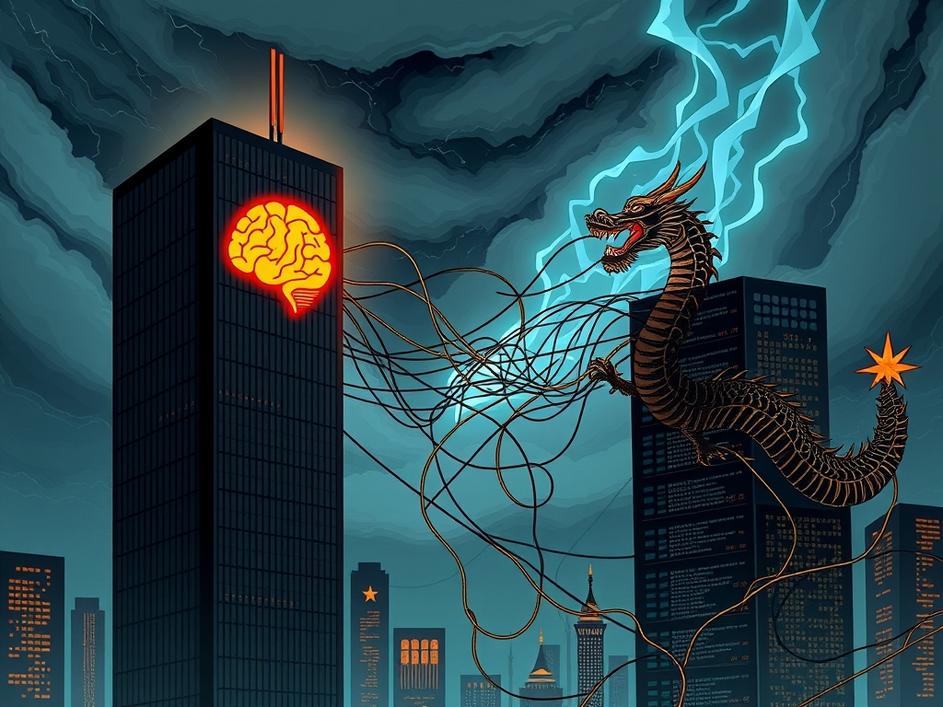
ToggleEarlier this month Anthropic mailed a formal note to the U.S. Senate Committee on Banking, Housing, and Urban Affairs. In the letter the startup warned that a Chinese technology giant was trying to lift its AI know‑how in a way that broke the rules. The tone was sharp, calling the effort “brazen” and “illicit.” By putting the complaint on the record, Anthropic pushed the issue into the political arena, forcing lawmakers to look at how AI talent and data move across borders.
According to Anthropic, Alibaba’s research team ran a series of experiments aimed at “distilling” the capabilities of large language models that Anthropic has built. The claim is that Alibaba used publicly available outputs, then fed them into its own training pipelines to recreate similar performance. Anthropic says this goes beyond normal benchmarking and crosses into theft of proprietary methods. The letter lists specific technical steps that, if true, would let Alibaba shortcut years of development for a fraction of the cost.
The AI field is moving fast, and the gap between a startup and a tech giant can be measured in months. If a company can copy a competitor’s model without paying for the research, the incentive to invest in original work drops sharply. That would slow progress overall and make it harder for smaller players to stay afloat. Anthropic’s warning is therefore not just about one deal; it is a signal that the rules of the game may be changing.
China has a long history of encouraging the acquisition of foreign technology. Policies ranging from joint‑venture requirements to talent‑attraction programs have helped local firms catch up quickly. Critics say that this approach sometimes blurs the line between legitimate learning and outright copying. Alibaba’s alleged actions fit into a broader pattern where Chinese firms look for shortcuts to compete on the global stage. That context makes the Senate’s attention understandable, even if the specifics are still under investigation.
International IP law was written for hardware and software, not for massive neural networks that evolve with data. Determining whether “distillation” counts as infringement is a murky question. Some experts argue that using publicly released model outputs is fair use, while others point out that the scale and intent matter. Ethically, copying a competitor’s breakthrough without acknowledgment feels wrong, but the law may not yet have a clear answer. This case could become a landmark for future AI disputes.
One practical step is to limit the amount of information that can be extracted from an API. Rate limits, watermarking of generated text, and monitoring for unusual query patterns can help. Another tactic is to keep core training data and architecture details private, sharing only what is needed for customers. Anthropic itself has been experimenting with “model fingerprinting” to spot copies in the wild. While none of these measures are foolproof, they raise the cost of illicit copying.
If the Senate decides to act, Alibaba could face fines, export restrictions, or a ban on certain AI activities in the United States. Even without formal penalties, the reputational hit could make partners wary. Investors might demand stronger compliance programs, and the company could see slower growth in its AI‑driven services. On the other hand, if the allegations prove unfounded, Alibaba could claim victimhood and push back against what it sees as a political weapon.
This episode shows that AI is no longer just a tech issue; it is a diplomatic and security matter as well. Nations will need clearer rules about what counts as acceptable model sharing and what crosses the line into espionage. Multilateral bodies may be called upon to draft standards that balance openness with protection of innovation. Until then, we can expect more letters, more hearings, and more tension between rivals.
The best outcome would be a framework that lets companies learn from each other without stealing the hard‑won breakthroughs that fuel the industry. That means transparent licensing, shared safety standards, and a willingness to enforce penalties when lines are crossed. For readers, the takeaway is simple: AI is powerful, and with power comes responsibility. Whether you are a founder, an investor, or just an observer, keeping an eye on how the rules evolve will be as important as watching the next model headline.
Source: Original Article



Comments are closed