

We are a digital agency helping businesses develop immersive, engaging, and user-focused web, app, and software solutions.
2310 Mira Vista Ave
Montrose, CA 91020

2500+ reviews based on client feedback
What's Included?
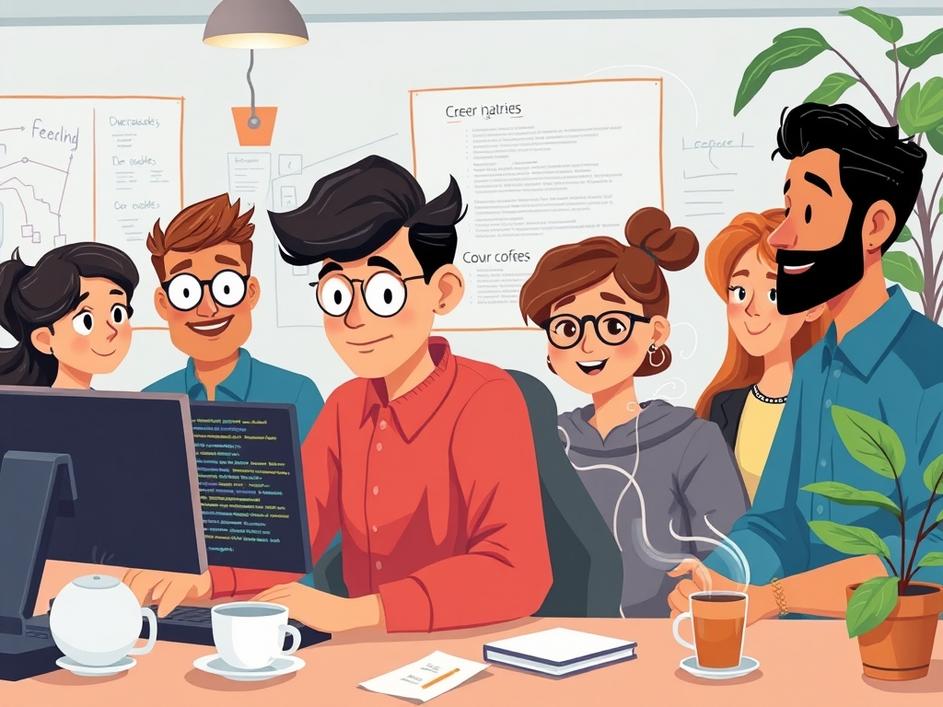
ToggleIt’s always interesting when a new word finds its way into our everyday language, especially one that eventually makes it into the dictionary. But it’s even more fascinating when that word comes from the fast-paced world of technology and has a meaning that’s a little more complex than it first appears. Recently, there’s been talk that “vibe-coding” is slated to become Collins Dictionary’s “word of the year” for 2025. Now, if you just hear “vibe-coding,” you might picture a team of programmers working together in perfect harmony, making great code while enjoying a chill atmosphere. You might imagine a group that just *gets* each other, where the code flows naturally because everyone is on the same wavelength. That sounds pretty good, right? Who wouldn’t want to “vibe-code”?
But the way this term is actually defined, and what it points to in the tech industry, tells a different story. It’s less about a positive feeling and more about a warning sign that experienced folks in the field are starting to notice. This new word, making its way into our lexicon, gives us a chance to think about how we build software and what values we put first in the development process. It forces us to look past the surface and consider what truly makes for strong, lasting technology, beyond just a good feeling in the room.
So, what *is* vibe-coding, according to the insights behind its dictionary entry? It’s not about working in a cool, relaxed environment where everyone’s happy. Instead, it talks about a specific kind of problem that can show up in how we make software. The core idea highlights a risk when engineers, especially those new to the field, start specializing too early in their careers. Imagine a situation where someone learns just one very specific part of coding or one particular tool, without getting a solid understanding of the bigger picture of computer science.
When this happens, their work might lean heavily on what feels right or what seems to align with the team’s existing style, rather than being built on deep, critical thinking and a full grasp of the underlying principles. It’s about prioritizing a superficial sense of agreement or a “good vibe” within the code and the team, over the hard work of truly understanding why something works, or why a certain approach is the best one. This means decisions might be made based on intuition or a desire for harmony, rather than rigorous technical evaluation. It’s a situation where the appearance of fitting in or going with the flow can sometimes overshadow the need for challenging assumptions and digging deep into complex problems. This approach, while perhaps making for smooth immediate interactions, can hide bigger issues down the road.
This definition of “vibe-coding” holds a critical lesson, especially for those just starting out in engineering. In many ways, junior developers are often encouraged to adapt quickly, to absorb the team’s way of doing things, and to contribute without making waves. This is natural for learning and fitting into a new environment. But if “vibe-coding” becomes the norm, it can become a double-edged sword. New engineers might learn to prioritize “fitting the vibe” over asking tough questions, over understanding the fundamental concepts that underpin the code.
They might be praised for quickly adopting team practices, even if those practices are not technically optimal or if they don’t fully grasp the ‘why’ behind them. This can stop them from developing a strong, independent critical mind. Instead of becoming engineers who can truly innovate and solve complex, novel problems, they might become very good at maintaining the status quo. This stunts their growth and limits their ability to bring fresh, challenging perspectives to the table. The focus shifts from foundational mastery to superficial conformity, which isn’t good for personal development or for the quality of the software itself. It’s a trap that many could fall into without proper guidance and a culture that values deep understanding.
Beyond individual developers, “vibe-coding” also shines a light on some broader shifts happening in the tech industry. There’s often immense pressure to deliver quickly, to iterate fast, and to launch products at a rapid pace. In this environment, sometimes the rigorous, slower process of deep architectural thinking, extensive code review, and thorough understanding can take a back seat. When a team leans too heavily on “vibe-coding,” it might mean that decisions are rushed, or that challenging discussions about technical debt, scalability, or long-term maintainability are avoided in favor of reaching a quicker consensus.
It can create an echo chamber where everyone agrees because it feels easier, not necessarily because it’s the best technical path. This can lead to building fragile systems, accumulating technical debt that becomes very hard to pay off later, and creating codebases that are difficult for new people to understand or for existing team members to modify safely. It speaks to a cultural preference for smooth sailing over the sometimes messy, but ultimately more productive, process of critical examination and constructive disagreement. It’s about how the pursuit of team harmony, while valuable, can sometimes inadvertently stifle the kind of robust debate needed for true engineering excellence.
So, if “vibe-coding” is a potential pitfall, how do we steer clear of it? The answer lies in fostering a culture that balances team cohesion with rigorous technical standards. Experienced engineers and leaders have a huge role to play here. They need to mentor junior staff, not just showing them *how* to do things, but also explaining *why*. This means encouraging questions, even difficult ones, and creating a safe space for challenging existing assumptions and code patterns. It’s about valuing a solid understanding of computer science fundamentals – data structures, algorithms, operating systems, networking – alongside practical coding skills.
Companies should invest in training that goes beyond specific tools, focusing on core principles that empower engineers to adapt and innovate, rather than just follow recipes. Code reviews should be about deep technical scrutiny, not just stylistic checks. We need to celebrate not only speed but also depth, clarity, and the ability to solve problems elegantly and robustly. When a junior engineer asks “Why do we do it this way?” they shouldn’t just get an answer about tradition or “how we’ve always done it,” but a thorough explanation that helps them build their own understanding. This way, we build teams that are both collaborative and critically sharp, capable of creating truly excellent software.
The arrival of “vibe-coding” in the dictionary isn’t just a quirky linguistic event; it’s a moment for reflection within the tech world. It forces us to consider the underlying values and practices that shape how we build and innovate. While a positive team environment and smooth collaboration are undoubtedly important, the definition of “vibe-coding” reminds us that true engineering excellence requires more than just good feelings or superficial agreement. It demands deep understanding, critical inquiry, and a continuous commitment to learning and challenging the status quo. As technology continues to evolve at breakneck speed, the ability to build robust, maintainable, and innovative solutions will depend on engineers who prioritize foundational knowledge and rigorous thinking over simply “vibe-ing” with the codebase. Let’s make sure our approach to development fosters genuine expertise and critical engagement, ensuring that our code, and our culture, are built on the strongest possible foundations.



Comments are closed