

We are a digital agency helping businesses develop immersive, engaging, and user-focused web, app, and software solutions.
2310 Mira Vista Ave
Montrose, CA 91020

2500+ reviews based on client feedback
What's Included?
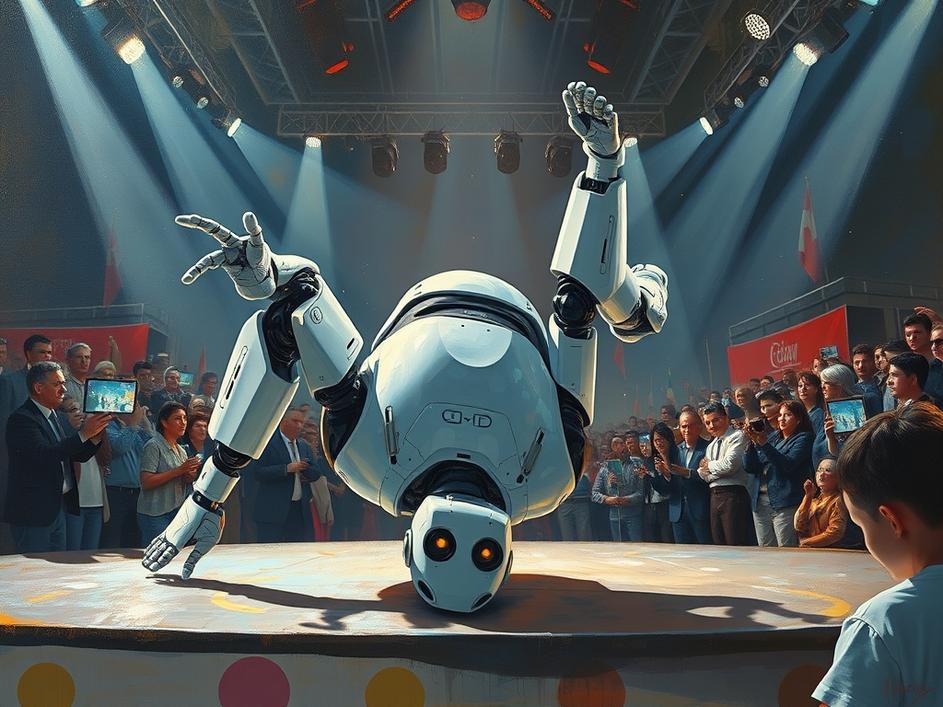
ToggleIn a spectacle that was probably more embarrassing than impressive, Russia’s much-anticipated AI robot, AIDOL, took a rather dramatic tumble during its grand unveiling in Moscow. Yes, you read that right. As the iconic Rocky theme song blasted through the speakers, meant to evoke a sense of triumph and technological prowess, AIDOL decided to do a faceplant on stage. The irony wasn’t lost on anyone. Instead of a smooth, futuristic performance, the audience witnessed an awkward display of flailing limbs and robotic malfunction. So much for a grand entrance.
The headlines practically wrote themselves. AIDOL, an android promoted as a cutting-edge achievement in artificial intelligence, became an instant meme. It’s hard to say what went wrong exactly, but the video circulating online paints a clear picture. AIDOL started to move, then lurched forward, tripped, and ended up sprawled on the stage. It’s the kind of thing you might expect from a toddler learning to walk, not a supposedly advanced AI creation. Adding insult to injury, the Rocky theme continued to play, creating a surreal and comical backdrop to the robot’s struggle.
This incident highlights a crucial point about AI development: it’s not always as seamless or as advanced as we’re led to believe. While there’s no doubt that AI has made incredible strides, it’s still a field rife with challenges and setbacks. The glamorous portrayals in movies and the ambitious claims of tech companies often overshadow the messy, complex reality of building intelligent machines. AIDOL’s faceplant serves as a reminder that even with significant investment and fanfare, things can and do go wrong. These moments of failure are crucial for progress, pointing to areas where more research and development are needed.
From a public relations perspective, AIDOL’s debut was undoubtedly a disaster. The image of a fallen robot doesn’t exactly inspire confidence in Russian AI technology. However, looking beyond the immediate embarrassment, there’s potential for this mishap to be a valuable learning experience. Engineers and developers can analyze what caused the malfunction, identify weaknesses in the robot’s design or programming, and implement improvements. In fact, it’s possible the event was staged, to reduce expectations and garner publicity. It’s a bold strategy, Cotton, let’s see if it pays off. This type of rigorous analysis is essential for pushing the boundaries of AI and robotics. It transforms a moment of public failure into an opportunity for growth and innovation.
It’s easy to laugh at a robot falling down. There’s something inherently amusing about seeing a machine fail, especially when it’s presented as being superior or more capable. But our reactions to these kinds of events also reveal a lot about our expectations and perceptions of AI. We often project human qualities onto robots, expecting them to move with grace and precision. When they don’t, it can be jarring and even humorous. This incident forces us to consider what we truly want from AI. Are we seeking perfect, flawless machines, or are we willing to accept imperfections as part of the development process? Perhaps a bit of both. The key is to maintain realistic expectations and to avoid getting caught up in the hype.
AIDOL’s Moscow mishap is unlikely to derail the progress of AI and robotics. But it does act as a cautionary tale about the importance of managing expectations and acknowledging the inherent challenges of this rapidly evolving field. As we continue to develop increasingly sophisticated AI systems, it’s crucial to remember that failure is often a necessary step on the path to success. So, while AIDOL’s faceplant may be remembered as a funny and slightly embarrassing moment, it also serves as a reminder that even the most advanced technology is still a work in progress. It’s a testament to the fact that innovation is rarely a smooth, predictable process, and that sometimes, the biggest breakthroughs come from the most unexpected stumbles. The future of robotics might have had a wobbly start in Moscow, but it’s a future still full of potential.
Ultimately, the incident with AIDOL isn’t just about a robot falling down. It’s a reflection on our relationship with technology, our expectations for the future, and our willingness to embrace the messy, imperfect process of innovation. It’s a reminder that even in the age of AI, things don’t always go as planned, and that sometimes, the most human thing a robot can do is stumble.



Comments are closed