

We are a digital agency helping businesses develop immersive, engaging, and user-focused web, app, and software solutions.
2310 Mira Vista Ave
Montrose, CA 91020

2500+ reviews based on client feedback
What's Included?
ToggleWe’ve all seen it happen. A cable news host invites a guest on to discuss a hot topic, expecting a predictable exchange of ideas. Maybe a little disagreement, some spirited debate, but generally sticking to the talking points everyone has already heard. But what happens when the guest goes off-script? What happens when the carefully constructed narrative crumbles in real-time, right there on live television?
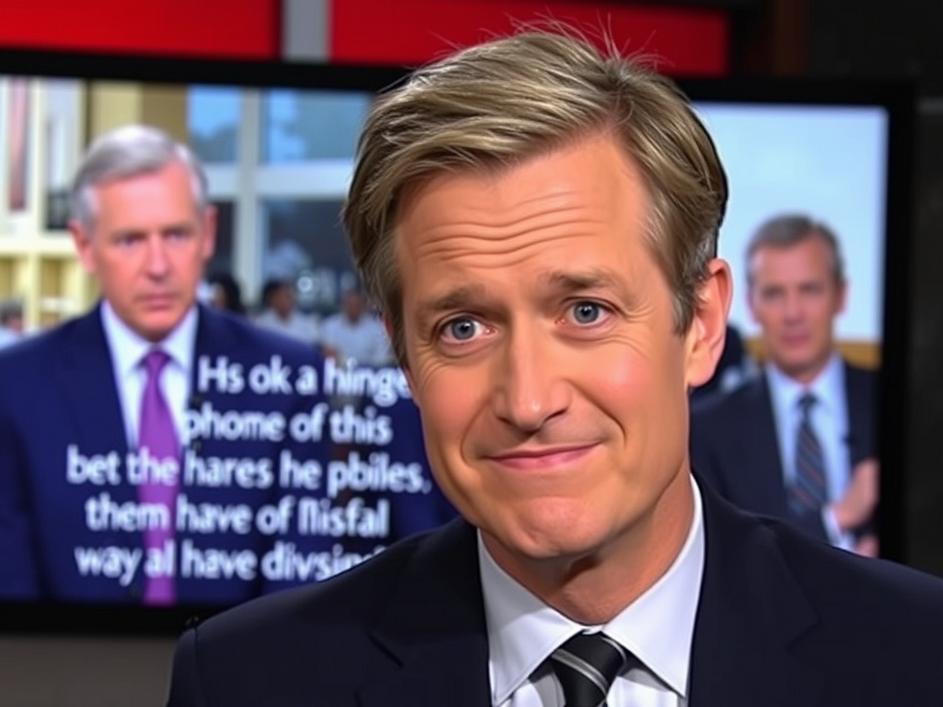
There’s a specific type of discomfort that’s palpable when a journalist realizes their carefully crafted narrative is about to be completely dismantled. It’s in the slight widening of the eyes, the subtle shift in posture, the ever-so-slightly forced smile. It happens when a guest says something so unexpected, so outside the accepted boundaries of the conversation, that the host is left scrambling to regain control.
So, what causes this moment of televised panic? It’s often a clash between expectation and reality. News programs thrive on predictability. Hosts have a general idea of what their guests will say, allowing them to steer the conversation and maintain a specific viewpoint. When someone deviates from that path, it throws the whole system into disarray. It forces the host to confront viewpoints that may challenge their own beliefs or the network’s overall agenda. And nobody likes being challenged, especially on live TV.
These moments expose the illusion of control that exists within news media. We like to believe that journalists are unbiased arbiters of truth, but the reality is far more complex. Networks have agendas, hosts have biases, and guests often have their own motivations. The carefully constructed narrative is designed to reinforce certain viewpoints and downplay others. The moment a guest disrupts that narrative, the whole house of cards begins to wobble. It reminds us that information is rarely presented in a vacuum, and that critical thinking is essential to understanding any news story.
Ultimately, these awkward on-air moments serve as a reminder to question everything we see and hear. They force us to confront the fact that news is often filtered through a lens of bias and agenda. It encourages to seek out diverse perspectives, to challenge assumptions, and to think critically about the information we consume. In a world of constant media bombardment, that’s a skill more valuable than ever. Maybe it will prompt viewers to do their own research, look at alternative sources, and form their own opinions, rather than simply accepting what they’re told. And that’s a good thing.
In a media landscape dominated by carefully crafted soundbites and pre-approved talking points, there’s something refreshing about these unscripted moments. They remind us that real life is messy, unpredictable, and often far more complex than the narratives we’re presented with. It’s in these moments of genuine human reaction – the discomfort, the surprise, the attempt to regain control – that we glimpse the underlying realities of the situation. It reminds us that these are real people with biases and agendas, not just talking heads reciting lines.
We, as viewers, play a critical role in this process. We can’t passively accept what we’re told; we need to be active consumers of information. We need to ask questions, seek out diverse perspectives, and challenge the narratives presented to us. By doing so, we can become more informed and engaged citizens, capable of making our own decisions about the world around us. The CNN host’s uneasy realization is a small example, but it highlights a much larger issue: the need for critical thinking in a media-saturated world. So next time you see a news interview, don’t just listen to the words – pay attention to the unspoken reactions, the subtle cues, and the underlying agendas. You might be surprised at what you discover.
The lesson here isn’t about demonizing the media or celebrating those who disrupt the status quo. It’s about fostering a healthy sense of skepticism and encouraging critical thinking. It’s about recognizing that everyone has a perspective, a bias, and an agenda – including ourselves. By acknowledging these realities, we can become more informed and engaged citizens, capable of navigating the complexities of the modern world. So, watch the news, listen to different viewpoints, but always remember to question everything and think for yourself.



Comments are closed