

We are a digital agency helping businesses develop immersive, engaging, and user-focused web, app, and software solutions.
2310 Mira Vista Ave
Montrose, CA 91020

2500+ reviews based on client feedback
What's Included?
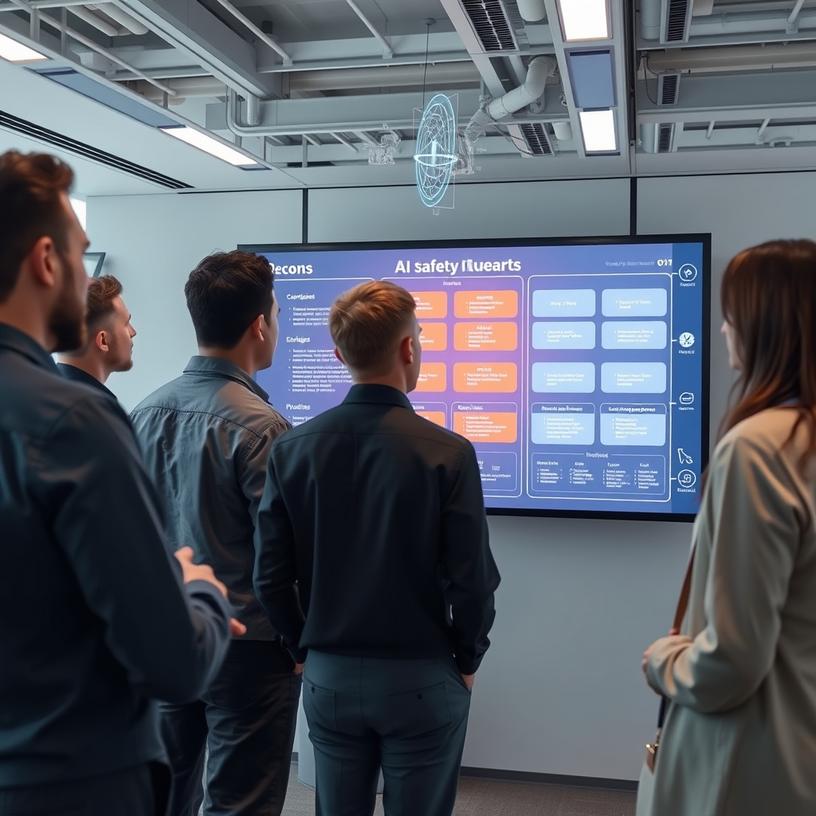
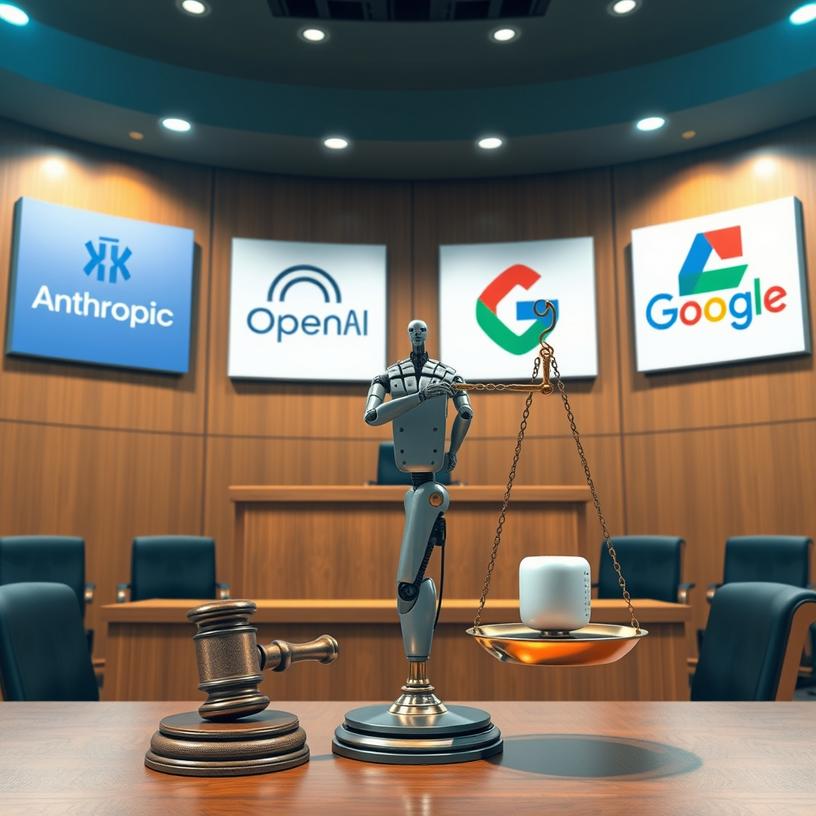
ToggleEarlier this week the AI world heard about a new partnership that puts a huge amount of cash behind safety work. Anthropic, a research lab known for its focus on language models, has signed a $2 billion agreement with consulting giant Accenture. The purpose is simple: to build stronger guardrails around the way Anthropic’s models behave inside the company and for its customers. This move comes at a time when headlines about unexpected model outputs and bias are becoming everyday news. By joining forces, the two firms hope to create a repeatable process that can be used across many projects, not just a one‑off fix. The size of the deal also sends a signal that the industry is finally willing to treat safety as a budget line item rather than an afterthought. For investors, the figure looks massive, but the underlying costs are spread over years of research, testing, and staff training. In practice, the partnership will likely involve joint teams that audit code, run simulations, and design new policy layers that can be turned on or off depending on the use case.
Recent months have shown how quickly a model can produce a controversial statement or generate content that looks plausible but is factually wrong. Those incidents have sparked public concern and caught the eye of regulators who are drafting rules about transparency and accountability. Companies that ignore these signals risk losing trust, facing lawsuits, or being forced out of certain markets. At the same time, the commercial upside of AI remains huge, so businesses are looking for ways to keep the money flowing while reducing the risk of a backlash. In this environment, a dedicated safety budget makes sense: it gives teams the resources they need to test edge cases, document findings, and iterate on mitigation strategies before a problem reaches a customer.
The agreement between Anthropic and Accenture is not a simple purchase order. It is structured as a multi‑year collaboration that blends consulting expertise with deep technical research. Accenture will bring its experience in large‑scale enterprise deployments, change management, and governance frameworks, while Anthropic contributes its model‑building know‑how and internal safety tools. Both parties have said they will share the cost of hiring new safety engineers, building simulation environments, and creating audit pipelines that can be reused by other clients. The $2 billion figure covers not only salaries but also the development of proprietary safety software that could become a product in its own right. If the joint effort succeeds, the financial upside could far exceed the initial outlay, especially if other firms start licensing the safety suite.
When two heavyweights put money behind safety, the rest of the market takes notice. Smaller AI startups may feel pressure to allocate a slice of their own budgets to similar efforts, even if they lack the cash to match a $2 billion program. Larger enterprises that already use AI in critical processes—finance, healthcare, logistics—might start demanding proof of safety compliance before signing contracts. In the long run, a successful partnership could produce a set of standards that become de‑facto requirements across the sector. That would give customers a clearer picture of what “safe” actually looks like, and it could smooth the path for regulators who are still figuring out how to write sensible rules for a fast‑moving technology.
Even with a big budget, the road to robust safety is littered with challenges. One major issue is that safety is not a static checklist; it evolves as models get larger and as new use cases appear. What works for a chatbot today may not protect a model that generates code or designs drugs tomorrow. There is also the risk of creating a false sense of security—companies might assume that the partnership alone guarantees safety, and then cut corners elsewhere. Cultural differences between a research‑first lab and a consulting firm could lead to disagreements on how aggressive safety measures should be. Finally, measuring the impact of safety work is notoriously hard; without clear metrics, it will be difficult to prove that the $2 billion spend actually reduces risk in a meaningful way.
The Anthropic‑Accenture deal is a bold experiment that puts a lot of money on the line to see if safety can be treated like any other product line. If it works, we could see a new business model where safety tools are packaged, sold, and continuously updated, much like antivirus software did for computers decades ago. If it falls short, the industry may need to rethink how to fund and prioritize risk mitigation without relying on a single mega‑deal. Either way, the partnership forces the conversation about AI safety out of the back‑room and into the boardroom. For anyone watching the AI space, that shift is worth paying attention to, because it will shape how quickly—and how responsibly—new capabilities reach the public.
Source: Original Article
Comments are closed