

We are a digital agency helping businesses develop immersive, engaging, and user-focused web, app, and software solutions.
2310 Mira Vista Ave
Montrose, CA 91020

2500+ reviews based on client feedback
What's Included?
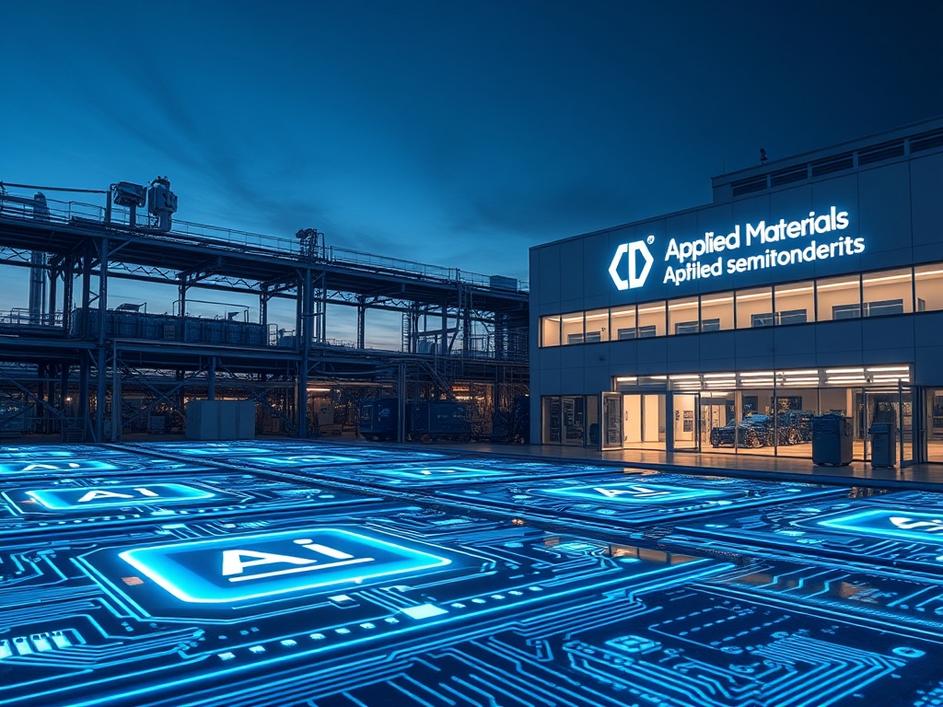
ToggleApplied Materials’ shares jumped almost 12 percent on Tuesday after the company lifted its third‑quarter earnings outlook and announced a broader AI‑focused packaging partnership. The move caught many investors off guard because the previous guidance had been fairly modest. The market reacted quickly, pushing the stock higher in a matter of minutes. For a company that sits at the heart of the chip‑making supply chain, any sign of stronger demand feels like a signal that the whole industry is picking up speed. That’s why the price move felt bigger than just a number on a spreadsheet.
In its latest earnings call, Applied Materials said it now expects Q3 revenue to land around $6.5 billion, up from the $6.2 billion it had projected a month ago. The company also nudged its earnings per share estimate higher by a few cents. Those adjustments stem from better‑than‑expected orders for its deposition and etch tools, especially from customers building AI accelerators. Management highlighted that the backlog has grown to a level not seen since 2022, suggesting that the demand surge is more than a flash in the pan. The revised numbers give analysts a fresh data point to work with, and most have upgraded their price targets accordingly.
At the same time, Applied Materials announced that its AI packaging alliance now includes two new partners: a leading European fab and a Chinese memory maker. The alliance is designed to co‑develop advanced wafer‑level packaging that can handle the massive bandwidth needs of generative AI models. By sharing design data and test results, the members hope to cut the time it takes to move a new package from lab to production. For Applied Materials, the partnership means more tool sales and longer‑term service contracts. It also positions the company as a central hub in the emerging AI hardware ecosystem.
The chip sector has been through a roller coaster of highs and lows over the past few years. After a long slump, demand for high‑performance compute has started to climb again, driven by AI workloads that need more transistors and faster interconnects. Applied Materials benefits directly because its equipment is required to build the layers that make these chips work. The recent guidance lift suggests the company is catching the tailwind early, before many of its competitors can fully scale. That early‑bird advantage is something investors love, especially when the market is still trying to figure out how big the AI hardware market will become.
Nothing is guaranteed, though. The semiconductor supply chain remains fragile, with geopolitical tensions and raw‑material shortages still looming. If any of Applied Materials’ big customers delay fab expansions, the revenue boost could evaporate. Moreover, rivals such as Lam Research and Tokyo Electron are also racing to capture the AI packaging niche. They have their own alliances and may undercut prices. Finally, the company’s own execution risk—delivering new tool generations on schedule—remains a key factor. Investors should keep an eye on order books, capacity utilization, and any signs of supply bottlenecks.
All things considered, the stock’s jump reflects a mix of optimism and caution. Applied Materials appears to be in a strong position to ride the AI wave, thanks to higher guidance and a broader partnership network. Yet the road ahead is still full of unknowns, from policy shifts to technology hiccups. For a long‑term holder, the news adds a layer of confidence, but it also reminds us that the semiconductor world moves fast and can change direction overnight. In the end, the real test will be whether the company can turn today’s excitement into sustained growth over the next several quarters.
Source: Original Article


Comments are closed