

We are a digital agency helping businesses develop immersive, engaging, and user-focused web, app, and software solutions.
2310 Mira Vista Ave
Montrose, CA 91020

2500+ reviews based on client feedback
What's Included?
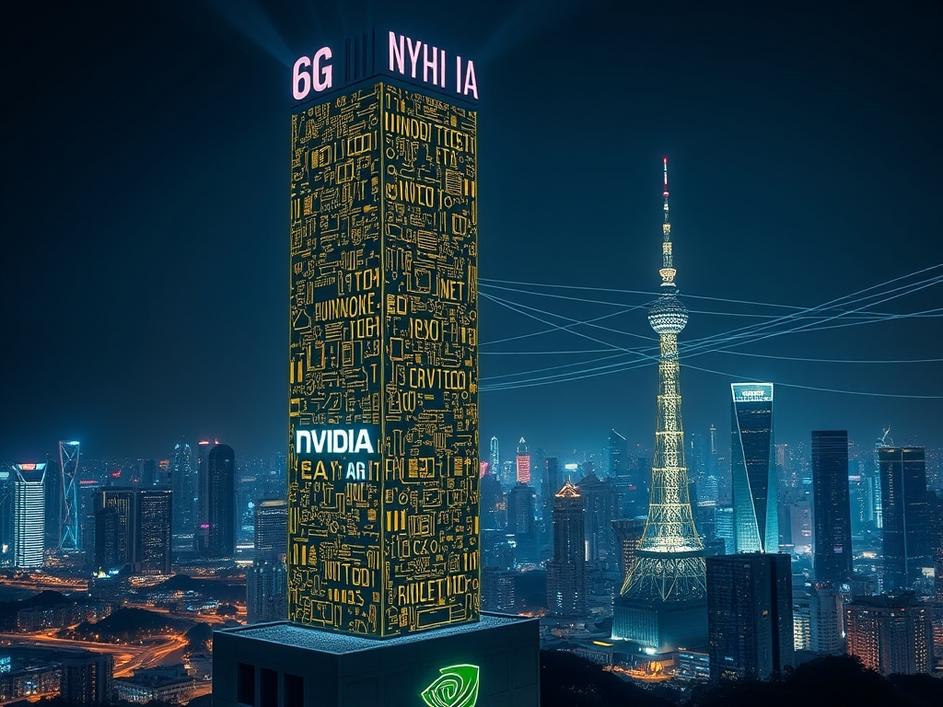
ToggleNvidia’s announcement that it is looking for Chinese AI base‑station suppliers has caught a lot of eyes. The company is not just adding another vendor to a list; it is trying to lock in hardware that can run its next‑generation 6G AI‑RAN chips. The timing is tight because the industry expects the first 6G trials to start before the end of the decade. If Nvidia cannot secure a reliable production line soon, it risks falling behind rivals that already have a foothold in the market. The urgency also hints at a broader shift: AI is becoming the core of wireless infrastructure, not just an add‑on. By moving fast, Nvidia hopes to shape the standards that will define how phones, cars and IoT devices talk to each other in the next ten years.
Imagine a base station that not only routes data but also runs deep‑learning models in real time. That is the promise of an AI‑RAN built for 6G. Instead of static signal processing, the station would predict traffic spikes, allocate spectrum on the fly, and even detect interference before it becomes a problem. The result could be lower latency, higher throughput, and more efficient use of energy. Nvidia’s silicon is designed to handle massive tensor operations at the edge, meaning the intelligence lives right where the signal is generated. If the hardware works as planned, operators could roll out services that feel like a cloud in the air, with instant adaptation to user demand.
China already dominates many layers of the telecom hardware stack. From silicon wafers to printed circuit boards, the country’s factories can turn out components at a scale and cost that few other regions can match. That is why Nvidia’s search is focused on Chinese partners: they can prototype, test and mass‑produce AI‑RAN modules faster than anyone else. Moreover, local firms have deep experience integrating with the nation’s 5G roll‑out, giving them a practical edge in meeting the strict timing and reliability requirements of telecom operators. By tapping this ecosystem, Nvidia hopes to shorten its development cycle and keep pricing competitive for carriers that are already feeling pressure on margins.
The flip side of relying on Chinese manufacturers is the geopolitical risk. Ongoing trade tensions have shown how quickly export controls can appear, cutting off access to critical tools or software. If a future sanction blocks Nvidia’s GPU design tools from reaching a Chinese fab, the whole supply chain could grind to a halt. There is also the concern of a fragmented standards landscape, where equipment built in one region may not interoperate smoothly with gear from another. That could force operators to choose between compatibility and cost, slowing the global rollout of 6G services. Nvidia’s gamble therefore rests not only on engineering success but also on the ability to navigate a volatile policy environment.
From a business perspective, the move is a calculated bet on future revenue streams. AI‑RAN hardware could become a multi‑billion‑dollar market if operators adopt it widely. By being first to market, Nvidia can lock in design wins and collect royalties on its IP for years to come. The company also stands to strengthen its position against rivals like Qualcomm and MediaTek, which are already pushing AI‑enhanced base‑band solutions. However, the gamble is not without cost. Developing custom silicon for edge stations, securing supply contracts, and managing cross‑border compliance all require substantial investment. If the market does not mature as quickly as expected, Nvidia could be left with expensive inventory and a diluted focus from its core GPU business.
In the end, Nvidia’s push for Chinese AI‑RAN partners highlights how quickly the telecom world is changing. The line between compute and connectivity is blurring, and the companies that can marry the two will shape the next decade of digital life. Whether Nvidia’s strategy pays off will depend on how fast 6G standards coalesce, how smoothly the supply chain can operate under political pressure, and whether operators are ready to pay for the extra intelligence at the edge. For now, the story is a reminder that innovation rarely happens in a vacuum; it needs the right mix of technology, partners and timing. If Nvidia can keep all three in sync, we may soon see a new generation of networks that feel less like metal and more like a living, learning brain.
Source: Original Article



Comments are closed