

We are a digital agency helping businesses develop immersive, engaging, and user-focused web, app, and software solutions.
2310 Mira Vista Ave
Montrose, CA 91020

2500+ reviews based on client feedback
What's Included?
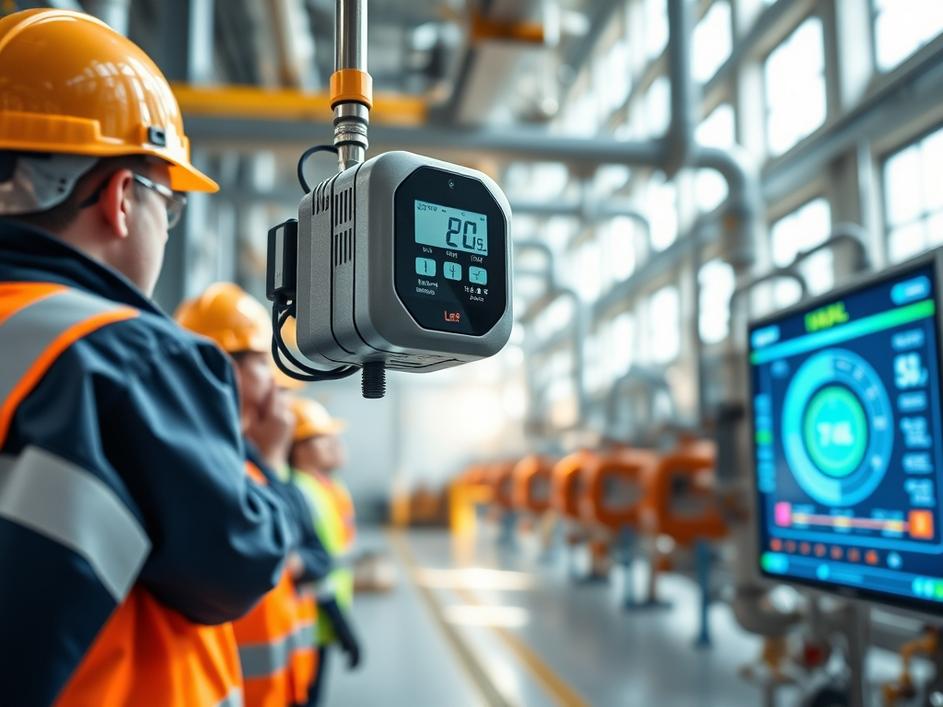
ToggleRS Korea just rolled out a new line of LTE‑based multi‑gas detectors, and the buzz around them is hard to miss. The company, known for its safety gear, decided to add cellular connectivity and a free IoT platform to its devices. That move means factories can now get real‑time alerts without paying extra for data plans or cloud services. In plain terms, it’s a step toward making hazardous‑area monitoring more accessible and less tangled in IT headaches.
Most plants sit far from the nearest Wi‑Fi hotspot, and wired Ethernet is often impractical. LTE fills that gap by offering a wide‑area, always‑on link that works almost anywhere a cell tower exists. RS Korea’s detectors tap directly into this network, sending gas concentration readings straight to a dashboard the moment something crosses a threshold. The advantage is clear: no need for on‑site routers, no extra cabling, and a lower chance of dead zones that could hide a leak.
The new units can sniff out several common industrial gases in a single package—think carbon monoxide, hydrogen sulfide, methane, and oxygen levels. Having multiple sensors bundled together cuts down on the number of devices a plant has to install and maintain. It also reduces the chance of missing a dangerous mix because a single sensor might be out of service. The compact design fits into tight spaces, making retrofits easier in older facilities.
What sets these detectors apart is the complimentary IoT service that RS Korea bundles in. Users get a cloud‑based portal where they can view trends, set custom alarms, and generate reports without paying subscription fees. The platform also supports push notifications to smartphones, so a supervisor can react even when they’re off‑site. By removing the cost barrier, the company hopes smaller operators will adopt the technology alongside the big players.
When workers see a clear, immediate warning on their phones or on a wall‑mounted screen, they’re more likely to act quickly. The real‑time nature of LTE alerts shortens the window between a leak starting and a response being triggered. In environments where a few minutes can mean the difference between a minor incident and a full‑scale evacuation, that speed matters. Moreover, the data history helps safety teams spot patterns, such as a recurring spike in a particular area, prompting preventive maintenance before a serious event.
Older gas monitoring setups often rely on proprietary radio links or wired connections that need regular calibration and manual data extraction. Those methods can be labor‑intensive and prone to gaps in coverage. RS Korea’s LTE approach eliminates many of those pain points. The devices still need periodic sensor checks, but the communication side is largely hands‑off. For plants already wrestling with aging infrastructure, swapping to a cellular solution can feel like a breath of fresh air.
Even with the benefits, there are a few things to keep in mind. LTE coverage isn’t truly universal—some remote sites might still struggle with weak signals, requiring a signal booster or a fallback to satellite. Also, while the IoT platform is free now, future pricing changes could affect long‑term budgeting. Finally, integrating the new alerts into existing safety protocols will need training; people must trust the new system enough to act on its warnings.
The launch arrives at a time when the industrial IoT market is growing fast, and regulators are tightening emissions and safety standards. Companies that can offer a plug‑and‑play solution with built‑in connectivity are well positioned to capture a slice of that demand. If RS Korea can keep the free IoT service reliable and maintain sensor accuracy, they could set a new benchmark that pushes competitors to follow suit.
RS Korea’s LTE‑based multi‑gas detectors blend solid sensor tech with a connectivity model that removes a lot of the usual friction. The free IoT platform adds value that could make a real difference for both large and small operators. While there are still practical considerations—signal strength, future costs, and user training—the overall package feels like a step forward for plant safety. If the industry embraces it, we might see a new norm where real‑time gas data is as routine as temperature readings today.
Source: Original Article

Comments are closed