

We are a digital agency helping businesses develop immersive, engaging, and user-focused web, app, and software solutions.
2310 Mira Vista Ave
Montrose, CA 91020

2500+ reviews based on client feedback
What's Included?
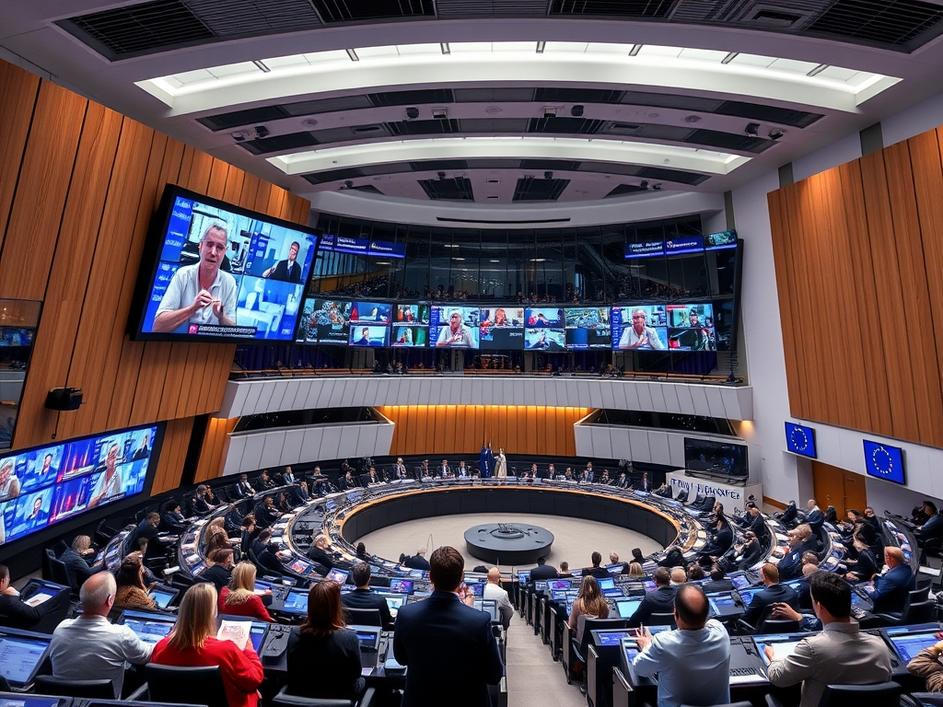
ToggleLast week the European Parliament opened a fresh streaming page that lets anyone watch live sessions in a dozen languages. The page lives on the Multimedia Centre’s website and replaces a clunky old interface that many found hard to navigate. From the moment you land on the site you see a clean list of language buttons, a simple calendar, and a big play button for the current feed. It feels like the EU finally listened to the request for a more user‑friendly way to follow debates. For people who live outside Brussels, this is the quickest route to see what lawmakers are saying about climate, digital policy, or migration. The design is straightforward, but the impact is bigger than the look. It signals that the Parliament wants its work to be as open as possible.
The new portal lists more than ten language options, from English and French to Bulgarian, Estonian, and even Gaelic. Clicking a flag instantly switches the audio and subtitles, so viewers don’t need a separate browser tab or a third‑party translator. This kind of instant multilingual support is rare for a political institution of this size. It means a farmer in rural Spain can follow a debate on agricultural subsidies in Spanish, while a tech startup founder in Dublin watches the same session in Irish. The inclusion of less‑spoken languages shows respect for the Union’s cultural diversity and helps people feel represented.
Seeing a live feed is not the same as reading a summary after the fact. When citizens can watch a debate as it unfolds, they can react in real time, share clips on social media, and start discussions while the topics are still fresh. This immediacy encourages a more active public sphere. It also reduces the gap between lawmakers and the people they serve, because the audience can see the tone, the interruptions, and the body language that get lost in written transcripts. In my own experience, watching a debate about digital privacy gave me a clearer picture of the concerns raised by both industry reps and civil‑society groups.
Running a multilingual stream for a whole continent is a technical challenge. The Multimedia Centre uses a cloud‑based encoding system that takes a single video feed and creates separate audio tracks for each language. Subtitles are generated by a mix of professional translators and AI tools that have been trained on EU terminology. The website’s front end pulls the right track based on the user’s selection, all within a fraction of a second. Security is also a priority; the streams are delivered over encrypted connections to prevent tampering. From a tech lover’s perspective, it’s a neat example of how modern infrastructure can serve democratic goals.
Journalists and bloggers now have a reliable source for live footage that doesn’t require a separate press credential. They can embed the stream directly into articles or pull short clips for analysis. The multilingual feature also helps reporters who work in regional outlets; they can produce stories in their native language without waiting for a translation service. For broadcasters, the new portal reduces the need to set up parallel feeds, saving time and money. Overall, the platform simplifies the workflow for anyone who needs to cover EU politics on a tight deadline.
The streaming hub is more than a technical upgrade; it’s a statement about openness. By making live debates easy to find and understand, the Parliament invites scrutiny and participation. It also sets a benchmark for other institutions that still rely on delayed or limited broadcasts. In the future, I hope the service expands to include interactive features like live polls or Q&A sessions that let viewers ask questions directly to MEPs. If that happens, the gap between citizens and decision‑makers could shrink even further, making the European project feel more like a conversation than a distant bureaucracy.
Source: Original Article

Comments are closed