

We are a digital agency helping businesses develop immersive, engaging, and user-focused web, app, and software solutions.
2310 Mira Vista Ave
Montrose, CA 91020

2500+ reviews based on client feedback
What's Included?
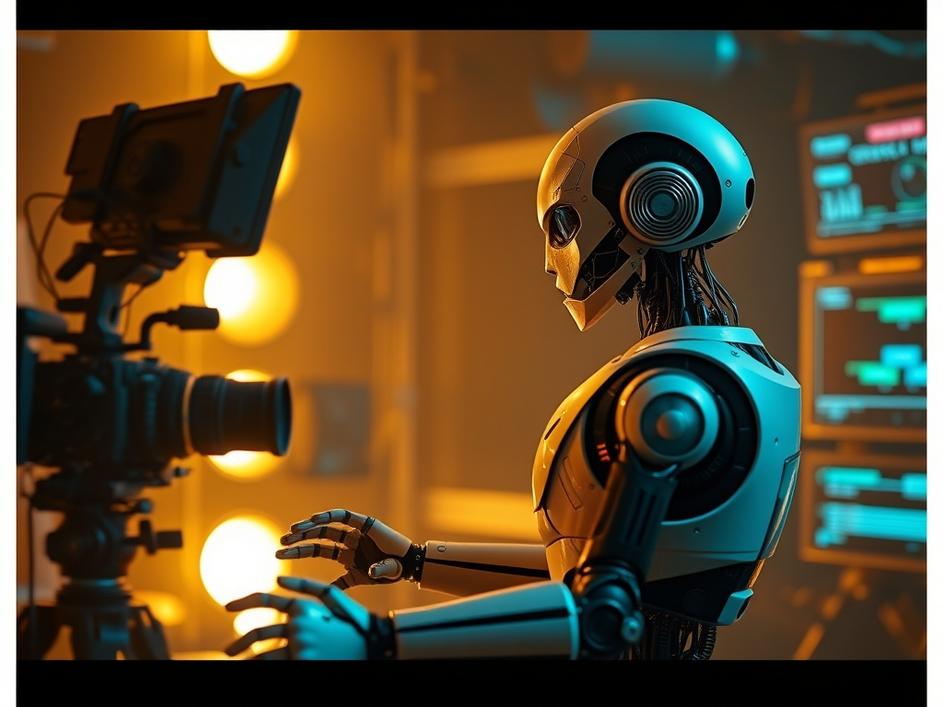
ToggleArtificial intelligence. It’s everywhere you look, isn’t it? From writing emails to creating art, AI tools are popping up faster than sequels to a popular horror movie. And naturally, Hollywood is taking notice. The big question is, will AI change the way movies are made? Will robots be writing scripts and directing actors anytime soon?
Jason Blum, the head honcho at Blumhouse Productions, has a pretty interesting take on all this. Now, Blumhouse isn’t just any studio; they’re the kings of low-budget horror that delivers massive scares and huge profits. Think “Paranormal Activity,” “Get Out,” and “The Purge.” They know a thing or two about making movies that connect with audiences. Blum himself doesn’t think AI will actually make movies better. That’s a pretty strong statement. He believes the creative spark, the thing that makes a film truly special, still comes from humans. But he also acknowledges that ignoring AI completely would be a mistake.
So, why can’t Hollywood just brush AI aside? Well, for starters, AI is already impacting many industries, and the entertainment industry is no different. AI algorithms can analyze massive amounts of data to predict what kind of movies audiences want to see. They can help with marketing, distribution, and even casting decisions. Think about it: AI could potentially identify unknown actors who have the potential to become huge stars, saving studios a ton of money on talent scouting. And when it comes to special effects and post-production, AI tools could streamline workflows and reduce costs significantly. However, AI could potentially write some of the mundane scenes in horror movies, to allow writers to focus on core plot.
But here’s the thing: even with all the data and automation, storytelling still matters. A movie can have the most incredible special effects and the catchiest marketing campaign, but if the story isn’t engaging, it’s going to flop. Blumhouse has built its success on compelling stories that resonate with viewers, and that’s where the human element comes in. It’s about understanding what scares people, what makes them laugh, what makes them cry. AI might be able to identify trends and patterns, but it can’t replicate the emotional intelligence and creativity that human writers and directors bring to the table. Can an AI understand the subtle nuances of social commentary like Jordan Peele did in “Get Out”? It’s highly unlikely.
So, what does the future hold? It seems likely that AI will become an increasingly valuable tool for filmmakers, but it won’t replace human creativity entirely. Instead, we’re probably heading towards a future where humans and AI collaborate. Imagine a writer using AI to generate initial drafts of a script, then refining and polishing it with their own unique voice and perspective. Or a director using AI to create realistic visual effects on a smaller budget. The key is to use AI as a tool to enhance the creative process, not to replace it altogether. It’s about finding the right balance between technology and human artistry.
There’s also a risk of AI leading to more formulaic movies. If studios rely too heavily on AI to predict what audiences want, they might end up churning out the same tired tropes and predictable storylines. This could lead to a decline in originality and innovation. Blumhouse, known for taking risks on unconventional projects, is likely wary of this. They understand that sometimes the biggest hits come from the most unexpected places. To make AI useful would require humans to feed it data, but also allow it to learn organically. An AI could analyze the common features of slasher films for example, and then generate the story arc for a new slasher film.
Ultimately, the goal should be to protect the magic of movies. Movies have the power to transport us to other worlds, to make us feel things we never thought possible, and to spark conversations that can change the world. We need to ensure that AI is used in a way that enhances these qualities, not diminishes them. As long as the human element remains at the heart of filmmaking, the future looks bright. AI is unlikely to kill off Hollywood, and is more likely to take on the mundane tasks of post-production and script writing.
Jason Blum’s perspective is a smart one. Don’t ignore AI, but don’t expect it to be a silver bullet. It’s a tool, and like any tool, it can be used for good or for ill. The future of horror, and of filmmaking in general, likely lies in finding a way to integrate AI into the creative process without sacrificing the human touch. Now, pass the popcorn; I want to see what happens next.



Comments are closed