

We are a digital agency helping businesses develop immersive, engaging, and user-focused web, app, and software solutions.
2310 Mira Vista Ave
Montrose, CA 91020

2500+ reviews based on client feedback
What's Included?
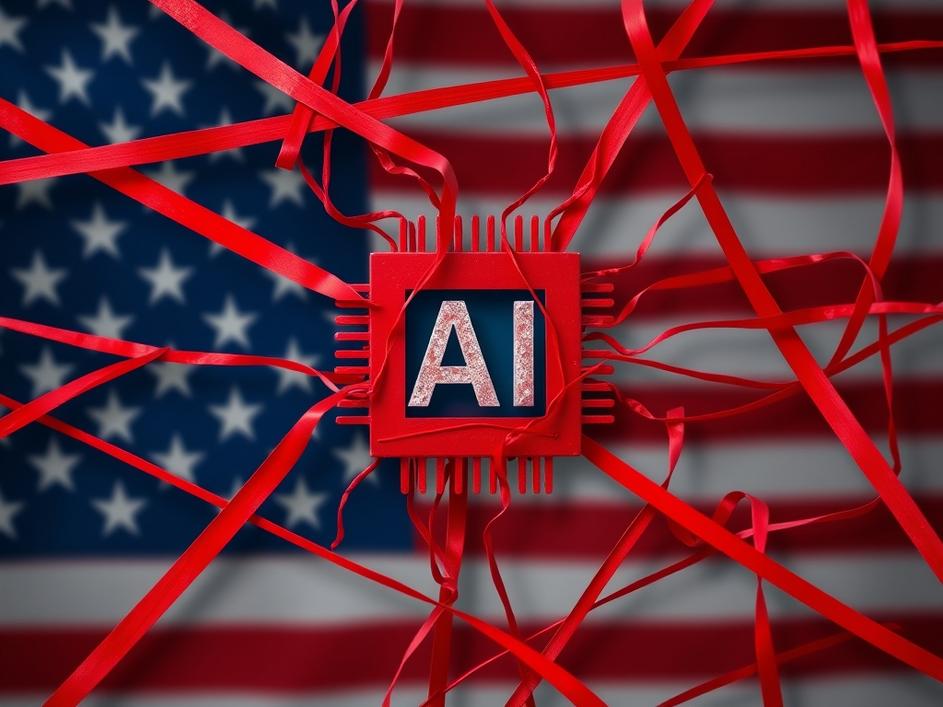
ToggleThe race to dominate artificial intelligence is on, and the United States is determined to win. The potential rewards are enormous: economic growth, scientific breakthroughs, and enhanced national security. But some worry that excessive government regulation could stifle innovation and hand the advantage to rivals like China. This concern is at the heart of a debate sparked by House Speaker Mike Johnson, who is advocating for a lighter regulatory touch on the burgeoning AI industry.
Johnson argues that overly strict rules could cripple American AI companies, making them less competitive on the global stage. He envisions a future where innovation flourishes, driven by a free market approach. This perspective isn’t new. Many in the tech industry believe that too much regulation can hinder progress, especially in rapidly evolving fields like AI. The core argument is that companies need the freedom to experiment and iterate without being bogged down by bureaucratic hurdles. The Speaker is championing policies that promote flexibility and minimize government intervention, allowing the private sector to lead the charge.
However, the call for deregulation isn’t without its critics. Many experts and policymakers emphasize the need for responsible AI development. They argue that without proper oversight, AI could pose significant risks, including job displacement, algorithmic bias, and the potential for misuse in areas like surveillance and autonomous weapons. Concerns about privacy, security, and ethical considerations are also paramount. The debate centers on finding the right balance: fostering innovation while mitigating potential harms. Simply letting the market run wild could have unintended and damaging consequences.
The challenge lies in crafting regulations that are both effective and adaptable. Regulations shouldn’t be so rigid that they stifle creativity, nor so lax that they permit recklessness. One potential solution is a tiered approach, where regulations are tailored to the specific risk level of different AI applications. For example, AI systems used in healthcare or finance, where errors could have serious consequences, might be subject to more stringent oversight than AI used for entertainment or marketing. This nuanced approach could allow for innovation in lower-risk areas while ensuring safety and responsibility in higher-risk domains. Furthermore, regulations should be designed to evolve alongside the technology. AI is advancing at an unprecedented pace, and rules that are appropriate today might become obsolete tomorrow. A flexible and adaptive regulatory framework is crucial to keeping pace with the rapid changes in the field. This also requires ongoing dialogue between government, industry, and academia to ensure that regulations are informed by the latest scientific and technological developments.
Beyond the debate over regulation, another critical factor in winning the AI race is investment. The United States needs to invest heavily in AI research and development, as well as in education and training programs to prepare the workforce for the AI-driven economy. This includes funding basic research to push the boundaries of AI technology, as well as supporting applied research to translate breakthroughs into real-world applications. Moreover, it requires investing in education at all levels, from elementary school to universities, to equip students with the skills they need to thrive in an AI-powered world. This includes not only technical skills like programming and data science, but also critical thinking, problem-solving, and creativity. And it is essential to foster a culture of innovation and entrepreneurship, to encourage startups and small businesses to develop and commercialize new AI technologies. Government support for startups, through grants, loans, and tax incentives, can play a vital role in fostering innovation and creating jobs. The U.S. needs to attract and retain top AI talent from around the world. This means creating a welcoming and inclusive environment for international students and researchers, as well as reforming immigration policies to make it easier for talented individuals to come and work in the United States.
It’s also important to recognize that the AI race is not just a competition, but also an opportunity for collaboration. AI has the potential to address some of the world’s most pressing challenges, from climate change to disease to poverty. By working together with other countries, the United States can accelerate progress and ensure that AI is used for the benefit of all humanity. This requires building strong international partnerships, sharing knowledge and best practices, and coordinating on ethical and regulatory standards. It also means engaging in open and transparent dialogue about the potential risks and benefits of AI, and working to build trust and understanding among nations.
The United States has the potential to lead the world in AI, but only if it makes the right choices. It needs to strike a balance between fostering innovation and ensuring responsible development. It needs to invest in research, education, and infrastructure. And it needs to work together with other countries to address the global challenges and opportunities presented by AI. The path forward is not easy, but the rewards are enormous. By embracing a bold and forward-looking approach, the United States can secure its position as a leader in AI and create a brighter future for all.
Ultimately, America’s success in the AI race hinges on a delicate balancing act. Over-regulation could stifle innovation, while a complete lack of oversight could lead to unforeseen consequences. The key is to create a regulatory environment that is both flexible and responsible, one that encourages innovation while also protecting the public interest. Coupled with strategic investments in research, education, and international collaboration, the United States can pave the way for a future where AI benefits all of humanity.


Comments are closed