

We are a digital agency helping businesses develop immersive, engaging, and user-focused web, app, and software solutions.
2310 Mira Vista Ave
Montrose, CA 91020

2500+ reviews based on client feedback
What's Included?
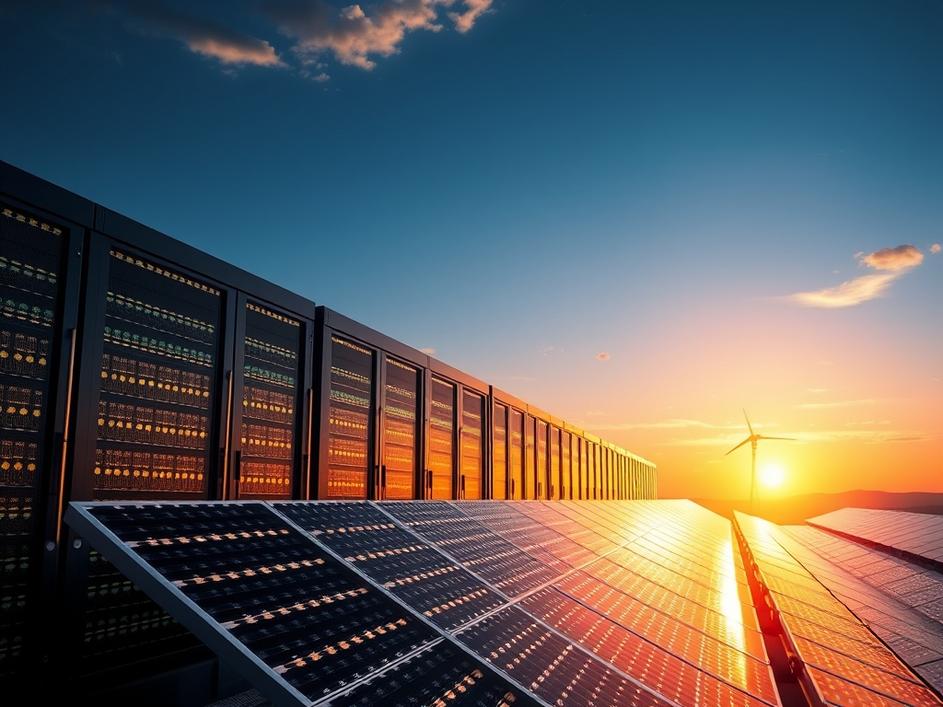
ToggleElon Musk’s xAI is taking a step toward more sustainable artificial intelligence. News broke last week that the company intends to construct a solar farm adjacent to its Colossus data center in Memphis. While details are still emerging, the project signals a commitment to reducing the carbon footprint associated with AI development. It’s a move that, if successful, could set a new standard for the industry, pushing other major players to invest in renewable energy sources to power their own massive computing operations.
The Colossus data center is, by all accounts, huge. Though specific details of its computing power remain under wraps, the sheer scale of such a facility hints at the enormous energy demands required to operate it. AI training, especially for large language models like those xAI is likely developing, is notoriously energy-intensive. Server farms hum around the clock, consuming vast amounts of electricity to process data and keep the machines cool. Building a solar farm nearby makes perfect sense as a way to mitigate this energy consumption and potentially lower operational costs in the long run.
The size of the planned solar farm is still under wraps, and it’s unclear exactly how much of the Colossus data center’s power needs it will fulfill. Will it provide a significant percentage, or simply offset a smaller portion? This detail is crucial in determining the actual environmental impact of the project. Even a partial offset is a positive step, and perhaps this initial solar farm will lead to larger installations in the future. A critical element to analyze is the energy storage. Will there be batteries to store solar energy for times when the sun isn’t shining, or will Colossus still need to rely on the grid for backup power?
xAI’s move could have broader implications for the entire AI industry. As AI models become more complex and data centers grow ever larger, the energy consumption associated with AI is becoming an increasingly pressing concern. Companies are facing pressure from investors, employees, and the public to reduce their environmental impact. By investing in renewable energy, xAI is not only reducing its carbon footprint but also demonstrating a commitment to sustainability that could inspire other AI companies to follow suit. The push for energy efficiency in hardware and more efficient algorithms will only continue to grow.
Of course, there are challenges to overcome. Solar energy is intermittent, and data centers require a constant and reliable power supply. This means that xAI will likely need to supplement the solar farm with other sources of energy, at least some of the time. Also, the environmental impact of manufacturing solar panels themselves needs to be considered, although solar panels are significantly less pollutive than coal, oil, and natural gas power plants. And the location, Memphis, may not have ideal sunshine year around. It’ll be interesting to see if Musk’s team looks to partner with power companies for energy storage options, such as using large batteries to act as backup to the solar panels.
Ultimately, xAI’s decision to build a solar farm next to its Colossus data center is a positive development. It’s a tangible step towards making AI development more sustainable. While the scale of the project and its ultimate impact remain to be seen, it sends a powerful message that AI companies can and should invest in renewable energy. Hopefully, this is just the beginning of a larger trend in the industry, leading to a future where AI is powered by clean, renewable energy sources.
Beyond the obvious benefits of reducing xAI’s carbon footprint, constructing a solar farm near the Colossus data center could make great economic sense. Solar energy has become incredibly competitive with other forms of energy generation. Over the lifespan of the solar farm, the overall cost of electricity generated by the solar panels could be far less than what xAI would otherwise need to pay the local power company. And the costs of solar panel technology continues to drop year after year.
The construction of a solar farm next to the Colossus data center represents more than just a move toward renewable energy. It signifies a growing awareness within the AI industry of the need for sustainable practices. As AI continues to advance and play an increasingly important role in our lives, it’s crucial that we develop it in a way that is both innovative and environmentally responsible. xAI’s project may be just one piece of the puzzle, but it’s a significant one. The world needs to ensure that technology progresses in a way that benefits humanity while protecting the planet. By embracing renewable energy sources, AI companies can help to pave the way for a brighter, more sustainable future.



Comments are closed