

We are a digital agency helping businesses develop immersive, engaging, and user-focused web, app, and software solutions.
2310 Mira Vista Ave
Montrose, CA 91020

2500+ reviews based on client feedback
What's Included?
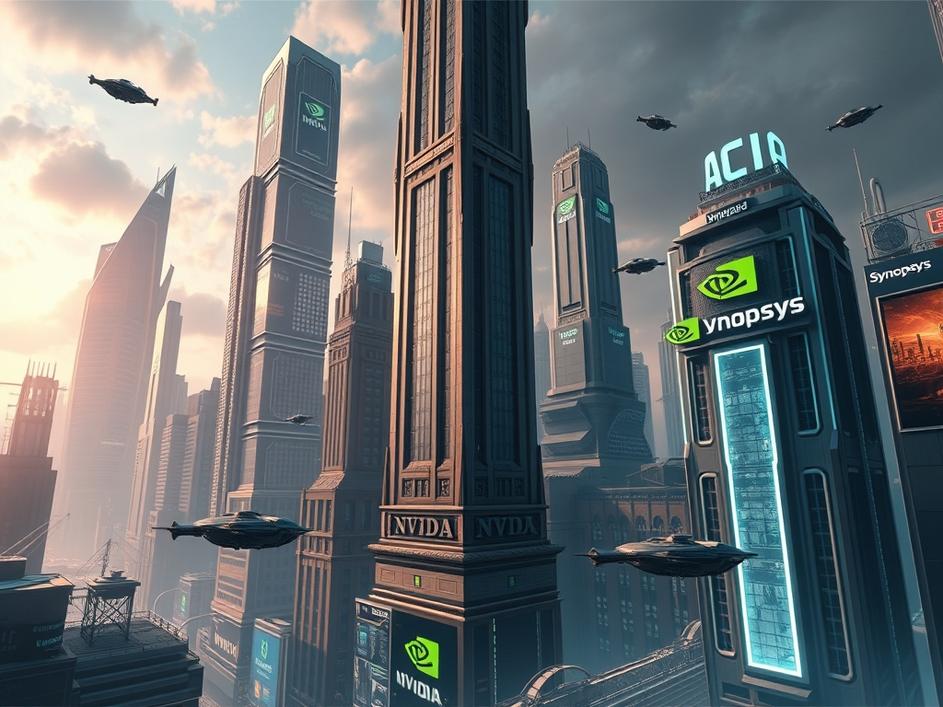
ToggleNvidia just made a massive move, injecting $2 billion into Synopsys, a giant in the world of chip design software. This isn’t just pocket change; it’s a serious commitment that signals a major shift in the AI landscape. Synopsys creates the tools engineers use to design and test the chips that power everything from smartphones to supercomputers. Think of them as the architects of the digital world, and Nvidia just became a major stakeholder in their firm. Why is this important? Because the future of AI hinges on better, faster, and more efficient chips, and Nvidia clearly believes Synopsys holds a key to unlocking that future.
This investment is more than just a financial transaction; it’s a strategic alliance. Nvidia isn’t simply looking for a return on investment; they’re looking to collaborate closely with Synopsys to push the boundaries of chip design. By working hand-in-hand, they can optimize Synopsys’ software for Nvidia’s cutting-edge hardware, and vice versa. This synergy could lead to breakthroughs in AI chip performance that neither company could achieve on its own. It’s a marriage of hardware and software expertise, a partnership built to dominate the next generation of AI technology. This close collaboration helps reduce development time and allow for quicker responses to changing market demands.
The AI market is a battlefield, and Nvidia is arming itself for war. Companies are scrambling to gain an edge in this rapidly evolving field, and Nvidia’s investment in Synopsys is a clear indication of their ambition to stay ahead of the curve. This move isn’t happening in a vacuum. We’re seeing a flurry of activity, with tech giants pouring billions into AI startups, research labs, and strategic partnerships. Nvidia understands that AI isn’t just about algorithms and data; it’s also about the underlying infrastructure that makes it all possible. They are positioning themselves at the heart of innovation of hardware development.
So, what does this investment really mean for the average person? In the short term, not much will change. But over time, this partnership could have a profound impact on the technology we use every day. Faster AI chips will lead to smarter smartphones, more efficient data centers, and more advanced AI applications in everything from healthcare to transportation. Imagine self-driving cars that are truly reliable, medical diagnoses that are more accurate than ever before, and virtual assistants that can understand your needs with near-human intuition. All of this becomes more feasible with the kind of technological leaps that Nvidia and Synopsys are pursuing. As chips get smaller, faster, and more efficient, devices also have the chance to become the same. The knock-on effect of innovation could change lives in unimaginable ways.
Of course, this partnership isn’t without its potential challenges. Integrating two large companies, even with shared goals, can be complex. There are cultural differences to navigate, technical hurdles to overcome, and regulatory concerns to address. And there’s always the risk that the partnership simply doesn’t live up to its potential. However, given the strong strategic alignment and the clear market opportunity, the odds seem to be in Nvidia and Synopsys’ favor. Additionally, competitors are sure to examine the move closely to determine how they can maintain their market share. As always, the business environment is in constant flux.
Nvidia’s investment in Synopsys is a bold move that underscores the growing importance of chip design in the AI era. It’s a reminder that the future of technology isn’t just about software and algorithms; it’s also about the hardware that powers them. By forging a strong partnership with Synopsys, Nvidia is positioning itself to lead the charge into the next phase of the AI revolution. It remains to be seen exactly how this collaboration will play out, but one thing is clear: the stakes are high, and the potential rewards are enormous. Only time will tell, but there is little doubt that AI is now an important aspect of everyday life.


Comments are closed