

We are a digital agency helping businesses develop immersive, engaging, and user-focused web, app, and software solutions.
2310 Mira Vista Ave
Montrose, CA 91020

2500+ reviews based on client feedback
What's Included?
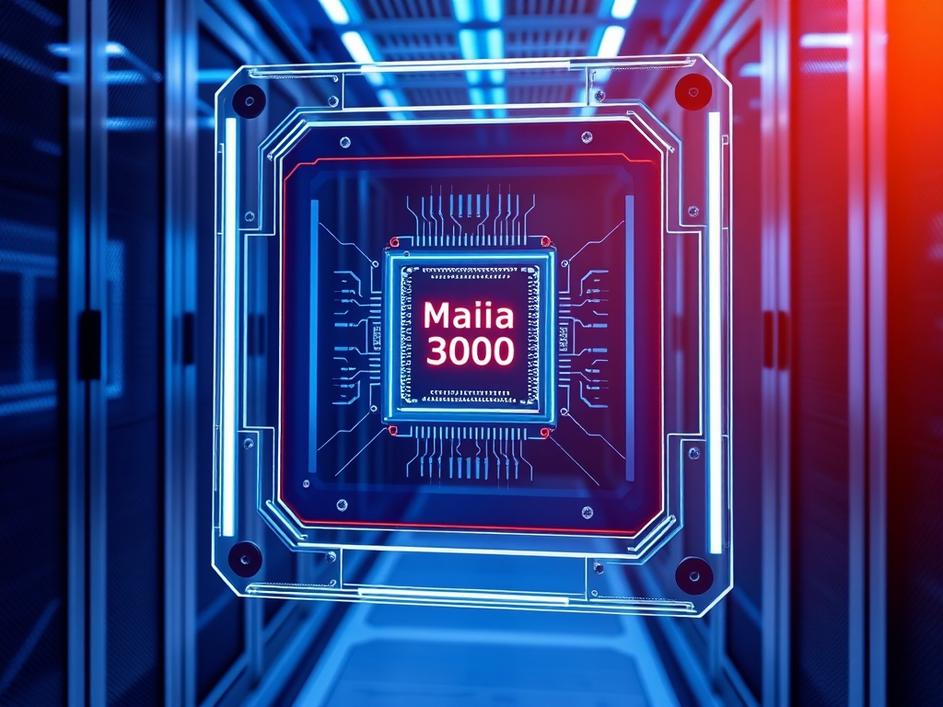
ToggleMicrosoft has set September for a public reveal of its Maia 300 chip, the company’s next step in the AI hardware race. This isn’t a gadget for consumers. It’s a data-center processor meant to power the AI workloads that sit at the core of Azure products and various Copilot-style services. The move mirrors a bigger trend: big cloud players trying to control more of the stack, from software to silicon, to squeeze out waste and tailor performance to their own models. For Microsoft, Maia 300 could be a way to push down costs per inference, improve latency, and tightly integrate hardware with the AI software stack that runs on top of it. In the run-up to the reveal, analysts will look for clues about its design goals, power envelope, and how it will play with Microsoft’s software tools. The real test will be whether the chip makes real-world workloads feel noticeably faster and cheaper.
Maia signals a continued shift toward in-house silicon in Redmond’s cloud strategy. It’s not just a new chip; it’s a statement about owning more of the hardware under the hood. The company has long partnered with external chipmakers, but Maia hints at a more cohesive platform where Microsoft designs the silicon to match its AI frameworks, engines, and data-center software. If the chip arrives with strong interconnects and memory bandwidth, it could deliver better performance per watt for large inference tasks. The manufacturing story also matters. Who will fabricate Maia 300, and at what scale? Will Microsoft push a custom node or rely on established foundries? These questions matter because timing and yields influence price and deployment pace. Even with a successful reveal, we’ll need to see a clear rollout plan and a steady supply chain to turn the hype into reliable service for customers.
From a developer and business angle, Maia 300 promises more predictable performance for AI workloads. Cloud users could see lower latency and higher throughput for popular tasks like language understanding and image analysis. If Microsoft can bundle the chip tightly with its Azure AI tools, customers might experience faster model loading, smoother scaling, and more cost-effective inference. There’s also a potential for better privacy and control when more of the stack runs in Microsoft’s own silicon, especially for sensitive deployments. For enterprises, that could translate into lower total cost of ownership and easier compliance. The risk, of course, is the software side. A new chip needs a solid compiler, well-supported libraries, and a smooth migration path for existing models. Without a clear software story, hardware gains can fade in real life.
Market context matters. Nvidia still dominates the AI accelerator space, and rivals like AMD, Google, and others are pushing their own solutions. Maia 300 will have to prove it can stand out not just on raw speed but on how it works with Microsoft’s software stack. The timing matters too. A September reveal builds hype ahead of the next wave of cloud upgrades, but it also invites scrutiny about performance claims and real-world gains. If Maia slides into production with robust tooling and a clear upgrade path for existing workloads, it could nudge customers toward Azure AI as their preferred platform. The ecosystem play matters as much as the chip itself, because developers tend to stick with platforms that offer mature tooling, good support, and predictable results.
There are obvious uncertainties. How the Maia architecture will handle memory bandwidth, interconnect latency, and energy use remains to be seen. The supply chain is another risk factor—chip production is a delicate business, and delays or shortages can slow even a well-timed launch. Compatibility with current AI frameworks and libraries is essential. If Microsoft builds a toolchain that feels disconnected from popular ML frameworks, adoption could stall. Then there’s the question of cadence: will Maia be a one-off, or will it be followed by improved revisions in quick succession? A steady, long-term roadmap would help reassure customers who depend on stable AI services.
Bottom line: Maia 300 is more than a single chip reveal. It signals a bigger bet on owning more of the AI stack, from hardware to software, in the Azure cloud. If Microsoft delivers on performance, energy efficiency, and a friendly software environment, Maia could push cloud AI toward higher efficiency and lower costs. If not, the hype may fade quickly as benchmarks disappoint. Either way, September will set the tone for how aggressively big tech plans to advance silicon for AI in the next few years. I’ll be watching not just the numbers, but how the platform evolves to support real-world workloads and developer needs. A good chip is useful only if the software and services around it actually thrive.



Comments are closed