

We are a digital agency helping businesses develop immersive, engaging, and user-focused web, app, and software solutions.
2310 Mira Vista Ave
Montrose, CA 91020

2500+ reviews based on client feedback
What's Included?
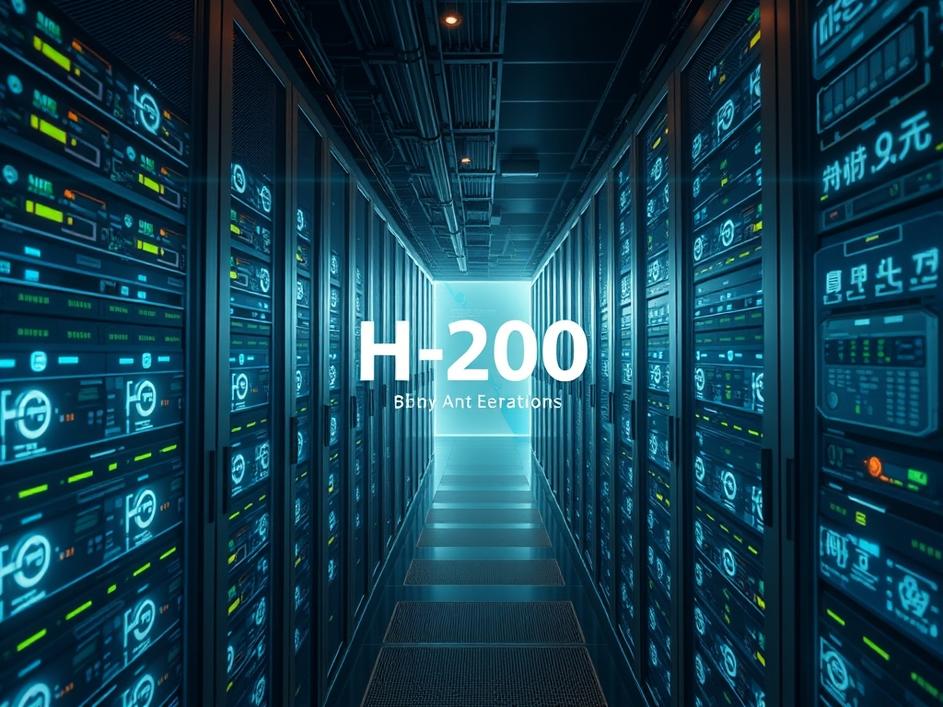
ToggleBig tech companies ByteDance (the parent company of TikTok) and Alibaba are reportedly eager to get their hands on Nvidia’s new H200 chips. This news highlights the ever-growing demand for powerful computing resources needed to fuel the latest artificial intelligence advancements. The H200 is the successor to the already impressive H100, and it promises even better performance for training and deploying complex AI models. What makes the H200 so desirable? It’s designed to handle massive datasets and intricate calculations much faster than previous generations, ultimately speeding up AI development and deployment. And with the AI space developing at a fast pace, the more powerful the AI chips they use, the better the AI products and services these companies can develop.
Both ByteDance and Alibaba have massive AI operations. ByteDance relies on AI to power TikTok’s recommendation algorithm, which is responsible for delivering that personalized video feed that keeps users engaged. A more powerful AI chip means a more refined algorithm, leading to increased user engagement and, ultimately, revenue. Alibaba, on the other hand, utilizes AI across its vast e-commerce empire, from product recommendations and fraud detection to logistics optimization and cloud computing services. The H200 could significantly improve the efficiency and effectiveness of these AI-driven systems, giving Alibaba a competitive edge in the market.
It’s impossible to discuss this news without acknowledging the complex geopolitical landscape. U.S. export controls have restricted the sale of certain advanced AI chips to China, aiming to limit the country’s technological advancement. The H200 may be subject to these restrictions, which could complicate ByteDance and Alibaba’s efforts to acquire the chips. This situation underscores the ongoing tech rivalry between the U.S. and China and the strategic importance of AI technology. The competition to acquire these chips is not just about technological advancement; it’s also about geopolitical influence.
The high demand for Nvidia’s H200 chips signifies the rapid growth and increasing importance of AI across various industries. As AI models become more sophisticated and data-intensive, the need for powerful computing hardware will only continue to grow. This demand will likely drive further innovation in the semiconductor industry, with companies racing to develop even more advanced AI chips. It also means that smaller companies may struggle to compete with tech giants like ByteDance and Alibaba, who have the resources to invest heavily in AI infrastructure. This could lead to further consolidation in the AI market, with a few dominant players controlling the most advanced AI technologies.
While the technical specifications of the H200 are impressive, it’s important to consider the real-world applications of this technology. For ByteDance, a more powerful AI chip could translate into more accurate and personalized content recommendations, leading to increased user satisfaction and platform growth. For Alibaba, the H200 could enable more efficient logistics operations, faster fraud detection, and improved cloud computing services for its customers. Ultimately, the benefits of the H200 will be felt by consumers and businesses alike, as AI continues to transform various aspects of our lives. This push for advancements also puts pressure on other companies to compete or potentially be left behind. The company with the fastest and most reliable AI will win in their respective market share. So, we can expect other top tech companies to try and acquire these AI chips in the near future, making it an AI arms race to compete at the forefront of the market.
The race for AI chip supremacy is far from over. Nvidia’s H200 is just the latest step in an ongoing evolution. We can expect to see even more powerful and specialized AI chips emerge in the coming years, driven by the ever-increasing demand for AI computing resources. As AI becomes more deeply integrated into our lives, the performance and efficiency of these chips will become even more critical. The companies that can develop and deploy the most advanced AI hardware will have a significant advantage in the future, shaping the direction of the AI industry and beyond.
Comments are closed