

We are a digital agency helping businesses develop immersive, engaging, and user-focused web, app, and software solutions.
2310 Mira Vista Ave
Montrose, CA 91020

2500+ reviews based on client feedback
What's Included?
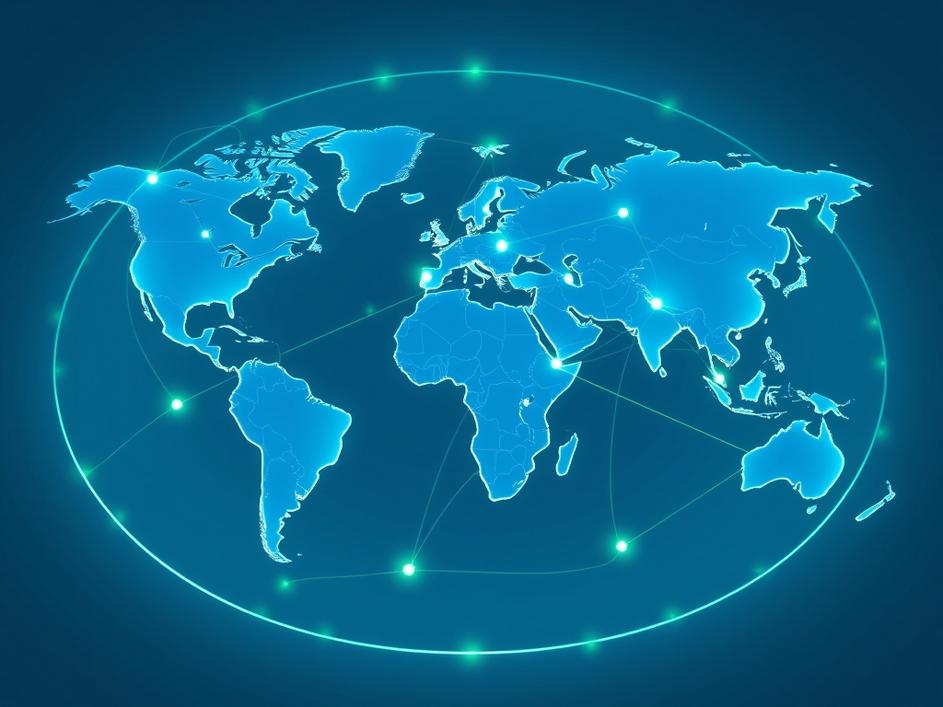
ToggleThe buzz around artificial intelligence (AI) is everywhere. It’s not just about Silicon Valley startups anymore. AI is rapidly becoming a global phenomenon, impacting industries and societies worldwide. But how exactly does this technology jump across borders? And who are the key players influencing its international journey? A recent talk at MIT explored these very questions, digging into the complex web of factors that determine how AI technologies spread across the globe.
The MIT event highlighted the importance of understanding the interplay between international trade and patent filings. These two elements are crucial indicators of AI’s diffusion. When companies trade goods and services that incorporate AI, the technology inevitably moves with them. Similarly, patent filings demonstrate where innovation is happening and where companies are seeking to protect their AI-related inventions. However, there’s a third, often overlooked, piece of the puzzle: political influence. Government policies, international agreements, and even diplomatic relations can significantly impact the flow of AI technology. For example, countries with strong research funding and supportive regulatory environments are more likely to attract AI investment and talent.
It’s tempting to think of AI diffusion as a simple case of one country developing a technology and then exporting it to others. The reality is much more complicated. The spread of AI is a multi-directional process, with ideas and innovations flowing in various directions. Moreover, different countries have different priorities and approaches to AI. Some may focus on developing AI for military applications, while others prioritize its use in healthcare or education. Understanding these nuances is essential for navigating the complex landscape of global AI.
The global diffusion of AI also has significant geopolitical implications. As AI becomes increasingly important for economic growth and national security, countries are vying for leadership in this field. This competition can lead to both collaboration and tension. On one hand, countries may seek to cooperate on AI research and development to share knowledge and resources. On the other hand, they may compete to attract the best AI talent and dominate key AI markets. The race to become an AI superpower is already underway, and the stakes are high.
As AI spreads across the globe, it’s crucial to consider the ethical implications. AI technologies can be used for good or ill, and it’s up to us to ensure that they are used responsibly. This requires careful attention to issues such as bias, fairness, and accountability. We need to develop ethical guidelines and regulations that promote the responsible development and deployment of AI. Furthermore, we need to foster a global dialogue on AI ethics to ensure that these technologies are used in a way that benefits all of humanity.
The future of AI’s global spread remains uncertain. Will it be characterized by collaboration or competition? The answer likely lies somewhere in between. We can expect to see both cooperation and rivalry as countries navigate the challenges and opportunities presented by AI. However, it’s crucial to remember that AI is a tool, and like any tool, it can be used for different purposes. By fostering a culture of responsible innovation and ethical development, we can harness the power of AI to create a better future for all.
One of the biggest challenges in the global diffusion of AI is ensuring that its benefits are shared equitably. Currently, a small number of countries and companies dominate the AI landscape. This concentration of power could exacerbate existing inequalities and create new ones. To avoid this, we need to democratize AI, making it more accessible to individuals and organizations in all parts of the world. This requires investing in education and training, promoting open-source AI technologies, and creating policies that support innovation in developing countries. By democratizing AI, we can unlock its full potential to address global challenges and improve the lives of people everywhere.
The global diffusion of AI is a complex and multifaceted phenomenon. It’s driven by a combination of technological, economic, and political factors. Understanding these factors is essential for navigating the AI revolution and ensuring that it benefits all of humanity. By fostering collaboration, promoting ethical development, and democratizing access, we can harness the power of AI to create a more just and sustainable world. The journey won’t be easy, but the potential rewards are enormous.


Comments are closed