

We are a digital agency helping businesses develop immersive, engaging, and user-focused web, app, and software solutions.
2310 Mira Vista Ave
Montrose, CA 91020

2500+ reviews based on client feedback
What's Included?
ToggleFor years, when you thought of artificial intelligence, you probably pictured massive data centers humming with servers. These power-hungry facilities were the domain where AI algorithms crunched numbers and learned patterns. But that’s changing, and NVIDIA is leading the charge. The company is actively extending the reach of its AI technologies far beyond those traditional data centers, bringing intelligence to unexpected places like factories, research labs, and even the electrical grid. This shift promises to reshape industries and improve efficiency in ways we’re only beginning to understand.
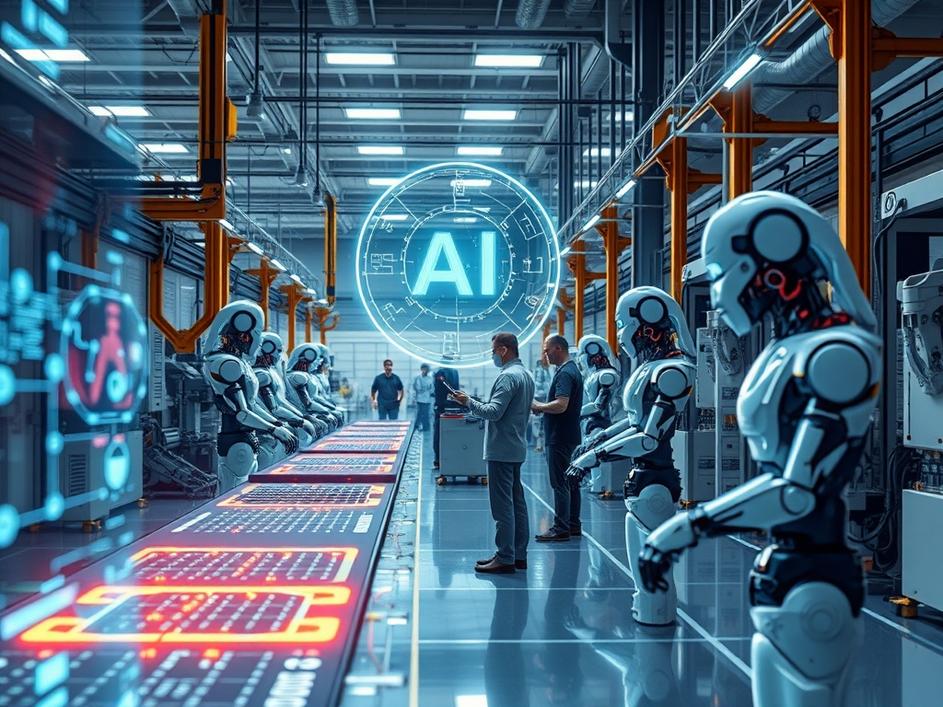
Imagine a factory floor where robots don’t just follow pre-programmed instructions, but actually learn and adapt to changing conditions. That’s the promise of AI-powered manufacturing. NVIDIA is working to embed its AI processing capabilities directly into factory equipment, enabling real-time analysis of production processes. This means machines can identify defects early, optimize workflows on the fly, and even predict maintenance needs before breakdowns occur. The result is increased productivity, reduced waste, and a more resilient manufacturing ecosystem. For example, AI can visually inspect products moving along an assembly line far faster and more accurately than a human, catching imperfections that might otherwise slip through. And these systems learn over time, becoming even better at their jobs as they accumulate more data.
Scientific research is often a slow and painstaking process, involving countless experiments and mountains of data to analyze. AI offers the potential to significantly accelerate this process by automating tasks, identifying patterns, and generating new hypotheses. NVIDIA is bringing its AI expertise to research labs, providing scientists with powerful tools to simulate complex phenomena, analyze large datasets, and design new experiments. This is particularly relevant in fields like drug discovery, materials science, and climate modeling, where the sheer complexity of the problems can be overwhelming. For example, AI can be used to screen millions of potential drug candidates, identifying those that are most likely to be effective against a particular disease, saving researchers years of work.
The electrical grid is a vast and complex network, responsible for delivering power to homes and businesses across the country. Managing this network efficiently and reliably is a constant challenge, especially as renewable energy sources like solar and wind become more prevalent. These sources are inherently variable, making it difficult to predict how much power they will generate at any given time. NVIDIA is applying its AI technology to help grid operators better manage these challenges, forecasting demand, optimizing power flow, and preventing outages. Smart grids use AI to analyze data from sensors and meters throughout the system, identifying potential problems before they escalate and making adjustments to maintain a stable and reliable power supply. This ultimately leads to a more efficient and sustainable energy future.
NVIDIA’s expansion into factories, labs, and grids represents a broader trend towards embedding AI into all aspects of our infrastructure. This isn’t just about making things faster or cheaper; it’s about creating systems that are more resilient, adaptable, and responsive to our needs. As AI becomes more pervasive, we can expect to see even more innovative applications emerge, transforming industries and improving our lives in countless ways. The key will be ensuring that these technologies are developed and deployed responsibly, with careful consideration of their ethical and societal implications. And so, we need to be aware of the long-term effects of such technologies on employment and also be aware of the dangers of autonomous machines performing actions with unforeseen results. It is exciting to see how AI technologies improve our lives but we also have to be weary of their integration.
While the potential benefits of widespread AI adoption are significant, there are also challenges to consider. Data security is a major concern, especially as more and more devices become connected and share information. Ensuring that sensitive data is protected from unauthorized access and misuse will be crucial. Ethical considerations are also paramount. As AI systems become more sophisticated, it’s important to address issues such as bias, fairness, and accountability. We need to ensure that AI is used in a way that is consistent with our values and that benefits all of society, not just a select few.
NVIDIA’s move to extend AI beyond data centers signals a significant shift in the landscape of artificial intelligence. By bringing AI to factories, labs, and power grids, NVIDIA is helping to create a more intelligent and efficient world. While challenges remain, the potential benefits are enormous. As AI continues to evolve, we can expect to see even more innovative applications emerge, transforming industries and improving our lives in countless ways. The future is intelligent, and NVIDIA is playing a key role in shaping that future.



Comments are closed