

We are a digital agency helping businesses develop immersive, engaging, and user-focused web, app, and software solutions.
2310 Mira Vista Ave
Montrose, CA 91020

2500+ reviews based on client feedback
What's Included?
ToggleIndian IT companies have been facing headwinds lately, causing concern among investors. A recent market dip saw a significant $68.6 billion wiped off the value of Indian IT stocks, and there’s worry that this could signal deeper problems. This downturn has caused Indian markets to underperform compared to their regional counterparts, raising questions about the sector’s future and its ability to adapt to emerging technologies like artificial intelligence.
The heart of the problem lies in a paradox: while AI presents enormous opportunities for growth and innovation, it also poses a threat to traditional IT service models. Indian IT firms have long thrived on providing labor-intensive services like software maintenance, business process outsourcing, and infrastructure management. But AI and automation are rapidly changing the game, potentially displacing these roles and requiring companies to shift toward higher-value, more specialized services.
The concern is whether Indian IT companies can adapt quickly enough. The transition requires significant investment in AI research and development, retraining of the workforce, and a willingness to embrace new business models. Some analysts believe that Indian firms are lagging behind their global peers in these areas, and that this could put them at a disadvantage in the long run. The fear is that they will be slow to adopt AI and leverage its benefits.
While the AI hype is real, the practical implementation of AI solutions in many industries is still in its early stages. Concerns about data privacy, security, and ethical considerations are slowing down adoption rates. It will take time for businesses to fully integrate AI into their operations. Indian IT companies must navigate these challenges carefully, building trust and demonstrating the value of their AI offerings to clients.
The recent market correction could be a wake-up call for Indian IT companies. It highlights the need for proactive strategies and investments to remain competitive in the AI-driven landscape. This includes focusing on niche areas where they can differentiate themselves, building stronger partnerships with AI technology providers, and creating a culture of innovation within their organizations. They need to reskill their workforce, foster innovation, and explore strategic partnerships.
Successful IT firms of the future will need to provide more than just coding and technical skills. They will also need to understand business strategy, design thinking, and the ethical implications of technology. Indian IT companies will need to cultivate these skills within their workforce to deliver comprehensive solutions that meet the evolving needs of their clients. They must understand how to solve real-world business problems, not just write lines of code.
For investors, the current situation presents both risks and opportunities. The short-term outlook for Indian IT stocks may be uncertain, but the long-term potential remains significant. Companies that successfully adapt to the AI revolution and demonstrate a clear vision for the future could see substantial growth. Careful analysis and due diligence are crucial to identify the winners and losers in this evolving landscape. The recent stock slump may be an opportunity to buy into solid companies at discounted prices, but it’s essential to do your homework.
India still boasts a significant advantage: a large pool of talented engineers and IT professionals. This talent pool can be leveraged to build and deploy AI solutions for clients around the world. By focusing on education and training, India can maintain its position as a leading IT outsourcing destination. Furthermore, India’s domestic market offers huge opportunities for IT companies, as businesses and government agencies increasingly adopt digital technologies.
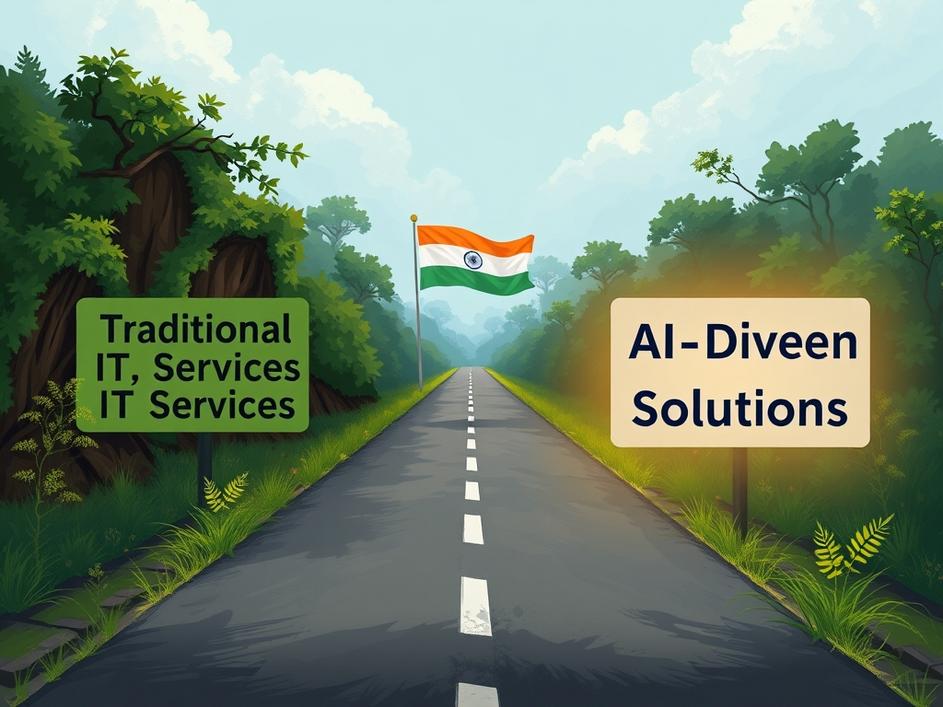
The Indian IT sector is at a crossroads. The rise of AI presents both a significant challenge and a tremendous opportunity. Whether Indian IT companies can successfully navigate this transition will depend on their ability to adapt, innovate, and invest in the future. The road ahead may be bumpy, but the potential rewards are substantial for those who embrace change and embrace the power of AI. The current market downturn might be a temporary setback, but it also provides a chance for Indian IT to reinvent itself and emerge stronger than ever.



Comments are closed