

We are a digital agency helping businesses develop immersive, engaging, and user-focused web, app, and software solutions.
2310 Mira Vista Ave
Montrose, CA 91020

2500+ reviews based on client feedback
What's Included?
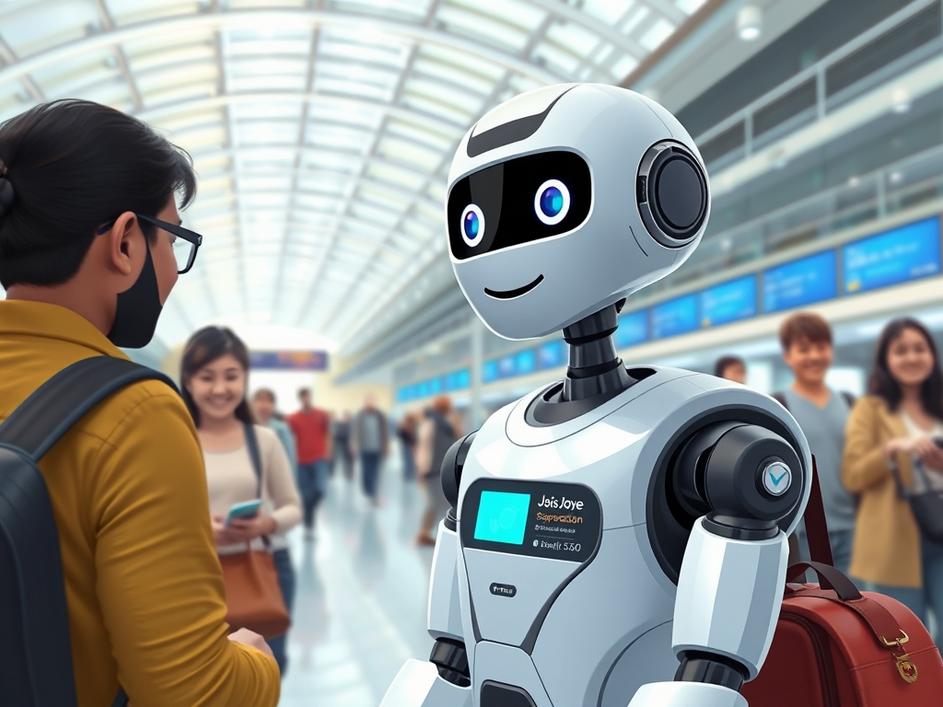
ToggleAirports can be chaotic places. Finding your gate, grabbing a quick bite, or even just locating a charging station can feel like a Herculean task. San José Mineta International Airport is trying something new to ease passenger stress: an AI-powered robot named José. This isn’t just a gimmick; it’s a real attempt to make the airport experience smoother for everyone.
José’s job is simple: help travelers. He roams the terminals, answering questions, providing directions, and offering information about airport services. Think of him as a walking, talking information booth, but with a digital brain. He can guide you to the nearest restroom, tell you which restaurants have the shortest lines, or even help you find a specific store. José is designed to alleviate common travel pain points.
José isn’t just pre-programmed with a bunch of answers. He uses artificial intelligence to understand natural language. That means you can ask him questions like you would ask a human, without having to use specific keywords or phrases. He is able to analyze your words to decipher the correct meaning and offer pertinent answers. He can understand different languages and dialects. Plus, if José can’t answer a question, he can connect you with a real human agent who can provide more specific assistance. It is an integration between AI and a team of human workers. José can learn with every human interaction. This means that the more people interact with José, the better and more effective he will become.
There are several advantages to having an AI assistant in an airport. First, José can provide consistent and reliable information. Unlike humans, he doesn’t get tired, doesn’t have bad days, and always has access to the latest airport data. Second, he can handle multiple inquiries at once, reducing wait times and freeing up human staff to focus on more complex tasks. Third, José can collect data on passenger behavior, helping the airport to identify areas for improvement and optimize its services. Where are travelers frequently getting lost? What information are they consistently asking for? The answers to these questions can help streamline airport operations.
Of course, there are also potential drawbacks to consider. Some people may be uncomfortable interacting with a robot, preferring human assistance. Others might worry about privacy issues related to data collection. It’s important for the airport to address these concerns proactively, ensuring that José is used responsibly and ethically. How is the data collected from these interactions being used? Are the interactions being recorded? Addressing these questions will ensure that trust is being built with the public. Additionally, while José can handle many common inquiries, he may not be able to address every situation. Complex or unusual requests may still require human intervention. The AI robot is there to augment and complement human services, not replace them entirely.
José represents a growing trend of using AI to improve the airport experience. As AI technology continues to develop, we can expect to see even more robots and automated systems in airports. These systems could handle tasks such as baggage handling, security screening, and even check-in. The goal is to make air travel more efficient, convenient, and enjoyable for everyone. One can imagine a future where personalized travel assistance is readily available, catering to individual needs and preferences. Imagine having a virtual assistant provide real-time updates on flight delays, gate changes, and even recommend nearby restaurants based on your dietary restrictions. The possibilities are vast.
The success of José in San José could pave the way for similar deployments in other airports around the world. Airports are constantly looking for ways to improve efficiency and enhance the passenger experience. AI-powered robots offer a promising solution, providing reliable information, reducing wait times, and freeing up human staff to focus on more complex tasks. If José proves to be a valuable asset to San José Airport, other airports may be quick to adopt similar technologies. This could lead to a more standardized and seamless travel experience across different airports.
José is not a perfect solution, but he is a step in the right direction. He is a tool to improve the travel experience. He is one component of a huge system that has multiple different roles and responsibilities. He represents a willingness to embrace new technology and explore innovative ways to make air travel less stressful. Whether you’re a frequent flyer or an occasional traveler, the idea of having an AI assistant to guide you through the airport is certainly appealing. As AI technology continues to evolve, we can expect to see even more creative and effective uses of it in the travel industry. The future of air travel may be closer than we think. And it might just involve a friendly robot named José.


Comments are closed