

We are a digital agency helping businesses develop immersive, engaging, and user-focused web, app, and software solutions.
2310 Mira Vista Ave
Montrose, CA 91020

2500+ reviews based on client feedback
What's Included?
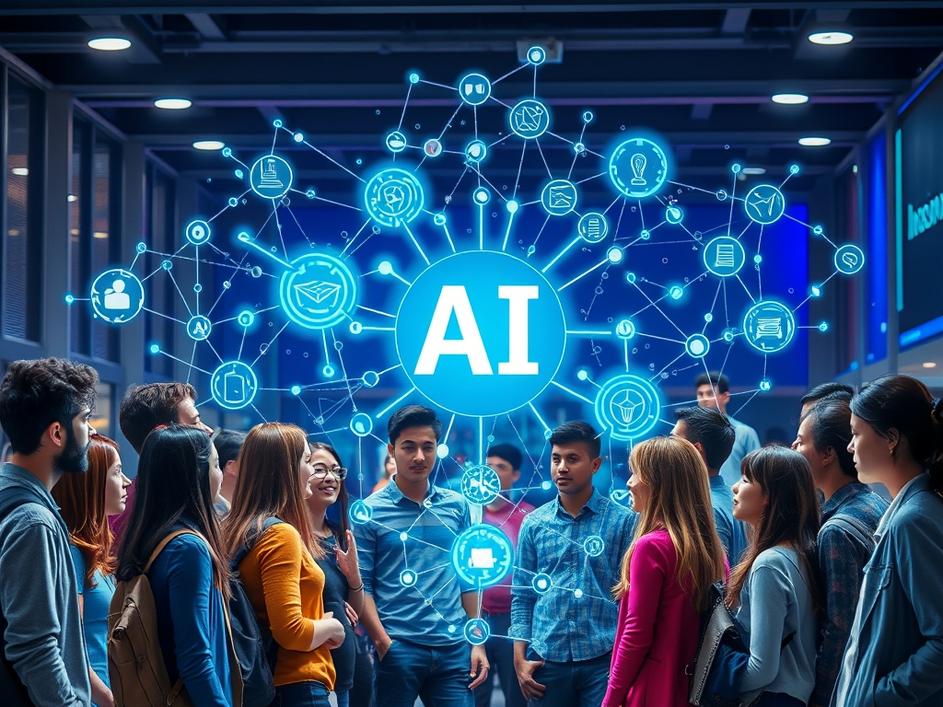
ToggleThe rise of artificial intelligence isn’t just reshaping industries; it’s also causing a significant shift in how college students view their future careers. A recent study reveals that a notable percentage of students in the United States are switching their majors, and AI is a major driving force behind this change. The traditional path of choosing a major based on personal interests or perceived job security is being challenged by the growing awareness of AI’s capabilities and its potential impact on the job market. Put simply, many students are now asking themselves, “Will a robot eventually do my job?”
Choosing a college major is already a daunting task. Students have to balance their passions with practical considerations such as earning potential and job availability. Add the rapidly evolving landscape of AI, and the decision becomes even more complex. It’s not surprising that students are experiencing a degree of uncertainty and anxiety as they try to predict what skills will be valuable in the future. Some students may see AI as a threat, leading them to abandon majors that are perceived as vulnerable to automation. On the other hand, some students may see AI as an opportunity, prompting them to pursue majors that focus on developing and implementing AI technologies.
The majors experiencing the biggest shakeups are in fields expected to face heavy automation. For example, roles involving repetitive tasks, data entry, or even some forms of analysis may seem less appealing as AI becomes more sophisticated. This doesn’t necessarily mean that these fields will disappear entirely, but it does suggest that the nature of work will change, requiring different skills and knowledge. Many students are likely thinking of switching to fields requiring more human involvement, creativity and critical thinking.
However, it’s not all doom and gloom. The rise of AI is also creating new opportunities and exciting career paths. Students are increasingly drawn to majors that focus on developing, implementing, and managing AI technologies. Fields such as computer science, data science, and machine learning are experiencing a surge in popularity. These students see AI not as a threat, but as a powerful tool that can be used to solve complex problems and improve people’s lives. This positive outlook is crucial for driving innovation and ensuring that AI is used responsibly and ethically.
It’s important to remember that AI is not a replacement for human intelligence. Many skills, such as creativity, critical thinking, emotional intelligence, and communication, are difficult for AI to replicate. As AI takes over routine tasks, these human skills will become even more valuable. Therefore, students who are considering switching majors should not solely focus on technical fields. They should also explore majors that emphasize the development of these essential human skills. Fields such as education, social work, healthcare, and the arts will likely remain in demand, as they rely heavily on human interaction and empathy.
Ultimately, the key to success in the age of AI is adaptability. Students need to be prepared to learn new skills, adapt to changing job requirements, and embrace new technologies. Colleges and universities have a crucial role to play in preparing students for this future. They need to offer courses and programs that focus on developing both technical skills and essential human skills. They also need to provide students with opportunities to gain practical experience through internships, research projects, and other hands-on activities. Moreover, career counseling must evolve to assist students in navigating this new landscape, offering guidance on emerging job roles and the skills needed to thrive in them. By fostering adaptability, we can ensure that the next generation is well-equipped to navigate the challenges and opportunities of the AI revolution.
The best approach is to focus on skills that are transferable across different industries and job roles. These include problem-solving, critical thinking, communication, collaboration, and creativity. Students who develop these skills will be well-positioned to adapt to changing job requirements and seize new opportunities, regardless of their major.
The influence of AI on career choices is more than just a trend; it’s a sign of a fundamental shift in the nature of work. It’s a sign that we are moving towards a future where lifelong learning is essential. The skills and knowledge that students acquire in college will not be enough to sustain them throughout their careers. They will need to continuously update their skills and knowledge to stay relevant in a rapidly changing job market. This requires a commitment to lifelong learning and a willingness to embrace new technologies.
The AI revolution is reshaping the world of work, and college students are rightly taking notice. While uncertainty and anxiety are understandable, it’s important to remember that AI also presents incredible opportunities. By focusing on developing a combination of technical skills and essential human skills, students can position themselves for success in the age of AI. The key is to embrace adaptability, commit to lifelong learning, and maintain a focus on the human element. In doing so, they can navigate the unknown and create fulfilling careers that contribute to a better future.



Comments are closed