What Dell showed at the Pangea 5 event
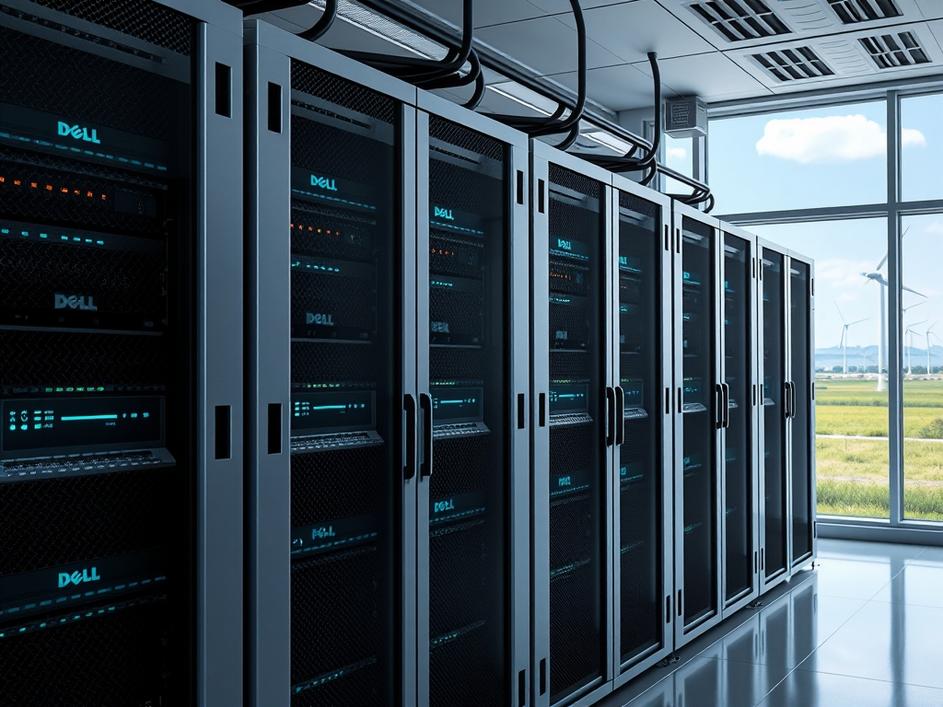
Dell gathered its partners and press on a sunny morning in May to talk about the next generation of its server line, called Pangea 5. The name sounds like a big idea, and the machines are built to handle the kind of workloads that are popping up in AI research and in big data projects that try to model energy systems. The announcement came at a time when many companies are looking for hardware that can run large language models without blowing up their electricity bill. Dell used the stage to say that its new platform is meant to be a solid base for both AI developers and engineers who work on climate‑related simulations.
Hardware that talks to AI workloads
The Pangea 5 servers are equipped with the latest generation of CPUs from Intel and AMD, plus a range of GPU options from Nvidia and AMD. Dell also added support for newer accelerator cards that are purpose‑built for tensor operations. The design lets you mix and match components, so a small team can start with a single node and later add more racks as their models grow. Memory capacity is pushed up to 6 TB per node, and storage uses NVMe drives that can deliver over 5 GB/s of sequential read speed. In plain terms, the box can feed data to a neural net fast enough to keep the training loop from stalling.
Energy‑focused computing as a design goal
Dell didn’t just talk about raw speed. It highlighted a set of power‑saving features that are meant to keep the carbon footprint low. The chassis includes a new liquid‑cooling loop that moves heat away from the chips more efficiently than traditional fans. The firmware can throttle power based on the actual load, so when a model is idle for a few seconds the whole rack can drop to a fraction of its peak draw. Dell also promised tighter integration with renewable‑energy management software, letting data‑center operators match the server’s consumption with solar or wind output in real time.
How the market might react
Competitors like HPE and Lenovo have already released similar AI‑focused servers, but Dell’s claim is that the Pangea 5 line is more flexible and greener. If the price stays competitive, we could see a shift in buying patterns, especially among research labs that have limited budgets but need to run climate models alongside AI experiments. Cloud providers may also take a look, because the ability to scale power usage up and down matches the pay‑as‑you‑go model they sell to customers. The real test will be how quickly Dell can ship enough units to meet demand.
What investors should keep in mind
From an investment angle, Dell’s push into AI and energy computing could open up a new revenue stream that sits beside its traditional PC and server business. The company has been trying to improve its margin on enterprise hardware, and the Pangea 5 platform could help if it attracts long‑term contracts. At the same time, the market for AI chips is still volatile, and Dell will need to keep its supply chain tight to avoid shortages. Watching the order book for the first quarter after launch will give a clearer picture of whether the hype translates into real sales.
Final thoughts on Dell’s direction
Overall, the Pangea 5 announcement feels like a sensible step rather than a flashy stunt. Dell is acknowledging that the future of computing is tied to both artificial intelligence and the need to run that AI responsibly on the planet. By offering a platform that can be tuned for performance and for power, the company gives customers a tool that fits many use cases. Whether this will move the needle for Dell’s stock or for the broader industry remains to be seen, but the focus on flexibility and sustainability is a clear sign of where the hardware world is heading.





Comments are closed