

We are a digital agency helping businesses develop immersive, engaging, and user-focused web, app, and software solutions.
2310 Mira Vista Ave
Montrose, CA 91020

2500+ reviews based on client feedback
What's Included?
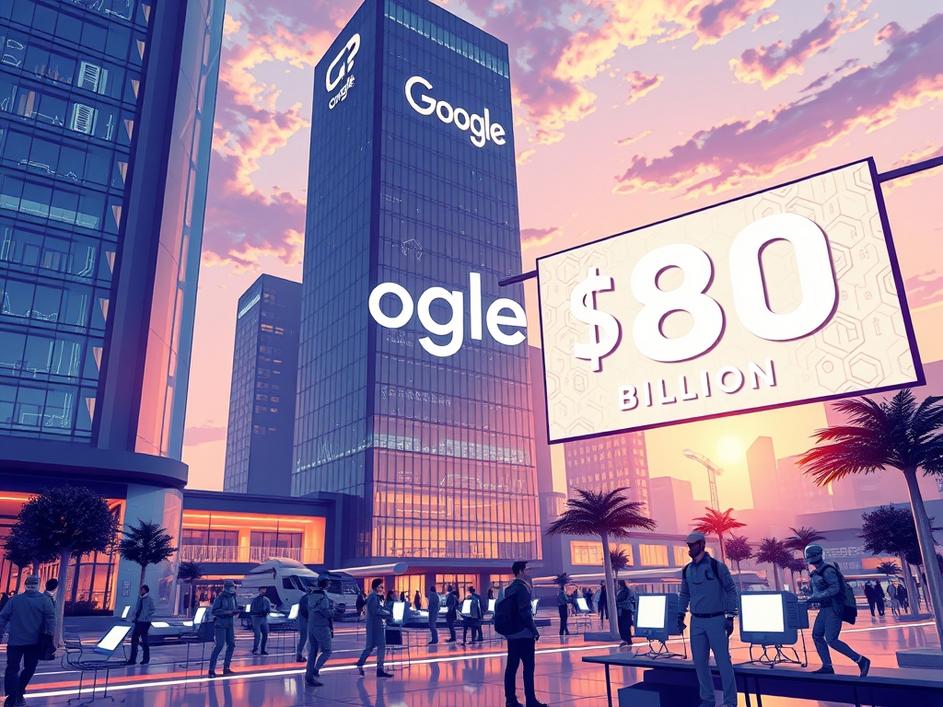
ToggleAlphabet just announced it will raise about $80 billion in new equity. The move is tied to a massive push into artificial intelligence. The company told investors that the cash will help fund everything from next‑gen chips to new cloud services. It’s a bold statement, especially because the amount is larger than any single AI‑related raise we have seen from a tech giant in recent years. The timing also lines up with the I/O developer conference, where Google is expected to showcase fresh AI tools for developers worldwide.
Instead of borrowing or dipping into cash reserves, Alphabet chose to sell more shares. That tells us the board believes the market will reward the risk. By issuing equity, the company can lock in low‑cost capital now, before any AI projects start to eat up cash flow. It also spreads the financial burden across a broader base of shareholders, which can be reassuring when the projects are still in early stages.
Alphabet has not been shy about spending on AI before. Over the past decade it poured billions into DeepMind, acquired AI startups, and built its Tensor Processing Units. Those investments have paid off in products like Google Assistant and Bard. However, those spends were largely funded from operating cash. The new $80 billion raise is a step up: it signals that the next wave of AI work will be far larger, and that the company wants a dedicated war chest rather than dipping into day‑to‑day earnings.
The cash could flow into several areas. First, custom silicon – Google already designs its own chips, but the next generation will need more power and efficiency for large language models. Second, talent – hiring top researchers and engineers is expensive, especially with competition from OpenAI and Microsoft. Third, cloud infrastructure – expanding Google Cloud’s AI services will require new data centers and better integration tools for developers. Finally, consumer products – think smarter Search, more capable Android features, and new AI‑driven hardware.
When the news broke, Alphabet’s stock saw a modest uptick, reflecting confidence that investors see AI as a growth engine. Analysts noted that the dilution risk is offset by the potential upside of dominant AI products. Some skeptics warned that raising such a large amount could signal that the company expects a long road to profitability on its AI ventures. Overall, the market seems to have priced in the announcement, but the real test will be how quickly the funds translate into revenue.
Throwing $80 billion at AI is not without danger. The field moves fast, and a single breakthrough elsewhere can make a massive investment look outdated. Regulatory scrutiny is also growing, with governments watching AI use in privacy, bias, and competition. If Alphabet’s AI tools run into legal hurdles, the capital could be tied up in compliance rather than product development. Moreover, the sheer size of the raise could put pressure on the company to deliver results faster than the technology naturally evolves.
Microsoft and Amazon are already deep in the AI race, each with their own cloud‑based AI platforms. Seeing Alphabet commit $80 billion may push them to accelerate their own spending or look for strategic partnerships. Smaller AI startups could also feel the squeeze, as investors may prefer to back a well‑funded giant rather than a risky newcomer. On the flip side, the increased competition could spark more collaboration, especially around open standards and safety protocols.
For the developer community, the raise could mean more tools, better APIs, and stronger support from Google Cloud. If the money fuels new services, we might see easier ways to integrate large language models into apps, or cheaper access to high‑performance GPUs. However, developers should also stay alert to pricing changes – a larger investment base could lead Google to adjust its cloud pricing to recoup costs. Keeping an eye on the I/O announcements will give clues about which APIs will get the biggest push.
Alphabet’s decision to raise $80 billion in equity is a clear signal that AI is at the core of its future strategy. The move gives the company a massive financial runway, but it also raises expectations from investors, regulators, and users. If the funds are deployed wisely – into hardware, talent, and services that solve real problems – the payoff could be huge. If not, the company could face dilution headaches and a slower return on investment. Either way, the announcement reshapes the AI landscape and gives everyone a reason to pay close attention to what Google does next.
Source: Original Article


Comments are closed