

We are a digital agency helping businesses develop immersive, engaging, and user-focused web, app, and software solutions.
2310 Mira Vista Ave
Montrose, CA 91020

2500+ reviews based on client feedback
What's Included?
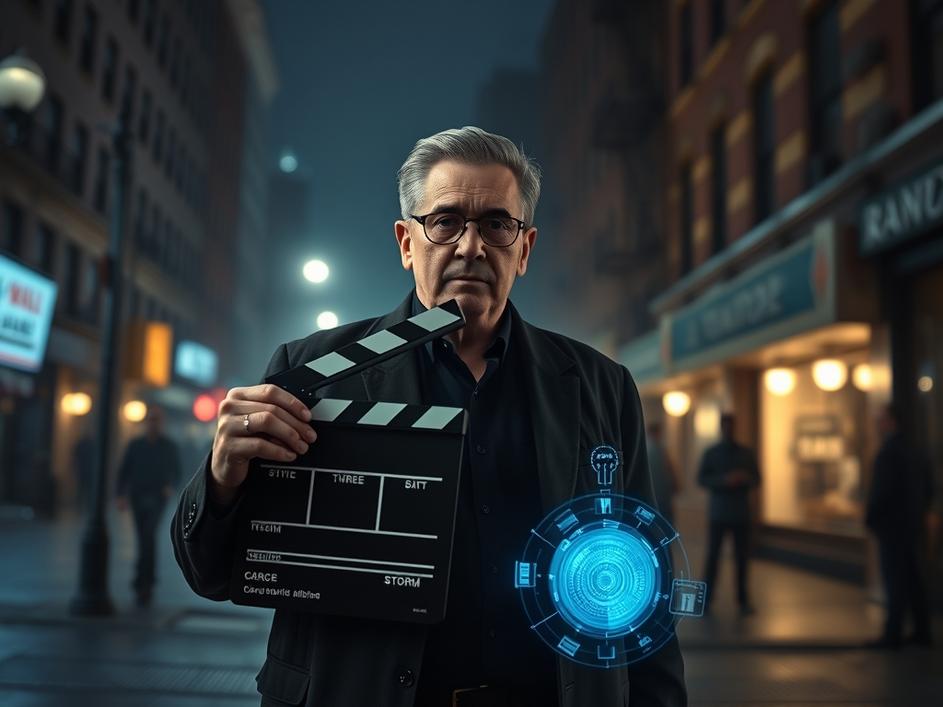
ToggleMartin Scorsese, the name that has been attached to some of the most iconic movies of the last half‑century, has taken a step that would have seemed unthinkable a decade ago. He announced a partnership with Black Forest Labs, a company that builds artificial‑intelligence systems for creative work. The move signals that even the most seasoned directors are willing to experiment with code‑driven ideas. It isn’t about replacing the human touch; it’s about adding another brush to the palette. For a filmmaker who has spent his career arguing for the power of storytelling, this choice feels like a natural curiosity rather than a stunt.
Artificial‑intelligence tools have been quietly making their way into post‑production for years. Simple tasks like color matching, sound cleanup, and even basic cut suggestions have become automated. Black Forest Labs focuses on a more ambitious goal: generating visual concepts, drafting storyboards, and offering script suggestions that adapt to a director’s style. The technology learns from massive datasets of film language, then tries to predict what could work in a new scene. When Scorsese says he will use these tools, he is testing whether a machine can understand the rhythm of a Scorsese cut, the tension of a long take, or the mood of a dimly lit street.
From a practical standpoint, the collaboration could speed up the pre‑visualization phase. Imagine a director sitting with an AI that instantly sketches a chase sequence based on a few written notes. That could free up time for actors to rehearse, for cinematographers to plan lighting, or for writers to refine dialogue. On a larger scale, the partnership might open doors for smaller studios that lack big budgets. If a reliable AI can generate high‑quality concept art, the barrier to entry for ambitious projects could drop. For Scorsese, it might also be a way to revisit ideas that never made it to the screen, giving them a fresh visual language without the usual cost.
Any time a new technology touches an art form, questions arise. Who owns a scene that was suggested by an algorithm? If an AI proposes a visual that looks like a famous painting, does that infringe on the original artist’s rights? Scorsese has always spoken about the responsibility of a filmmaker to the audience, and now he will have to consider the responsibility of the machine. There is also the fear that younger creators might lean too heavily on shortcuts, losing the messy trial‑and‑error that often leads to breakthroughs. The partnership forces the industry to draw a line between assistance and automation, and to decide where credit belongs.
Watching this unfold feels like watching an old friend try a new sport. Scorsese isn’t abandoning his instincts; he’s simply testing a new teammate. The real value will be in how he integrates the AI’s output with his own judgment. If he uses the tool to explore ideas he might never have thought of, then the collaboration could enrich the language of cinema. If he lets the algorithm dictate the final cut, the result could feel hollow. My hope is that the partnership stays true to the spirit of experimentation that has defined Scorsese’s career. The best movies often come from a blend of discipline and surprise, and a well‑trained AI could be the surprise element that sparks fresh discipline.
In the end, the partnership is a reminder that art and technology have always been linked. The first movies were made with hand‑cranked cameras; today they might be edited with code that learns from decades of footage. Scorsese’s willingness to sit at that intersection sends a message that even legends can be students. Whether the results become classics or footnotes, the experiment will give the rest of the industry a clearer view of what AI can actually do for storytelling. It’s a chance to ask tough questions, to set standards, and maybe to discover a new kind of visual poetry that only a human‑machine conversation can create.
Source: Original Article


Comments are closed