

We are a digital agency helping businesses develop immersive, engaging, and user-focused web, app, and software solutions.
2310 Mira Vista Ave
Montrose, CA 91020

2500+ reviews based on client feedback
What's Included?
ToggleIn the last decade the farm calendar has turned into a guessing game. A sunny morning can become a soaking rainstorm in minutes, and that split second decides if a seed will grow or rot. Farmers used to trust old almanacs and gut feeling. Today they need something as exact as a GPS coordinate. The new partnership between OneSoil and Rainbow Weather promises a forecast that knows the shape of a single field, not just a whole region. It gives growers a chance to plan planting, irrigation and harvest with confidence. It also lets them look beyond the next week and think about longer cycles. When a farmer can see the rain coming, they can move equipment, protect seedlings, or delay sowing. That small choice can mean the difference between profit and loss.
Since the early 2000s extreme rainfall events have risen sharply. In Europe, floods have become a regular headline, and in many parts of the world the wet season is arriving earlier and ending later. Those swings mess up planting windows and push harvest dates into risky territory. A field that once received a gentle drizzle now faces a sudden deluge that washes away topsoil. The result is lower yields, higher costs and more uncertainty for everyone in the food chain. Smallholders feel the pressure hardest because they cannot afford expensive insurance or large storage facilities. The climate trend makes a reliable, field‑scale forecast not just nice to have, but essential for staying in business.
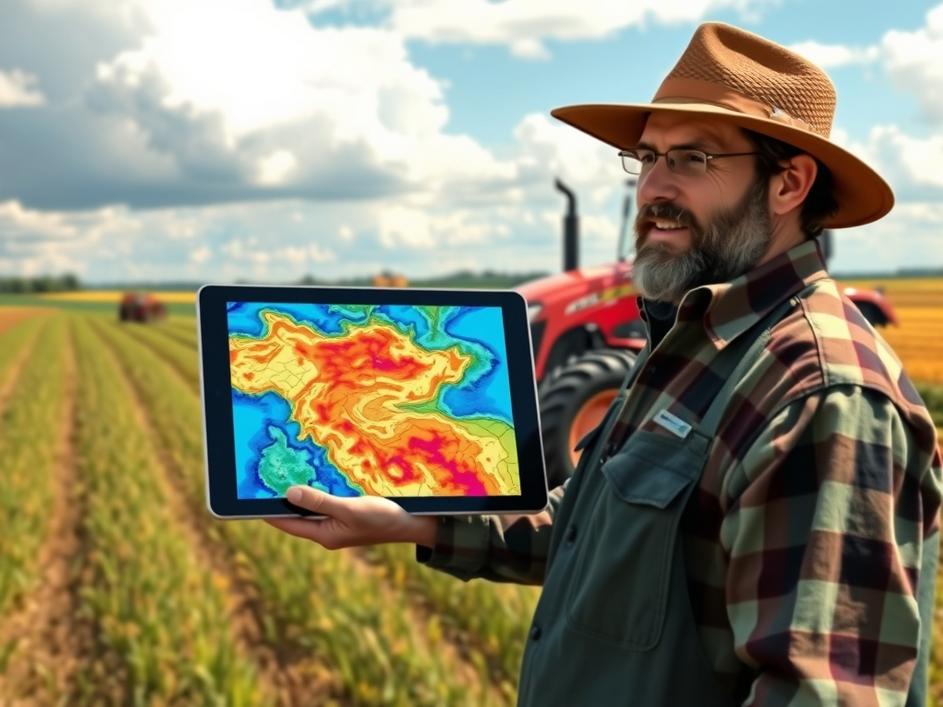
OneSoil brings satellite‑derived maps of soil health, crop type and field boundaries. Rainbow Weather adds a deep‑learning model that reads weather radar, satellite images and local sensor data to predict rain at a resolution of a few hundred meters. Together they have built a cloud service that pushes a five‑day rain outlook straight to a farmer’s phone or tractor console. The system updates every hour, so the forecast stays fresh as storms move. Because the model is trained on years of European and North American weather, it can handle both slow, steady rains and fast, intense showers. The partnership also promises to expand to Asia and Africa within the next two years, aiming to help the 2 billion people who farm on small plots.
The biggest advantage is timing. A farmer can see that a 10 mm rain will fall over the western half of a field in the next 12 hours, while the eastern side stays dry. With that knowledge they can delay sowing on the wet side, or apply a quick‑dry fertilizer only where it will not be washed away. Irrigation schedules become smarter too – water is turned on only where the forecast shows a dry spell. The technology also feeds into yield models, so a farmer can estimate how much the rain will boost or hurt the upcoming crop. In practice, the tool reduces wasted inputs, cuts fuel use and lowers the risk of a total loss from unexpected flooding.
Even the best forecast is useless if nobody trusts it. Many growers are used to traditional methods and may doubt a computer model. Building trust will require clear explanations of how the AI works and proof that it beats old methods. Data privacy is another concern – the service needs precise field boundaries, which some farmers consider sensitive. OneSoil says it stores data anonymously and only uses it to improve the model. Connectivity can also be a problem in remote areas where mobile internet is spotty. The partnership is addressing that by offering offline downloads that sync when a signal is available. Finally, cost matters; the subscription must be affordable for small farms, otherwise the benefits stay out of reach.
Accurate, hyperlocal rain forecasts could become as common as a weather app on a phone, but tailored for the soil beneath our feet. If OneSoil and Rainbow Weather can keep the price low, protect farmer data and prove the model works season after season, adoption could spread quickly. That would give growers a real tool to fight the volatility that climate change brings. In the long run, better decisions on the field mean more stable food supplies and less waste. The partnership is a step toward a future where technology helps farmers stay ahead of the storm, instead of being caught off guard.
Source: Original Article

Comments are closed