

We are a digital agency helping businesses develop immersive, engaging, and user-focused web, app, and software solutions.
2310 Mira Vista Ave
Montrose, CA 91020

2500+ reviews based on client feedback
What's Included?
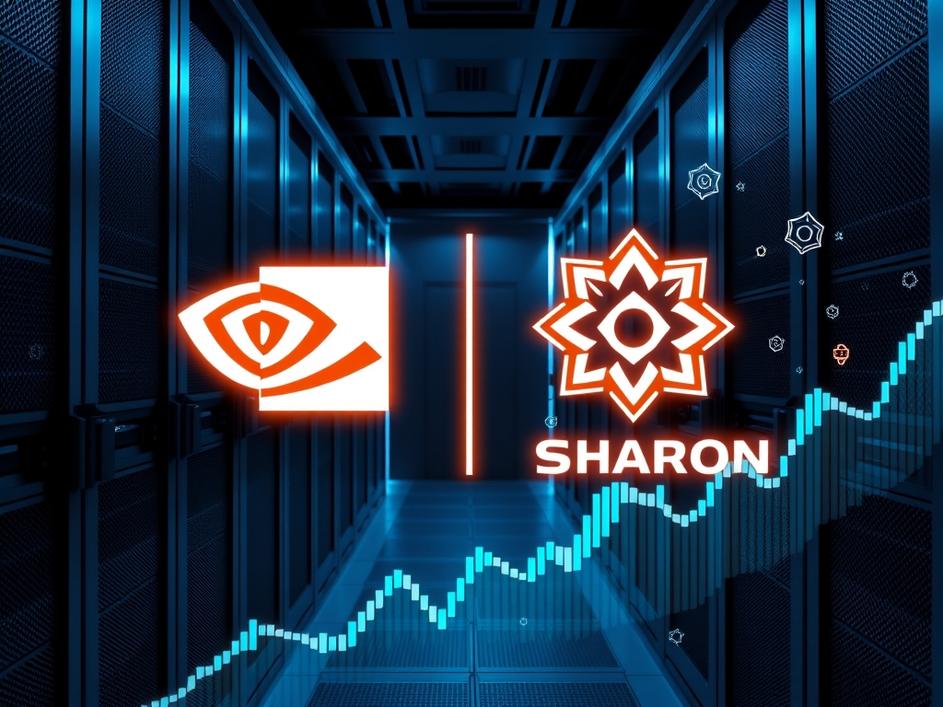
ToggleNvidia has been the headline of every tech chat lately. A new partnership that ties its chips to a fast‑growing AI startup has sent investors scrambling. The deal, announced on June 12, pairs Nvidia’s latest GPU platform with Sharon AI’s proprietary models, giving the smaller firm a hardware edge that was previously out of reach. For most traders, the news feels like a clear signal that Nvidia’s growth engine is still in overdrive. The stock jumped sharply in the minutes after the press release, and the momentum has not faded. In this post I’ll break down what the agreement actually looks like, why it matters for both companies, and what it could mean for the broader AI market.
The contract is essentially a supply‑and‑support pact. Nvidia will provide Sharon AI with a dedicated pool of A100‑class GPUs, along with priority access to upcoming Hopper‑based silicon. In return, Sharon AI commits to run its flagship language model exclusively on Nvidia hardware for the next three years, and to co‑market the solution to enterprise customers. The agreement also includes a revenue‑share component that kicks in once the joint offering crosses a $200 million sales threshold. While the fine print is still under NDA, analysts estimate the upfront hardware commitment could be worth upwards of $150 million. That amount alone is enough to move the needle on Nvidia’s quarterly guidance, especially when you consider the high margin on GPU sales.
When the news broke, Nvidia’s shares rose more than 6 % in after‑hours trading, pushing the ticker toward a fresh all‑time high. At the same time, Sharon AI (NASDAQ:SHAZ) surged past the 30 % mark, outpacing most of the AI‑related names on the exchange. The volume on both stocks was several times the daily average, indicating that many investors were eager to get a piece of the action. Some market watchers pointed out that the move is partly a psychological boost – a reminder that Nvidia’s ecosystem is still expanding. Others warned that the rally could be short‑lived if the broader tech market cools down. Still, the price action suggests that the market is pricing in a meaningful upside for both parties.
Nvidia’s core business has always been about selling silicon that can crunch massive amounts of data. The AI boom has turned that capability into a cash‑cow, and deals like the one with Sharon AI keep the pipeline full. The company’s recent earnings showed a double‑digit increase in GPU revenue, and the new partnership adds a predictable stream of recurring income through the revenue‑share clause. Moreover, by locking in a fast‑growing customer, Nvidia reduces the risk that a competitor could steal market share with a rival chip. The deal also gives Nvidia a chance to test new software stacks in a real‑world setting, which can feed back into future product designs. All of these factors combine to make the stock look more attractive than a simple “chip maker” label would suggest.
The agreement is a reminder that the AI market is still in its early partnership phase. Smaller firms with clever models need the horsepower that only a handful of manufacturers can provide. In return, those manufacturers gain credibility and a foothold in niche verticals. This symbiotic relationship is likely to repeat itself as more startups emerge with specialized solutions for finance, healthcare, and robotics. Investors should watch for similar deals, because they often act as early indicators of where the next wave of demand will flow. At the same time, the concentration of AI workloads on a few GPU providers raises questions about supply chain resilience and pricing power. If Nvidia continues to secure exclusive contracts, it could tighten its grip on the market, but it also invites regulatory scrutiny.
All things considered, the Nvidia‑Sharon AI deal feels like a win‑win that justifies the recent stock surge. The partnership gives Nvidia a reliable customer and a new source of recurring revenue, while Sharon AI gets the compute muscle it needs to scale. That said, the excitement should be tempered with a reminder that the tech market can swing quickly, and that any single partnership is just one piece of a larger puzzle. For investors, the key takeaway is to look beyond the headline numbers and assess the durability of the underlying business relationships. If Nvidia can keep stacking similar agreements, the upside could be substantial. If not, the current hype may fade as quickly as it arrived. Either way, the story is a good example of how strategic collaborations can move markets in real time.
Source: Original Article


Comments are closed