

We are a digital agency helping businesses develop immersive, engaging, and user-focused web, app, and software solutions.
2310 Mira Vista Ave
Montrose, CA 91020

2500+ reviews based on client feedback
What's Included?
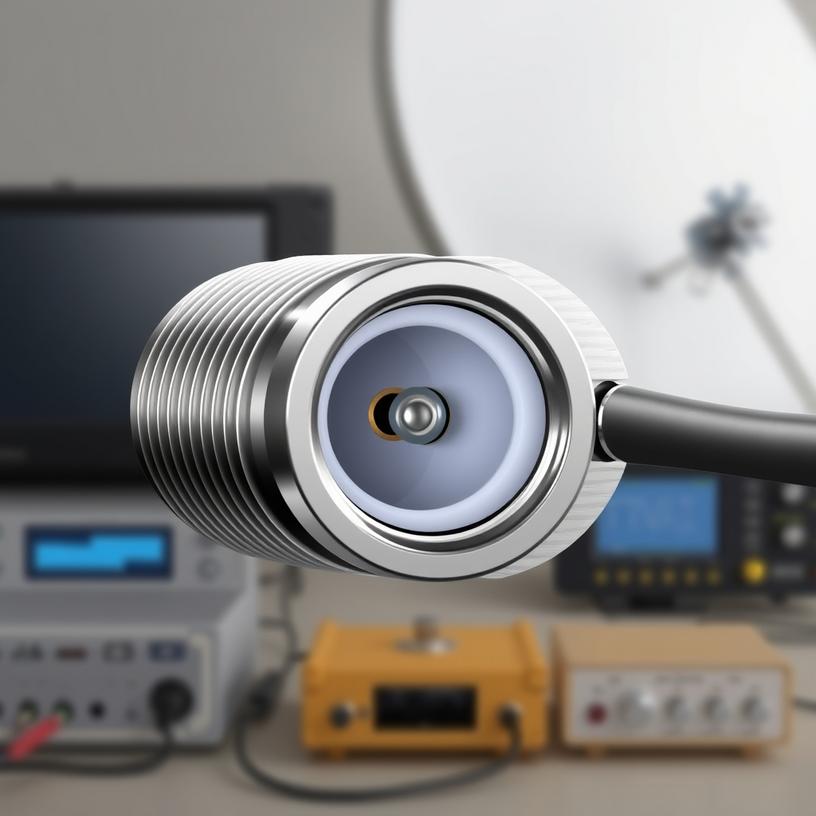
ToggleThe N‑type male plug is a kind of RF coaxial connector that you see a lot in wireless and satellite gear. It was created to carry high‑frequency signals with low loss. Its threaded design gives a tight seal, which helps keep water and dust out. Because of that, engineers trust it for outdoor installations. In everyday talk, you might hear it called just an “N‑connector” and it usually means the male end that screws onto a matching female socket.
The story starts in the 1940s at Bell Labs. Paul Neill, a radio engineer, needed a connector that could survive the harsh conditions of early radar and microwave work. He designed a screw‑type interface that could handle up to 11 GHz, which was impressive at the time. Over the decades the standard was refined, and today the International Electrotechnical Commission (IEC) and the Electronic Industries Alliance (EIA) define the exact dimensions. The result is a part that has stayed relevant for more than 70 years.
An N male plug has a 0.312‑inch (7.9 mm) outer diameter and a 0.188‑inch (4.8 mm) inner diameter. It is usually made for a 50‑ohm impedance, although a 75‑ohm version exists for video applications. The connector can work from DC up to about 18 GHz for standard air‑dielectric types, and up to 40 GHz when a precision version is used. Power handling is another strong point: a typical N plug can pass up to 500 W continuous in the lower bands, making it suitable for high‑power transmitters.
You’ll meet N male plugs in many places. Satellite dishes often use them to link the LNB to the indoor receiver. Test labs rely on them for vector network analyzers and spectrum analyzers because the connector stays stable over a wide frequency range. Mobile‑backhaul towers, microwave point‑to‑point links, and even some amateur radio rigs use N connectors for their robustness. The common thread is the need for a secure, weather‑proof connection that won’t degrade the signal.
Picking an N plug isn’t just about size. First, decide the frequency you need. If you plan to work above 18 GHz, look for a precision or air‑dielectric version. Second, think about power. For high‑power transmitters, a gold‑plated version with a larger dielectric can handle more heat. Third, consider the environment. For outdoor use you want a connector with a corrosion‑resistant body, such as brass with a nickel‑gold finish, and a proper O‑ring seal. Finally, match the gender and impedance of the rest of your system to avoid mismatches.
When you screw an N male plug onto a cable, make sure the cable’s outer jacket is stripped just enough to expose the shielding braid. The braid should be folded back over the dielectric and pressed firmly into the connector’s inner barrel. A torque wrench set to about 5‑7 in‑lb helps avoid over‑tightening, which can crush the dielectric and raise VSWR. After assembly, check the connection with a return‑loss meter; a good install shows less than –20 dB loss across the band.
Compared with a BNC, the N plug is bulkier but handles higher frequencies and more power. An SMA connector is smaller and works well up to 18 GHz, yet it isn’t as weather‑proof as the N type. The newer 2.92 mm (K) connector can reach 40 GHz, but it requires a tighter tolerance and is more expensive. In short, if you need a rugged, high‑power, outdoor‑ready link, the N male plug often wins the trade‑off.
Even with the rise of tiny millimeter‑wave connectors, the N male plug still has a place. Its simple thread design means it can be serviced in the field without special tools. As 5G and satellite constellations push more equipment into harsh environments, manufacturers are adding better sealing materials and higher‑frequency versions. I expect we’ll see more hybrid designs that keep the N’s mechanical strength while offering lower loss at 30‑40 GHz. For now, it remains a go‑to choice for many engineers.
The N male plug connector is more than a legacy part; it’s a workhorse that blends durability, performance, and ease of use. Understanding its specs, where it shines, and how to install it properly can save time and money in any RF project. Whether you’re setting up a backyard satellite dish or a professional microwave link, the N connector deserves a spot in your toolbox.
Source: Original Article


Comments are closed