

We are a digital agency helping businesses develop immersive, engaging, and user-focused web, app, and software solutions.
2310 Mira Vista Ave
Montrose, CA 91020

2500+ reviews based on client feedback
What's Included?
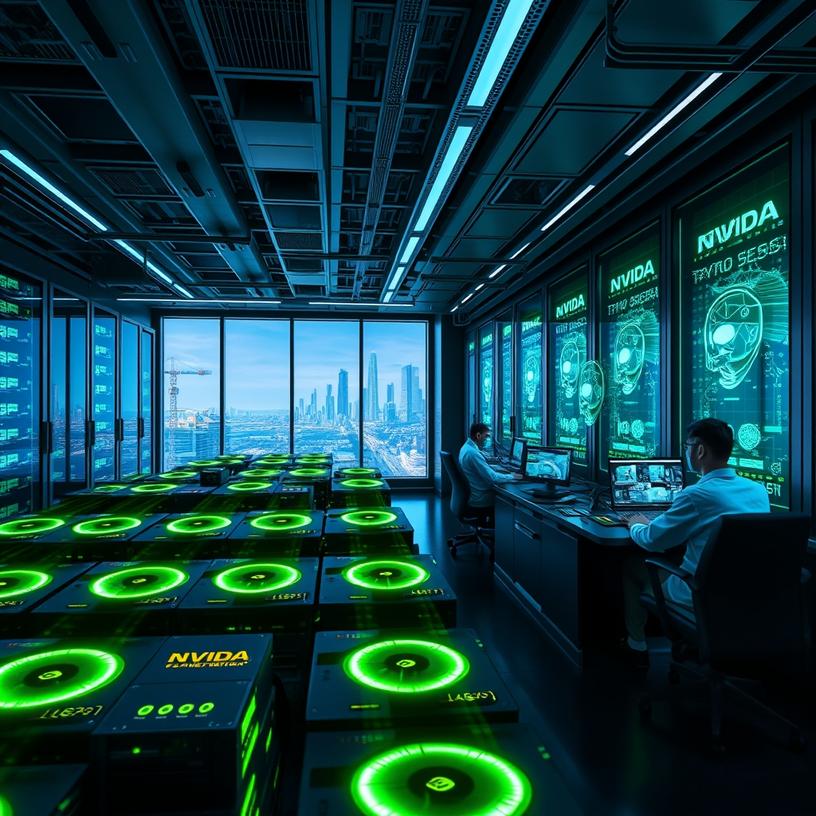
ToggleNvidia has become a household name for anyone paying attention to artificial intelligence. The company’s graphics processors now power most of the training runs you hear about in the news, and its stock has reflected that surge. But the story isn’t just about a single product line; it’s about a company that moved from gaming consoles to the data‑center floor in less than a decade. That shift gave investors a lot of excitement, and it also gave Nvidia a platform to build a broader business model. Today the firm sells chips, software tools, and even cloud services that sit at the core of many AI projects. Understanding where it stands now helps us guess where it might be in five years.
Looking ahead, the biggest driver will still be demand for faster, cheaper compute. Companies across every sector are trying to train larger models, and they need hardware that can keep up without blowing the budget. If Nvidia can keep the price‑performance curve moving, it will stay the go‑to supplier. At the same time, new kinds of workloads – such as inference at the edge, real‑time video analysis, and scientific simulations – will push the company to diversify its product line. Expect to see more specialized silicon that targets these niches, alongside the classic data‑center GPUs.
The next generation of Nvidia silicon is likely to be more than a bigger GPU. The company has already hinted at chips that blend traditional graphics cores with dedicated AI accelerators, memory that sits closer to the compute units, and tighter integration with high‑speed interconnects. These moves could shave latency for large language models and improve energy efficiency for edge devices. If the roadmap stays on track, we could see a new naming scheme that separates “compute‑focused” and “AI‑focused” parts, giving customers clearer choices. That kind of clarity would help Nvidia keep its lead even as rivals try to catch up.
Hardware alone won’t carry the brand forward; the software stack matters just as much. Nvidia’s CUDA environment has become a de‑facto standard, and the company is extending that reach with libraries for deep learning, data analytics, and even autonomous driving. Partnerships with cloud providers, OEMs, and startups will keep the ecosystem vibrant. If Nvidia can keep the developer experience smooth – easy installation, good documentation, and fast updates – it will stay the default choice for new AI projects. That network effect is hard for newcomers to break, and it will likely be a key factor in the next five years.
No forecast is complete without a look at the downside. Competition is heating up, with rivals offering alternative architectures that claim better power efficiency or lower cost. Regulatory scrutiny over chip exports could also limit Nvidia’s access to certain markets, especially if geopolitical tensions rise. Inside the company, the pressure to keep revenue growing may lead to over‑promising on new products, which could hurt credibility. Investors should watch how Nvidia balances ambition with realistic delivery, and whether it can keep its margins healthy as the market matures.
All things considered, Nvidia is well positioned to stay a major player in the AI hardware space, but the road ahead isn’t guaranteed. If the firm can deliver on its hardware roadmap, keep the software stack friendly, and navigate competitive and regulatory headwinds, it could look very different – and still very strong – in 2029. For anyone watching the tech landscape, the next five years will be a good test of whether Nvidia can turn today’s hype into a sustainable, long‑term business model.
Source: Original Article



Comments are closed