

We are a digital agency helping businesses develop immersive, engaging, and user-focused web, app, and software solutions.
2310 Mira Vista Ave
Montrose, CA 91020

2500+ reviews based on client feedback
What's Included?
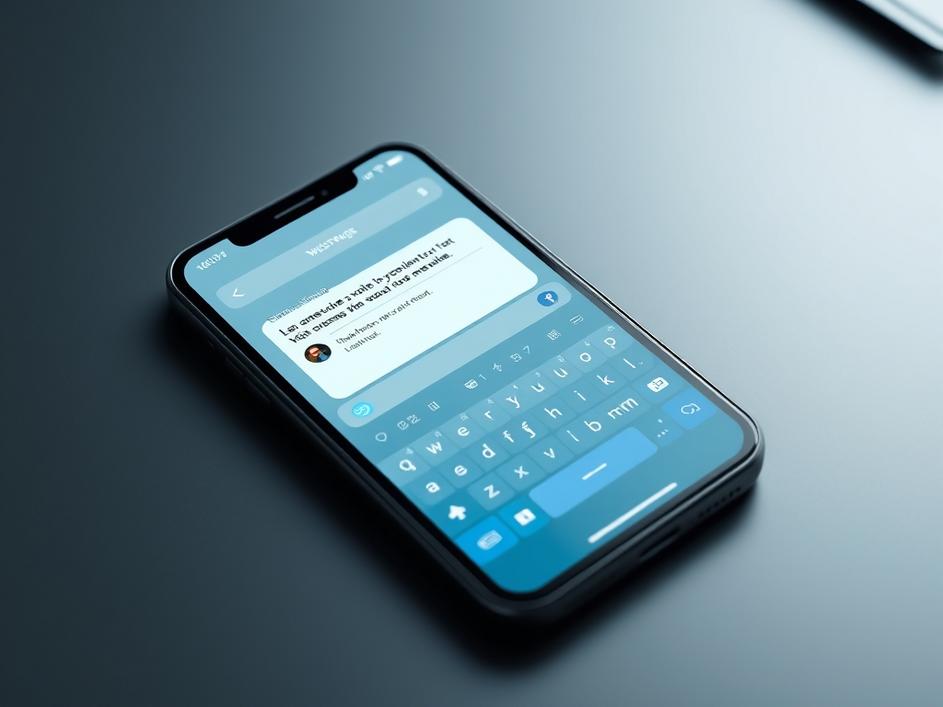
ToggleFor years, we’ve dreamed of a world where we can just speak our thoughts and have them instantly appear on our screens. Typing on a phone can be a real pain, especially for longer messages or documents. Voice dictation has been around for a while, but it hasn’t always been the most reliable or convenient option. Now, a new tool called Willow’s voice keyboard is trying to change all of that, promising to make voice input a truly viable alternative to typing on iOS devices.
Willow is designed to be a system-wide keyboard replacement for iPhones and iPads. Instead of tapping away at the glass, you simply speak, and Willow converts your words into text. But here’s the really interesting part: Willow isn’t just about transcribing your speech. It also lets you edit what you’ve said using voice commands. Imagine saying “delete the last sentence” or “replace ‘happy’ with ‘joyful'” and having it happen instantly. This capability sets Willow apart from other dictation tools and could make it a real game-changer for mobile productivity.
What makes Willow potentially special is its focus on editing. Current voice dictation is okay for short messages. But when composing longer documents or emails the constant stops and starts to fix errors becomes tedious. Willow aims to fix this by putting voice-based editing front and center. The idea is to create a fluid workflow where you can seamlessly switch between speaking and editing, all without ever having to touch the screen. This represents a significant step forward in making voice input more practical for everyday use.
The benefits of a reliable voice keyboard are clear. It could significantly speed up composing messages, emails, and documents on the go. It could also be a boon for accessibility, allowing people with physical limitations to use their iOS devices more easily. Imagine writing an entire email on your commute, editing a document while walking the dog, or composing a social media post while cooking dinner, all hands-free. Willow has the potential to unlock new levels of productivity and convenience for mobile users.
Of course, there are still challenges to overcome. The accuracy of voice recognition is crucial. Even small errors can be frustrating, especially when you’re trying to work quickly. Willow will need to be highly accurate in noisy environments and with different accents to be truly effective. Another challenge is learning the voice commands for editing. It will take some time to get used to speaking commands like “insert before” or “select the next word.” The user interface will need to be intuitive and easy to learn to avoid overwhelming new users. Battery life is another key consideration. Continuous voice recognition and processing can be power-intensive, and users won’t want a keyboard that drains their battery too quickly.
In today’s world, privacy is always a concern. Users will want to know how Willow is handling their voice data. Is it being stored on their device, or is it being sent to the cloud for processing? What security measures are in place to protect their privacy? Willow will need to be transparent about its data practices and offer strong privacy protections to gain user trust.
Willow’s voice keyboard represents a promising step forward in the evolution of mobile input. The ability to edit with voice commands is a game-changer, and it could make voice dictation a truly viable alternative to typing. However, Willow still has hurdles to overcome, especially regarding accuracy, ease of use, and privacy. If it can address these challenges effectively, Willow has the potential to become an essential tool for iOS users. The future of mobile productivity could be as simple as speaking your mind.
Ultimately, Willow’s success will depend on how well it integrates into users’ daily lives. Will it truly save time and effort, or will it just add another layer of complexity to mobile communication? Only time will tell. But one thing is clear: the dream of effortless voice input is closer than ever, and Willow is helping to lead the way.


Comments are closed